Will OE Thayer rotor fit Getzen 3047?
- LeoInFL
- Posts: 252
- Joined: Apr 19, 2018
Just curious. Will a OE Thayer rotor fit my Getzen 3047? The OE Thayer has a significant 'wedge' cutaway from the rotor that, I'm guessing, reduces the rotational mass of the rotor and makes the action quicker. The rotor that came with my Getzen is a solid cone.
So if it is possible to changeout the rotor, would the sound/response stay the same?
Thanks in advance!
So if it is possible to changeout the rotor, would the sound/response stay the same?
Thanks in advance!
- Burgerbob
- Posts: 6327
- Joined: Apr 23, 2018
Nope. Won't fit to begin with. Not sure where you'd get one, either!
- LeoInFL
- Posts: 252
- Joined: Apr 19, 2018
Does anyone know if the new Getzen 3047's have the 'cutaway' rotor or are they still the same as mine?
- Burgerbob
- Posts: 6327
- Joined: Apr 23, 2018
Pretty sure Edwards axials (or Getzen, same thing) have been pretty consistently the same for pretty much the production run. Of course, that doesn't mean a new core would fit an old casing.
- hornbuilder
- Posts: 1384
- Joined: May 02, 2018
Getzen use a nickel plated brass rotor core, which is hollow. It is made of several pieces which are brazed together.
The other rotor type is either cast or machined aluminum, which is anodized. There is a company in Minnesota making these, and they are very well made! Courtois use them on their axial tenors.
Finally, no, you can't swap out the rotors. You would need to change the casing as well, since there are several other key design differences as well. Not a small job, but doable for a decent tech.
The other rotor type is either cast or machined aluminum, which is anodized. There is a company in Minnesota making these, and they are very well made! Courtois use them on their axial tenors.
Finally, no, you can't swap out the rotors. You would need to change the casing as well, since there are several other key design differences as well. Not a small job, but doable for a decent tech.
- elmsandr
- Posts: 1373
- Joined: Mar 23, 2018
While the cut-away anodized rotor looks pretty great... it also kinda makes the valve into a battery. Get some interesting scale buildups as a result. I have three of them (tenor and a bass), and I have been tempted to swap them out for an Edwards or Shires brazed version. I have owned an Edwards bass in the past, I don't think that the core material was significant in the valve effort or rotational issues. The throw on all of them sucked, could all benefit from stiffer springs and improved lever geometry. But the blow is nice, if you like that sort of thing.
Cheers,
Andy
Cheers,
Andy
- hornbuilder
- Posts: 1384
- Joined: May 02, 2018
Very true Andy!!
- hornbuilder
- Posts: 1384
- Joined: May 02, 2018
Here are some photos of the Milashius made valve core.
- tbonesullivan
- Posts: 1959
- Joined: Jul 02, 2019
I've got one of the old old school Orla Ed Thayer valves, which used something like teflon coated cast aluminum? It's a pretty strange texture. It does have some erosion of the coating, which has led to a bit of oxidation, but it still works very well.
I do not however think that swapping between makers would work, as they may use slightly larger or smaller cones. Also the Edwards and Shires Axials have removable bearings on the top plate, while with the OE and Orla Ed thayers, the top plate is the bearing, and once it goes you have to replace the whole valve.
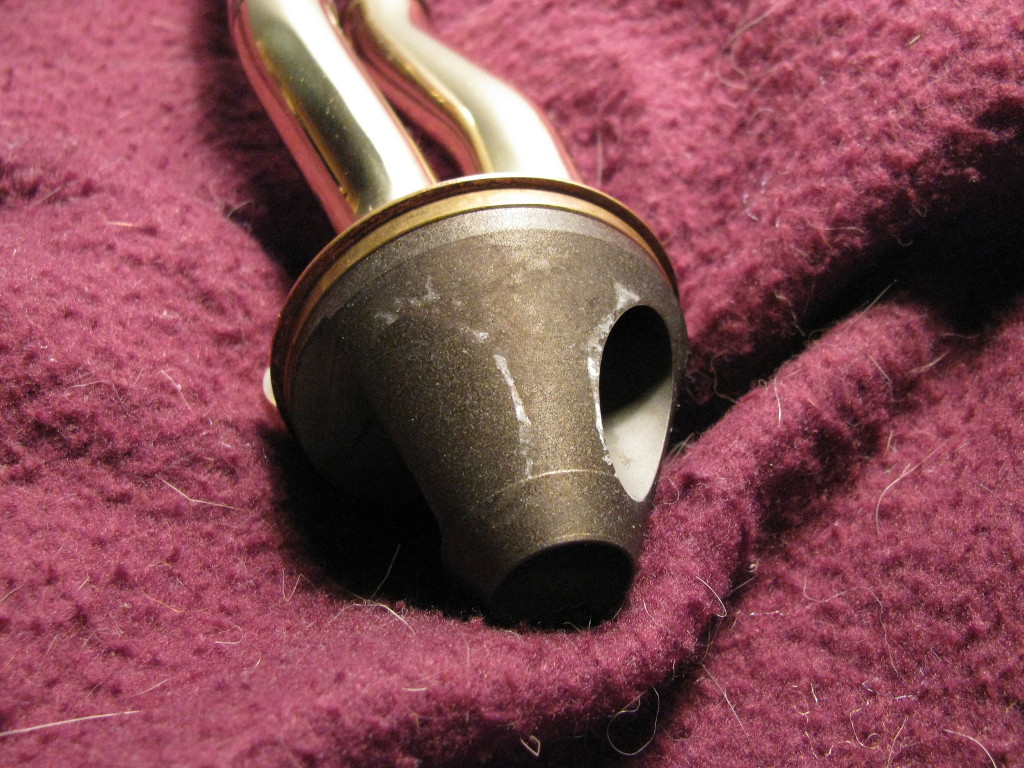
I do not however think that swapping between makers would work, as they may use slightly larger or smaller cones. Also the Edwards and Shires Axials have removable bearings on the top plate, while with the OE and Orla Ed thayers, the top plate is the bearing, and once it goes you have to replace the whole valve.
- hornbuilder
- Posts: 1384
- Joined: May 02, 2018
David,
You core is anodized, cast aluminum. You can treat the rotor to help keep it in good shape, by doing the following.
Bake the core in the oven (temp and time not critical, it just needs to get warm all the way through) Remove.from.oven, and while still warm, coat in anhydrous lanolin. The heat will melt the lanolin into the pores of the material, and "seal" them against water contact. Wipe off any excess, and re-install the valve. Do this every 12 months or so, and the rotor will last indefinately.
This was described to me by Ed Thayer himself, and it works very well indeed!
You core is anodized, cast aluminum. You can treat the rotor to help keep it in good shape, by doing the following.
Bake the core in the oven (temp and time not critical, it just needs to get warm all the way through) Remove.from.oven, and while still warm, coat in anhydrous lanolin. The heat will melt the lanolin into the pores of the material, and "seal" them against water contact. Wipe off any excess, and re-install the valve. Do this every 12 months or so, and the rotor will last indefinately.
This was described to me by Ed Thayer himself, and it works very well indeed!
- Burgerbob
- Posts: 6327
- Joined: Apr 23, 2018
[quote="hornbuilder"]David,
You core is anodized, cast aluminum. You can treat the rotor to help keep it in good shape, by doing the following.
Bake the core in the oven (temp and time not critical, it just needs to get warm all the way through) Remove.from.oven, and while still warm, coat in anhydrous lanolin. The heat will melt the lanolin into the pores of the material, and "seal" them against water contact. Wipe off any excess, and re-install the valve. Do this every 12 months or so, and the rotor will last indefinately.
This was described to me by Ed Thayer himself, and it works very well indeed![/quote]
Very cool!!
This is only for those aluminum OEs, of course?
You core is anodized, cast aluminum. You can treat the rotor to help keep it in good shape, by doing the following.
Bake the core in the oven (temp and time not critical, it just needs to get warm all the way through) Remove.from.oven, and while still warm, coat in anhydrous lanolin. The heat will melt the lanolin into the pores of the material, and "seal" them against water contact. Wipe off any excess, and re-install the valve. Do this every 12 months or so, and the rotor will last indefinately.
This was described to me by Ed Thayer himself, and it works very well indeed![/quote]
Very cool!!
This is only for those aluminum OEs, of course?
- hornbuilder
- Posts: 1384
- Joined: May 02, 2018
Yes. Any of the anodized aluminum rotors would benefit from that process.
O.E.Thayer (run by James Nydigger) never really managed to get a handle on their anodizing. Their rotors were a light gray color, and very susceptible to corrosion.
Thayer Valve International (run by Ed Thayer) did get their anodizing g pretty well sorted. The rotors were a very dark, metalic gray color. Using this lanolin process on them worked very well. I had one valve that was 20 years old with no signs of wear or corrosion.
O.E.Thayer (run by James Nydigger) never really managed to get a handle on their anodizing. Their rotors were a light gray color, and very susceptible to corrosion.
Thayer Valve International (run by Ed Thayer) did get their anodizing g pretty well sorted. The rotors were a very dark, metalic gray color. Using this lanolin process on them worked very well. I had one valve that was 20 years old with no signs of wear or corrosion.
- BGuttman
- Posts: 7368
- Joined: Mar 22, 2018
It would probably work for any core, although you really need it for the aluminum ones. Brass cores don't make as severe a "battery" and electrolytic corrosion is less of a problem.
- hornbuilder
- Posts: 1384
- Joined: May 02, 2018
I've never considered it for anything other than aluminum. Yes, brass oxidizes, but it is nowhere near as volatile as aluminum, and does not create the same amount of oxide.
- Burgerbob
- Posts: 6327
- Joined: Apr 23, 2018
[quote="hornbuilder"]
Thayer Valve International (run by Ed Thayer) did get their anodizing g pretty well sorted. The rotors were a very dark, metalic gray color. Using this lanolin process on them worked very well. I had one valve that was 20 years old with no signs of wear or corrosion.[/quote]
I just had a set of these that was in similarly perfect shape. I think the casings had worn much more than the rotors themselves was the issue.
Thayer Valve International (run by Ed Thayer) did get their anodizing g pretty well sorted. The rotors were a very dark, metalic gray color. Using this lanolin process on them worked very well. I had one valve that was 20 years old with no signs of wear or corrosion.[/quote]
I just had a set of these that was in similarly perfect shape. I think the casings had worn much more than the rotors themselves was the issue.
- MTbassbone
- Posts: 558
- Joined: Apr 21, 2018
[quote="hornbuilder"]
Bake the core in the oven (temp and time not critical, it just needs to get warm all the way through) Remove.from.oven, and while still warm, coat in anhydrous lanolin. The heat will melt the lanolin into the pores of the material, and "seal" them against water contact. Wipe off any excess, and re-install the valve. Do this every 12 months or so, and the rotor will last indefinately.
[/quote]
I did this same procedure on a friends horn about 20 years ago, and it worked great. From what I know it is still going strong.
Bake the core in the oven (temp and time not critical, it just needs to get warm all the way through) Remove.from.oven, and while still warm, coat in anhydrous lanolin. The heat will melt the lanolin into the pores of the material, and "seal" them against water contact. Wipe off any excess, and re-install the valve. Do this every 12 months or so, and the rotor will last indefinately.
[/quote]
I did this same procedure on a friends horn about 20 years ago, and it worked great. From what I know it is still going strong.
- jjenkins
- Posts: 364
- Joined: Apr 22, 2018
[quote="hornbuilder"]Bake the core in the oven (temp and time not critical, it just needs to get warm all the way through) Remove.from.oven, and while still warm, coat in anhydrous lanolin. The heat will melt the lanolin into the pores of the material, and "seal" them against water contact. Wipe off any excess, and re-install the valve. Do this every 12 months or so, and the rotor will last indefinately.[/quote]
This is a similar process to "seasoning" a cast iron skillet which essentially creates a non-stick coating on the cooking surface. Makes perfect sense.
This is a similar process to "seasoning" a cast iron skillet which essentially creates a non-stick coating on the cooking surface. Makes perfect sense.
- hornbuilder
- Posts: 1384
- Joined: May 02, 2018
Sort of. The temp isn't high enough to induce polymerization of the lanolin. It is really just a fat sealant coat. <EMOJI seq="1f633" tseq="1f633">😳</EMOJI>
- tbonesullivan
- Posts: 1959
- Joined: Jul 02, 2019
Well, looks like I'll be baking a valve core this weekend. Finally I'll have a use for those many small jars of lanolin slide grease I don't use anymore.
- jjenkins
- Posts: 364
- Joined: Apr 22, 2018
[quote="hornbuilder"]Sort of. The temp isn't high enough to induce polymerization of the lanolin. It is really just a fat sealant coat. <EMOJI seq="1f633" tseq="1f633">😳</EMOJI>[/quote]
Thank you for clarifying the difference for me. Although most rotary valve cores are made of brass and not cast aluminum, do you see this process having any value on brass cores as well?
Thank you for clarifying the difference for me. Although most rotary valve cores are made of brass and not cast aluminum, do you see this process having any value on brass cores as well?
- BGuttman
- Posts: 7368
- Joined: Mar 22, 2018
[quote="jjenkins"]<QUOTE author="hornbuilder" post_id="162292" time="1636649472" user_id="3205">
Sort of. The temp isn't high enough to induce polymerization of the lanolin. It is really just a fat sealant coat. <EMOJI seq="1f633" tseq="1f633">😳</EMOJI>[/quote]
Thank you for clarifying the difference for me. Although most rotary valve cores are made of brass and not cast aluminum, do you see this process having any value on brass cores as well?
</QUOTE>
As I said above: It will put a seal coating on the brass core. The seal coat will be less important since galvanic corrosion is less likely between brass and brass than between brass and aluminum.
If you do it, you won't hurt anything (even if you don't help anything either).
Sort of. The temp isn't high enough to induce polymerization of the lanolin. It is really just a fat sealant coat. <EMOJI seq="1f633" tseq="1f633">😳</EMOJI>[/quote]
Thank you for clarifying the difference for me. Although most rotary valve cores are made of brass and not cast aluminum, do you see this process having any value on brass cores as well?
</QUOTE>
As I said above: It will put a seal coating on the brass core. The seal coat will be less important since galvanic corrosion is less likely between brass and brass than between brass and aluminum.
If you do it, you won't hurt anything (even if you don't help anything either).
- jjenkins
- Posts: 364
- Joined: Apr 22, 2018
[quote="BGuttman"]<QUOTE author="jjenkins" post_id="162307" time="1636654216" user_id="3111">
Thank you for clarifying the difference for me. Although most rotary valve cores are made of brass and not cast aluminum, do you see this process having any value on brass cores as well?[/quote]
As I said above: It will put a seal coating on the brass core. The seal coat will be less important since galvanic corrosion is less likely between brass and brass than between brass and aluminum.
If you do it, you won't hurt anything (even if you don't help anything either).
</QUOTE>
You sure did. I skimmed through this thread and missed that.
Thank you for clarifying the difference for me. Although most rotary valve cores are made of brass and not cast aluminum, do you see this process having any value on brass cores as well?[/quote]
As I said above: It will put a seal coating on the brass core. The seal coat will be less important since galvanic corrosion is less likely between brass and brass than between brass and aluminum.
If you do it, you won't hurt anything (even if you don't help anything either).
</QUOTE>
You sure did. I skimmed through this thread and missed that.