Differences Holton 169 verses E185 and TR185
- imsevimse
- Posts: 1765
- Joined: Apr 29, 2018
I know this has been discussed a lot, but unfortunately the knowledge that was shared is now buried in the old forum and that forum might never go up again. I'm interested in these facts and new generations of trombone players might also be interested, so please share if you know the answers <EMOJI seq="1f600" tseq="1f600">😀</EMOJI>
1. I know the 169 is considered to be outstanding, but have also read a 185 can be as good and share everything but the name with the 169. How do I know if a 185 is a 169?
2. Another question is if there is a difference between the two 185 models E185 and TR185 and what the difference is?
3. What is the real difference between the three models?
My question is to those who have experience from playing them or have memories from the old forum and can share what they remember about these models. If you could answer any of the question above I would be grateful.
/Tom
1. I know the 169 is considered to be outstanding, but have also read a 185 can be as good and share everything but the name with the 169. How do I know if a 185 is a 169?
2. Another question is if there is a difference between the two 185 models E185 and TR185 and what the difference is?
3. What is the real difference between the three models?
My question is to those who have experience from playing them or have memories from the old forum and can share what they remember about these models. If you could answer any of the question above I would be grateful.
/Tom
- ngrinder
- Posts: 294
- Joined: Apr 24, 2018
I’m no expert (paging J. Schatz!), but from viewing a 169 and 185 side to side, the 169’s throat is much larger. There’s a picture on Facebook I will try to dig up.
I own an E185 and have played a hand full of 185s, including an E185 that had the very same engraving and construction as my horn. Unfortunately the serial number on my horn is blocked by a trigger placement, but given how much variation was coming out of the factory, they could be very close in age.
To me, the earlier horns are more “orchestral.” The 169’s throat lends itself to broader attacks and gives a bit more uniform “Bach” like sound, while the 185s I’ve played have a bit more malleable color and presence, as well as immediacy of attack. The most responsive 185 I’ve played is very late in the 185’s manufacturing life (1970-something), with a red brass bell that looks like it came off an early 180.
I own an E185 and have played a hand full of 185s, including an E185 that had the very same engraving and construction as my horn. Unfortunately the serial number on my horn is blocked by a trigger placement, but given how much variation was coming out of the factory, they could be very close in age.
To me, the earlier horns are more “orchestral.” The 169’s throat lends itself to broader attacks and gives a bit more uniform “Bach” like sound, while the 185s I’ve played have a bit more malleable color and presence, as well as immediacy of attack. The most responsive 185 I’ve played is very late in the 185’s manufacturing life (1970-something), with a red brass bell that looks like it came off an early 180.
- bellend
- Posts: 218
- Joined: Mar 23, 2018
Having owned and played both I would say the bells are identical, both copied from a Fuchs Conn like the Bach 50
- norbie2018
- Posts: 1051
- Joined: Apr 05, 2018
I know that Fuchs is German for Fox. Can anyone give a history on this model?
- Tbarh
- Posts: 505
- Joined: Aug 16, 2018
Ngrinder , how much of a difference are we talking about in bell throatsizes ? I could not see any the last time i was in a room with these three models .. Maybe i did not look close enough . :idk:
Tbarh
Tbarh
- bellend
- Posts: 218
- Joined: Mar 23, 2018
Originally knows as a "Fuchs" model, this single valve bass trombone was one of the first American made large bore and large bell bass trombones and featured tuning in the slide, which was very popular during the day. Designed with Robert Fuchs of the Chicago Grand Opera around 1915, it was marketed as the pinnacle of bass trombone development at the time.
- norbie2018
- Posts: 1051
- Joined: Apr 05, 2018
[quote="bellend"]Originally knows as a "Fuchs" model, this single valve bass trombone was one of the first American made large bore and large bell bass trombones and featured tuning in the slide, which was very popular during the day. Designed with Robert Fuchs of the Chicago Grand Opera around 1915, it was marketed as the pinnacle of bass trombone development at the time.[/quote]
Is it known to be that spectacular?
Is it known to be that spectacular?
- Burgerbob
- Posts: 6327
- Joined: Apr 23, 2018
[quote="norbie2018"]<QUOTE author="bellend" post_id="70933" time="1541935781" user_id="82">
Originally knows as a "Fuchs" model, this single valve bass trombone was one of the first American made large bore and large bell bass trombones and featured tuning in the slide, which was very popular during the day. Designed with Robert Fuchs of the Chicago Grand Opera around 1915, it was marketed as the pinnacle of bass trombone development at the time.[/quote]
Is it known to be that spectacular?
</QUOTE>
Having played one, yes.
Originally knows as a "Fuchs" model, this single valve bass trombone was one of the first American made large bore and large bell bass trombones and featured tuning in the slide, which was very popular during the day. Designed with Robert Fuchs of the Chicago Grand Opera around 1915, it was marketed as the pinnacle of bass trombone development at the time.[/quote]
Is it known to be that spectacular?
</QUOTE>
Having played one, yes.
- ngrinder
- Posts: 294
- Joined: Apr 24, 2018
<ATTACHMENT filename="Holtons.jpg" index="0">[attachment=0]Holtons.jpg</ATTACHMENT>
Here's the picture I was talking about. The horn on the left is a 185 from the 70s, I believe, and on the right is a 169 (both D valve sections were modified by Terry Pierce).
This is actually the only 169 that I have played, and the throat is indeed much wider than my horn and the other 185s I have tried. It's very possible that it could be a one off or a fluke, but I always thought 169ss had different throats than later Holton basses - of course I could be mistaken.
Here's the picture I was talking about. The horn on the left is a 185 from the 70s, I believe, and on the right is a 169 (both D valve sections were modified by Terry Pierce).
This is actually the only 169 that I have played, and the throat is indeed much wider than my horn and the other 185s I have tried. It's very possible that it could be a one off or a fluke, but I always thought 169ss had different throats than later Holton basses - of course I could be mistaken.
- blast
- Posts: 671
- Joined: Mar 22, 2018
Look at your picture and study the flare width... 185's were 9 1/2" or 10" in diameter whilst almost all 169's were 9 3/8" diameter, which makes the 169 look like a more open bell throat.
I have owned many 185's and 169's. 169 Holtons vary a lot.... thick bells and thin bells, different valve bores.... you have take each one as it comes. 185's are more consistent, have 9 1/2" or 10" bells that have a harder finish and generally have a slightly more commercial feel.
I have two 169's..... and a Conn Fuchs 70H.... and yes, the Fuchs is a bit special, and has a 9 3/8" bell.
Chris
I have owned many 185's and 169's. 169 Holtons vary a lot.... thick bells and thin bells, different valve bores.... you have take each one as it comes. 185's are more consistent, have 9 1/2" or 10" bells that have a harder finish and generally have a slightly more commercial feel.
I have two 169's..... and a Conn Fuchs 70H.... and yes, the Fuchs is a bit special, and has a 9 3/8" bell.
Chris
- imsevimse
- Posts: 1765
- Joined: Apr 29, 2018
I now have two 9 1/2" bell TR185. Both from 1968 and both are great. One has the optional second valve in Eb and the original almost impossible thumb-setup to control both valves. What were they thinking? The other has a modernized D-valve which is manovered by the middle finger. Much more useful. Both trombones are very open and responsive.
One of my dream trombones is a 169. At least to give one a try to know the difference would be nice.
/Tom
One of my dream trombones is a 169. At least to give one a try to know the difference would be nice.
/Tom
- eatanick
- Posts: 35
- Joined: Oct 11, 2018
Unfortunately, I have no experience with 169s or E-185s, but I have owned two TR-185s and another TR-185 bell section (it was really beaten up and now has independent Rotaxes).
One TR-185 and the extra bell are both from 1966 (only three apart in serial number), have 9 1/2 inch bells, single radius tuning slides and fit an original slot in valve (acquired separately to all three horns). The other TR-185 I owned was from the early/mid seventies I think, had a 10 inch bell, dual radius tuning slide and the slot in valve wouldn't fit properly (the slot in valve body would hit the main tuning slide before you could push it in far enough to be in tune).
I found the '66 bell to be maybe a little more dense, warm and refined sounding when compared to the '70s bell, but the '70s bell was a bit snappier feeling. I couldn't feel or hear a difference between tuning slides. The playing slides were very different, though, with the '66 slide feeling much, much better to play. I assumed it was a bad leadpipe, but the action wasn't great so I didn't even look into getting it removed.
Anecdotally, I think I remember reading about and even seeing a photo on TTF of one E-185 that had another small oversleeve on an outer slide slide tube. I remember it looking a bit like a ferrule randomly placed part way down the slide, but I could be making that sleeve thing up entirely.
One TR-185 and the extra bell are both from 1966 (only three apart in serial number), have 9 1/2 inch bells, single radius tuning slides and fit an original slot in valve (acquired separately to all three horns). The other TR-185 I owned was from the early/mid seventies I think, had a 10 inch bell, dual radius tuning slide and the slot in valve wouldn't fit properly (the slot in valve body would hit the main tuning slide before you could push it in far enough to be in tune).
I found the '66 bell to be maybe a little more dense, warm and refined sounding when compared to the '70s bell, but the '70s bell was a bit snappier feeling. I couldn't feel or hear a difference between tuning slides. The playing slides were very different, though, with the '66 slide feeling much, much better to play. I assumed it was a bad leadpipe, but the action wasn't great so I didn't even look into getting it removed.
Anecdotally, I think I remember reading about and even seeing a photo on TTF of one E-185 that had another small oversleeve on an outer slide slide tube. I remember it looking a bit like a ferrule randomly placed part way down the slide, but I could be making that sleeve thing up entirely.
- imsevimse
- Posts: 1765
- Joined: Apr 29, 2018
[quote="blast"]Look at your picture and study the flare width... 185's were 9 1/2" or 10" in diameter whilst almost all 169's were 9 3/8" diameter, which makes the 169 look like a more open bell throat.
I have owned many 185's and 169's. 169 Holtons vary a lot.... thick bells and thin bells, different valve bores.... you have take each one as it comes. 185's are more consistent, have 9 1/2" or 10" bells that have a harder finish and generally have a slightly more commercial feel.
I have two 169's..... and a Conn Fuchs 70H.... and yes, the Fuchs is a bit special, and has a 9 3/8" bell.
Chris[/quote]
Hi Chris!
Soon I can answer this question myself <EMOJI seq="1f60e" tseq="1f60e">😎</EMOJI>
Okay, I stumbled over a Holton 169 from 1964 that I bought today. When I compare to one of my TR185 from 1968 they look about the same with the difference that the TR185 has the optional second valve in D.
When I compare bells the 169 is not 9 3/8". Both bells are 9 1/2".
Both are great trombones. I feel very fortunate to have them. If I should try to say something about the difference: Maybe the TR185 has a little "wider" sound. It "expands" more. The 169 has a more compact sound. Both horns resonate very well.
/Tom
I have owned many 185's and 169's. 169 Holtons vary a lot.... thick bells and thin bells, different valve bores.... you have take each one as it comes. 185's are more consistent, have 9 1/2" or 10" bells that have a harder finish and generally have a slightly more commercial feel.
I have two 169's..... and a Conn Fuchs 70H.... and yes, the Fuchs is a bit special, and has a 9 3/8" bell.
Chris[/quote]
Hi Chris!
Soon I can answer this question myself <EMOJI seq="1f60e" tseq="1f60e">😎</EMOJI>
Okay, I stumbled over a Holton 169 from 1964 that I bought today. When I compare to one of my TR185 from 1968 they look about the same with the difference that the TR185 has the optional second valve in D.
When I compare bells the 169 is not 9 3/8". Both bells are 9 1/2".
Both are great trombones. I feel very fortunate to have them. If I should try to say something about the difference: Maybe the TR185 has a little "wider" sound. It "expands" more. The 169 has a more compact sound. Both horns resonate very well.
/Tom
- blast
- Posts: 671
- Joined: Mar 22, 2018
[quote="imsevimse"]<QUOTE author="blast" post_id="70958" time="1541970467" user_id="52">
Look at your picture and study the flare width... 185's were 9 1/2" or 10" in diameter whilst almost all 169's were 9 3/8" diameter, which makes the 169 look like a more open bell throat.
I have owned many 185's and 169's. 169 Holtons vary a lot.... thick bells and thin bells, different valve bores.... you have take each one as it comes. 185's are more consistent, have 9 1/2" or 10" bells that have a harder finish and generally have a slightly more commercial feel.
I have two 169's..... and a Conn Fuchs 70H.... and yes, the Fuchs is a bit special, and has a 9 3/8" bell.
Chris[/quote]
Hi Chris!
Soon I can answer this question myself <EMOJI seq="1f60e" tseq="1f60e">😎</EMOJI>
Okay, I stumbled over a Holton 169 from 1964 that I bought today. When I compare to one of my TR185 from 1968 they look abiut the same with the difference that the TR185 has the optional second valve in D.
When I compare bells the 169 is not 9 3/8". Both bells are 9 1/2".
Both are great trombones. I feel very fortunate to have them. If I should try to say something about the difference: Maybe the TR185 has a little "wideer" sound. It "expands" more. The 169 has a more compact sound. Both horns resonate very well.
/Tom
</QUOTE>
Congrats Tom ! I did say that "almost" all 169's had 9 3/8" bells.... one of the two I have is a 9 1/2", so it does happen. You should find the throats to be the same.
Chris
Look at your picture and study the flare width... 185's were 9 1/2" or 10" in diameter whilst almost all 169's were 9 3/8" diameter, which makes the 169 look like a more open bell throat.
I have owned many 185's and 169's. 169 Holtons vary a lot.... thick bells and thin bells, different valve bores.... you have take each one as it comes. 185's are more consistent, have 9 1/2" or 10" bells that have a harder finish and generally have a slightly more commercial feel.
I have two 169's..... and a Conn Fuchs 70H.... and yes, the Fuchs is a bit special, and has a 9 3/8" bell.
Chris[/quote]
Hi Chris!
Soon I can answer this question myself <EMOJI seq="1f60e" tseq="1f60e">😎</EMOJI>
Okay, I stumbled over a Holton 169 from 1964 that I bought today. When I compare to one of my TR185 from 1968 they look abiut the same with the difference that the TR185 has the optional second valve in D.
When I compare bells the 169 is not 9 3/8". Both bells are 9 1/2".
Both are great trombones. I feel very fortunate to have them. If I should try to say something about the difference: Maybe the TR185 has a little "wideer" sound. It "expands" more. The 169 has a more compact sound. Both horns resonate very well.
/Tom
</QUOTE>
Congrats Tom ! I did say that "almost" all 169's had 9 3/8" bells.... one of the two I have is a 9 1/2", so it does happen. You should find the throats to be the same.
Chris
- Bonephilly
- Posts: 106
- Joined: Aug 20, 2018
Slightly off topic...
I put a 183 bell on my 180. Wow! Huge improvement. For my tastes the 180 10” bell is too big and spread out. The 9” 183 bell is much much better and fits more of my bass trombone needs. In general, I wouldnt be scared away from a 9” bass bell. It’s more to the smaller bass side than a bigger tenor if that makes sense.
I put a 183 bell on my 180. Wow! Huge improvement. For my tastes the 180 10” bell is too big and spread out. The 9” 183 bell is much much better and fits more of my bass trombone needs. In general, I wouldnt be scared away from a 9” bass bell. It’s more to the smaller bass side than a bigger tenor if that makes sense.
- blast
- Posts: 671
- Joined: Mar 22, 2018
[quote="Bonephilly"]Slightly off topic...
I put a 183 bell on my 180. Wow! Huge improvement. For my tastes the 180 10” bell is too big and spread out. The 9” 183 bell is much much better and fits more of my bass trombone needs. In general, I wouldnt be scared away from a 9” bass bell. It’s more to the smaller bass side than a bigger tenor if that makes sense.[/quote]
I know what you mean.... I inherited a 9" Rath ns bell and it is so nice to play. Incidentally, I have an early 183 with a 9 1/2" bell.
Chris
I put a 183 bell on my 180. Wow! Huge improvement. For my tastes the 180 10” bell is too big and spread out. The 9” 183 bell is much much better and fits more of my bass trombone needs. In general, I wouldnt be scared away from a 9” bass bell. It’s more to the smaller bass side than a bigger tenor if that makes sense.[/quote]
I know what you mean.... I inherited a 9" Rath ns bell and it is so nice to play. Incidentally, I have an early 183 with a 9 1/2" bell.
Chris
- imsevimse
- Posts: 1765
- Joined: Apr 29, 2018
This evening I put four Holton basses up to a test.
It is one 169 with 9 1/2" bell from 1964, two TR185 with 9 1/2" bell from 1968 and one TR183 with 9" bell from 1974.
I put them on four stands and switched repeatedly between them. First one comment about the trigger on the TR183 that has two plastic details in the trigger system. In each end of the brace between the rotor and the trigger it has a plastic device to hold the parts. One has cracked but it works anyway. The older Holtons have slight different details that do the same thing but they are in metal, much better.
The test is basically to play scales and arpeggios and some songs on all bones to see if I could come to some conclusions about the Holton sound - what that is -
and compare this to other basses and also to find differences between the Holton models. The other trombones I used was a couple of Conns (73h, 62h) Yamahas (321,322) a Martin bass and an Olds P24G.
My conclution is there is definitely a feel that unites all the Holtons. All have a broad sound, a sound that can expand more compared to any of the other models. I can feel that the Conns "lock in" to a sound more even though they have lots of colors and can be altered. I felt all Holtons to be "wavy" in the sound. I'm not sure if that term exists and if it can be understood, but what I mean by that is the playing characteristics helps me to broaden and spread the sound, so "wavy" is a positive word in my book <span class="emoji" title=":wink:">😉</span> . The Yamahas (321, 322) are more close to the Holton sound than to the Conn sound in soft nuances. The Martin is a .535 bass which means it is very tenor like in this test. The Olds P24-G has a full bodied fundamental with lots of high frequency above. In this test I would place the Holton sound between the Conns and the Olds sound I would place the Yamaha very close to the Holtons when played soft, but the sound in the Yamaha changes more when pushed. Not the same with the Holtons. They are full bodied and "wavy" in all nuances.
If I compare the Holtons to each other I find one of the TR185 to be more "mellow" and the other to have more high freq. It could be because one has the lacquer removed. The one without lacquer is the more mellow one The 169 is more close to the one with lacquer but it is a little less "wavy" or more "compact" and distinct if you prefer, but still it has a broad sound. The TR183 has a 9" bell. It is not as broad as the other Holtons. It is "wavy" but not as big in the sound and not as distinct as the 169. All the Holtons have great fake notes and notes in all registers pop out with ease. Easier low register than the Conns. I would say the TR185 and 169 are pretty close and it is only small things in character that diverse. I could due with a TR185 because it is a very good bass with a great sound. The two TR185 I have here are close in my opinion. I need to try both in a big band before I decide what to think.
I don't know if this makes sense to others who have not done similar tests. And they who have might disagree. Maybe you come to other conclusions. We are different so you probably will not agree to my test results, it would be strange if you did. I'm interested to hear your opinion.
/Tom
It is one 169 with 9 1/2" bell from 1964, two TR185 with 9 1/2" bell from 1968 and one TR183 with 9" bell from 1974.
I put them on four stands and switched repeatedly between them. First one comment about the trigger on the TR183 that has two plastic details in the trigger system. In each end of the brace between the rotor and the trigger it has a plastic device to hold the parts. One has cracked but it works anyway. The older Holtons have slight different details that do the same thing but they are in metal, much better.
The test is basically to play scales and arpeggios and some songs on all bones to see if I could come to some conclusions about the Holton sound - what that is -
and compare this to other basses and also to find differences between the Holton models. The other trombones I used was a couple of Conns (73h, 62h) Yamahas (321,322) a Martin bass and an Olds P24G.
My conclution is there is definitely a feel that unites all the Holtons. All have a broad sound, a sound that can expand more compared to any of the other models. I can feel that the Conns "lock in" to a sound more even though they have lots of colors and can be altered. I felt all Holtons to be "wavy" in the sound. I'm not sure if that term exists and if it can be understood, but what I mean by that is the playing characteristics helps me to broaden and spread the sound, so "wavy" is a positive word in my book <span class="emoji" title=":wink:">😉</span> . The Yamahas (321, 322) are more close to the Holton sound than to the Conn sound in soft nuances. The Martin is a .535 bass which means it is very tenor like in this test. The Olds P24-G has a full bodied fundamental with lots of high frequency above. In this test I would place the Holton sound between the Conns and the Olds sound I would place the Yamaha very close to the Holtons when played soft, but the sound in the Yamaha changes more when pushed. Not the same with the Holtons. They are full bodied and "wavy" in all nuances.
If I compare the Holtons to each other I find one of the TR185 to be more "mellow" and the other to have more high freq. It could be because one has the lacquer removed. The one without lacquer is the more mellow one The 169 is more close to the one with lacquer but it is a little less "wavy" or more "compact" and distinct if you prefer, but still it has a broad sound. The TR183 has a 9" bell. It is not as broad as the other Holtons. It is "wavy" but not as big in the sound and not as distinct as the 169. All the Holtons have great fake notes and notes in all registers pop out with ease. Easier low register than the Conns. I would say the TR185 and 169 are pretty close and it is only small things in character that diverse. I could due with a TR185 because it is a very good bass with a great sound. The two TR185 I have here are close in my opinion. I need to try both in a big band before I decide what to think.
I don't know if this makes sense to others who have not done similar tests. And they who have might disagree. Maybe you come to other conclusions. We are different so you probably will not agree to my test results, it would be strange if you did. I'm interested to hear your opinion.
/Tom
- sf105
- Posts: 433
- Joined: Mar 24, 2018
[quote="imsevimse"]This evening I put four Holton basses up to a test.
It is one 169 with 9 1/2" bell from 1964, two TR185 with 9 1/2" bell from 1968 and one TR183 with 9" bell from 1974.
The test is basically to play scales and arpeggios and some songs on all bones to see if I could come to some conclusions about the Holton sound - what that is -
and compare this to other basses and also to find differences between the Holton models. The other trombones I used was a couple of Conns (73h, 62h) Yamahas (321,322) a Martin bass and an Olds P24G.
[...][/quote]
I'm struggling to explain to my wife why I need all the trombones that I have, but I'm way behind you. What's your secret <span class="emoji" title=":wink:">😉</span>
S
It is one 169 with 9 1/2" bell from 1964, two TR185 with 9 1/2" bell from 1968 and one TR183 with 9" bell from 1974.
The test is basically to play scales and arpeggios and some songs on all bones to see if I could come to some conclusions about the Holton sound - what that is -
and compare this to other basses and also to find differences between the Holton models. The other trombones I used was a couple of Conns (73h, 62h) Yamahas (321,322) a Martin bass and an Olds P24G.
[...][/quote]
I'm struggling to explain to my wife why I need all the trombones that I have, but I'm way behind you. What's your secret <span class="emoji" title=":wink:">😉</span>
S
- imsevimse
- Posts: 1765
- Joined: Apr 29, 2018
[quote="sf105"]I'm struggling to explain to my wife why I need all the trombones that I have, but I'm way behind you. What's your secret <span class="emoji" title=":wink:">😉</span>
S[/quote]
Me and my trombones don't need no wife :-)
More testing...
Yesterday I took the 169 to a big band. I got a lot of positive comments on my sound from the other bone-players and the leader who is a trombone player said "that's the sound I want from a bass trombone". Of course I took that to my heart. I did not tell them what instrument I had until afterwords.
This evening I took the horn to another band, strengthened by yesterdays comments :pant: The songs we played had a few C's and B's, and they worked all right. No complaints anyway. I do know the fake-notes fairly well and I use them on every C and B if they are short. It's the sustained C's and B's in fortissimo that worries. The gig is Saturday.
/Tom
S[/quote]
Me and my trombones don't need no wife :-)
More testing...
Yesterday I took the 169 to a big band. I got a lot of positive comments on my sound from the other bone-players and the leader who is a trombone player said "that's the sound I want from a bass trombone". Of course I took that to my heart. I did not tell them what instrument I had until afterwords.
This evening I took the horn to another band, strengthened by yesterdays comments :pant: The songs we played had a few C's and B's, and they worked all right. No complaints anyway. I do know the fake-notes fairly well and I use them on every C and B if they are short. It's the sustained C's and B's in fortissimo that worries. The gig is Saturday.
/Tom
- HawaiiTromboneGuy
- Posts: 1025
- Joined: Sep 03, 2018
Picked up a TR185 with the second rotor this morning and am hoping the shipping time won’t be too long as it’s coming international. Excited to receive the horn as I’ve never played a Holton bass before.
- mrdeacon
- Posts: 1225
- Joined: May 08, 2018
[quote="HawaiiTromboneGuy"]Picked up a TR185 with the second rotor this morning and am hoping the shipping time won’t be too long as it’s coming international. Excited to receive the horn as I’ve never played a Holton bass before.[/quote]
You get all the toys! I think you'll like it.
You get all the toys! I think you'll like it.
- bassboneman69
- Posts: 290
- Joined: Aug 15, 2018
I have often wondered about the unique idiosyncrasies between the different 169’s...let alone the 185’s!
I find it interesting no one has mentioned the hand slide materials and moreover the leadpipe.
I am soooo hoping Mr. Schatz will chime in as well.
I find it interesting no one has mentioned the hand slide materials and moreover the leadpipe.
I am soooo hoping Mr. Schatz will chime in as well.
- WGWTR180
- Posts: 2152
- Joined: Sep 04, 2019
[quote="imsevimse"]<QUOTE author="sf105" post_id="72297" time="1543934794" user_id="173">
I'm struggling to explain to my wife why I need all the trombones that I have, but I'm way behind you. What's your secret <span class="emoji" title=":wink:">😉</span>
S[/quote]
Me and my trombones don't need no wife :-)
More testing...
Yesterday I took the 169 to a big band. I got a lot of positive comments on my sound from the other bone-players and the leader who is a trombone player said "that's the sound I want from a bass trombone". Of course I took that to my heart. I did not tell them what instrument I had until afterwords.
This evening I took the horn to another band, strengthened by yesterdays comments :pant: The songs we played had a few C's and B's, and they worked all right. No complaints anyway. I do know the fake-notes fairly well and I use them on every C and B if they are short. It's the sustained C's and B's in fortissimo that worries. The gig is Saturday.
/Tom
</QUOTE>
If you're a bass trombonist there are no "fake note" low Bs and Cs. :)
I'm struggling to explain to my wife why I need all the trombones that I have, but I'm way behind you. What's your secret <span class="emoji" title=":wink:">😉</span>
S[/quote]
Me and my trombones don't need no wife :-)
More testing...
Yesterday I took the 169 to a big band. I got a lot of positive comments on my sound from the other bone-players and the leader who is a trombone player said "that's the sound I want from a bass trombone". Of course I took that to my heart. I did not tell them what instrument I had until afterwords.
This evening I took the horn to another band, strengthened by yesterdays comments :pant: The songs we played had a few C's and B's, and they worked all right. No complaints anyway. I do know the fake-notes fairly well and I use them on every C and B if they are short. It's the sustained C's and B's in fortissimo that worries. The gig is Saturday.
/Tom
</QUOTE>
If you're a bass trombonist there are no "fake note" low Bs and Cs. :)
- Basbasun
- Posts: 496
- Joined: Mar 26, 2018
[quote="WGWTR180"]If you're a bass trombonist there are no "fake note" low Bs and Cs. :)[/quote]
What? :horror:
What? :horror:
- imsevimse
- Posts: 1765
- Joined: Apr 29, 2018
[quote="WGWTR180"]If you're a bass trombonist there are no "fake note" low Bs and Cs. :)[/quote]
I'm not sure I follow you here. I guess you mean if you are a real bass trombone player you need two valves. I could not disagree more. The factitious notes are my buddies :good:
/Tom
I'm not sure I follow you here. I guess you mean if you are a real bass trombone player you need two valves. I could not disagree more. The factitious notes are my buddies :good:
/Tom
- RConrad
- Posts: 106
- Joined: Oct 17, 2018
[quote="HawaiiTromboneGuy"]Picked up a TR185 with the second rotor this morning and am hoping the shipping time won’t be too long as it’s coming international. Excited to receive the horn as I’ve never played a Holton bass before.[/quote]
I'm hoping one day in the future I can find me a TR185 and my wife won't kick me out for getting another trombone. Would love to see some pictures and hear your thoughts on the one you picked up once you get some time with it!
I'm hoping one day in the future I can find me a TR185 and my wife won't kick me out for getting another trombone. Would love to see some pictures and hear your thoughts on the one you picked up once you get some time with it!
- HawaiiTromboneGuy
- Posts: 1025
- Joined: Sep 03, 2018
[quote="RConrad"]<QUOTE author="HawaiiTromboneGuy" post_id="123683" time="1598307262" user_id="3695">
Picked up a TR185 with the second rotor this morning and am hoping the shipping time won’t be too long as it’s coming international. Excited to receive the horn as I’ve never played a Holton bass before.[/quote]
I'm hoping one day in the future I can find me a TR185 and my wife won't kick me out for getting another trombone. Would love to see some pictures and hear your thoughts on the one you picked up once you get some time with it!
</QUOTE>
I’ll definitely get some photos up once the horn arrives!
Picked up a TR185 with the second rotor this morning and am hoping the shipping time won’t be too long as it’s coming international. Excited to receive the horn as I’ve never played a Holton bass before.[/quote]
I'm hoping one day in the future I can find me a TR185 and my wife won't kick me out for getting another trombone. Would love to see some pictures and hear your thoughts on the one you picked up once you get some time with it!
</QUOTE>
I’ll definitely get some photos up once the horn arrives!
- WGWTR180
- Posts: 2152
- Joined: Sep 04, 2019
[quote="imsevimse"]<QUOTE author="WGWTR180" post_id="123730" time="1598357297" user_id="7573">
If you're a bass trombonist there are no "fake note" low Bs and Cs. :)[/quote]
I'm not sure I follow you here. I guess you mean if you are a real bass trombone player you need two valves. I could not disagree more. The factitious notes are my buddies :good:
/Tom
</QUOTE>
Uh, No that's not what I meant. What "fake notes" are you talking about. Can't you play low B and Low C on a single valve as well as a double valve. Please don't put words in my mouth.
If you're a bass trombonist there are no "fake note" low Bs and Cs. :)[/quote]
I'm not sure I follow you here. I guess you mean if you are a real bass trombone player you need two valves. I could not disagree more. The factitious notes are my buddies :good:
/Tom
</QUOTE>
Uh, No that's not what I meant. What "fake notes" are you talking about. Can't you play low B and Low C on a single valve as well as a double valve. Please don't put words in my mouth.
- WGWTR180
- Posts: 2152
- Joined: Sep 04, 2019
[quote="Basbasun"]<QUOTE author="WGWTR180" post_id="123730" time="1598357297" user_id="7573">
If you're a bass trombonist there are no "fake note" low Bs and Cs. :)[/quote]
What? :horror:
</QUOTE>
You as well. You play "fake notes" on the bass trombone? What are your fake notes?
If you're a bass trombonist there are no "fake note" low Bs and Cs. :)[/quote]
What? :horror:
</QUOTE>
You as well. You play "fake notes" on the bass trombone? What are your fake notes?
- BGuttman
- Posts: 7368
- Joined: Mar 22, 2018
I think they are referring to "falset tones".
Much bass trombone literature does not go below D or C which should be playable on a single valve instrument (provided the slide is suitably long).
Sometimes there is plenty of time to pull to E, but sometimes not. Having a good falset B or C can be a lifesaver when you don't want to tote a full double to the gig.
Much bass trombone literature does not go below D or C which should be playable on a single valve instrument (provided the slide is suitably long).
Sometimes there is plenty of time to pull to E, but sometimes not. Having a good falset B or C can be a lifesaver when you don't want to tote a full double to the gig.
- imsevimse
- Posts: 1765
- Joined: Apr 29, 2018
[quote="WGWTR180"]<QUOTE author="imsevimse" post_id="123742" time="1598372593" user_id="3173">
I'm not sure I follow you here. I guess you mean if you are a real bass trombone player you need two valves. I could not disagree more. The factitious notes are my buddies :good:
/Tom[/quote]
Uh, No that's not what I meant. What "fake notes" are you talking about. Can't you play low B and Low C on a single valve as well as a double valve. Please don't put words in my mouth.
</QUOTE>
I did not mean to put words into your mouth I'm trying to understand what you mean. I understand now THAT was not what you meant. Problem is I still don't know exactly what you mean and maybe it is a barrier in language.
As you probably can imagine it has it limitations to not communicate in ones native language. To not make things worse I want to tell you that my comment is not meant to be snarky. I'm prepared to explain better if I'm asked to do that.
I now guess you think "fake notes" is just a silly name for them. Is that it? I don't mean to put words into your mouth but I'm guessing here and I'm trying to explain. :good:
Is it more clear if I just call them factitious notes?
In Swedish language we sometimes refer to them as "fake notes". I guess that is a silly name and we should always call them factitious notes or falsettos or false tones and never suggest they are fake because it is nothing fake about them. It is just another skill. Haven't thought much about that until now. You are right it is nothing fake about them.
/Tom
I'm not sure I follow you here. I guess you mean if you are a real bass trombone player you need two valves. I could not disagree more. The factitious notes are my buddies :good:
/Tom[/quote]
Uh, No that's not what I meant. What "fake notes" are you talking about. Can't you play low B and Low C on a single valve as well as a double valve. Please don't put words in my mouth.
</QUOTE>
I did not mean to put words into your mouth I'm trying to understand what you mean. I understand now THAT was not what you meant. Problem is I still don't know exactly what you mean and maybe it is a barrier in language.
As you probably can imagine it has it limitations to not communicate in ones native language. To not make things worse I want to tell you that my comment is not meant to be snarky. I'm prepared to explain better if I'm asked to do that.
I now guess you think "fake notes" is just a silly name for them. Is that it? I don't mean to put words into your mouth but I'm guessing here and I'm trying to explain. :good:
Is it more clear if I just call them factitious notes?
In Swedish language we sometimes refer to them as "fake notes". I guess that is a silly name and we should always call them factitious notes or falsettos or false tones and never suggest they are fake because it is nothing fake about them. It is just another skill. Haven't thought much about that until now. You are right it is nothing fake about them.
/Tom
- Bach5G
- Posts: 2874
- Joined: Apr 07, 2018
Eb down to B on a straight horn; B, maybe C, on single trigger. Fake notes. As in, “How did Watrous play that low D?” He faked it.
- WGWTR180
- Posts: 2152
- Joined: Sep 04, 2019
[quote="Bach5G"]Eb down to B on a straight horn; B, maybe C, on single trigger. Fake notes. As in, “How did Watrous play that low D?” He faked it.[/quote]
Right! on a Bach 16M!!! Not a bass trombone.
Right! on a Bach 16M!!! Not a bass trombone.
- imsevimse
- Posts: 1765
- Joined: Apr 29, 2018
[quote="WGWTR180"]<QUOTE author="Bach5G" post_id="123772" time="1598388841" user_id="2999">
Eb down to B on a straight horn; B, maybe C, on single trigger. Fake notes. As in, “How did Watrous play that low D?” He faked it.[/quote]
Right! on a Bach 16M!!! Not a bass trombone.
</QUOTE>
I don't want to hijack this thread, but here is an example of false notes and "fake notes" on a single valved bass. There are plenty of threads at this forum about this. You can search. These notes exists on the bass trombone too both on the straight horn and on the valve. They can be a bless if learned.
/Tom
<YOUTUBE id="sLGCX0AeR54">[media]https://youtu.be/sLGCX0AeR54</YOUTUBE>
Eb down to B on a straight horn; B, maybe C, on single trigger. Fake notes. As in, “How did Watrous play that low D?” He faked it.[/quote]
Right! on a Bach 16M!!! Not a bass trombone.
</QUOTE>
I don't want to hijack this thread, but here is an example of false notes and "fake notes" on a single valved bass. There are plenty of threads at this forum about this. You can search. These notes exists on the bass trombone too both on the straight horn and on the valve. They can be a bless if learned.
/Tom
<YOUTUBE id="sLGCX0AeR54">
- Posaunus
- Posts: 5018
- Joined: Mar 23, 2018
Perhaps WGWTR180 overlooks that some bass trombones have only a single valve? : :horror:
Or is a single valve bass trombone not a "real" bass trombone? :idk:
Or is a single valve bass trombone not a "real" bass trombone? :idk:
- droffilcal
- Posts: 76
- Joined: Aug 08, 2018
Damn good! I love it -- I too am fascinated by the false tones on both tenors and basses. I'm good at them, but not THAT good, wow!
Jeff Reynolds (ret. LA Phil bass tbn) believed that working on false tones was really beneficial to playing the notes with the valves; I remember some hand-written exercises where you play valve notes and false tones one after the other and try to make them sound exactly the same. So, low B w/ two valves, low B with one valve in 7th, low B with one valve in flat 3rd, low B in flat 6th with no valve. It's very satisfying to lock those notes in with a good sound!
Jeff Reynolds (ret. LA Phil bass tbn) believed that working on false tones was really beneficial to playing the notes with the valves; I remember some hand-written exercises where you play valve notes and false tones one after the other and try to make them sound exactly the same. So, low B w/ two valves, low B with one valve in 7th, low B with one valve in flat 3rd, low B in flat 6th with no valve. It's very satisfying to lock those notes in with a good sound!
- mrdeacon
- Posts: 1225
- Joined: May 08, 2018
[quote="WGWTR180"]<QUOTE author="Bach5G" post_id="123772" time="1598388841" user_id="2999">
Eb down to B on a straight horn; B, maybe C, on single trigger. Fake notes. As in, “How did Watrous play that low D?” He faked it.[/quote]
Right! on a Bach 16M!!! Not a bass trombone.
</QUOTE>
Wait are you suggesting that false tones aren't possible on bass trombone? Or at least what most people associate as false tones on bass trombone are actually something else? I assumed your first post that started all this was a joke but now I'm not sure...
In Los Angeles Flase notes and Fake notes are the same thing so maybe I'm missing something here.
Eb down to B on a straight horn; B, maybe C, on single trigger. Fake notes. As in, “How did Watrous play that low D?” He faked it.[/quote]
Right! on a Bach 16M!!! Not a bass trombone.
</QUOTE>
Wait are you suggesting that false tones aren't possible on bass trombone? Or at least what most people associate as false tones on bass trombone are actually something else? I assumed your first post that started all this was a joke but now I'm not sure...
In Los Angeles Flase notes and Fake notes are the same thing so maybe I'm missing something here.
- Thrawn22
- Posts: 1436
- Joined: Sep 06, 2018
False tones, fake tones, fake notes, false notes are all the same thing correct? They're apart of my routine on tenor and bass. They help in so many ways. I practice false low B and C on my 72H and alternate between trigger notes below staff and false tones.
Puts hair in your chest it does.
Puts hair in your chest it does.
- Basbasun
- Posts: 496
- Joined: Mar 26, 2018
Ha the thread is hijaked! False tones (falsettstimme in 1618 Sytagma Musikum) has ben used for ages. Many players around the world use them. They are god for doubble bone players too. The low C and B work much better if you practise the fake tones.
- Basbasun
- Posts: 496
- Joined: Mar 26, 2018
[quote="WGWTR180"]<QUOTE author="Basbasun" post_id="123738" time="1598364760" user_id="196">
What? :horror:[/quote]
You as well. You play "fake notes" on the bass trombone? What are your fake notes?
</QUOTE>
Low Gb/#F on first and following chrimaticly down to low C on 7.
With the F atachment: Low Db/C# on first and following down to low Ab/#G on 6 (the placement as a much lowered tenor 7) if you can reach it.
So, low C on V2, low B onV3.
Those positions has pretty good resonance, there another method that are easier to remember (!) that uses the positions as one octave up, maybe god for practising but don resonate as good. Many trumpeters practise on those.
Sorry about this.
What? :horror:[/quote]
You as well. You play "fake notes" on the bass trombone? What are your fake notes?
</QUOTE>
Low Gb/#F on first and following chrimaticly down to low C on 7.
With the F atachment: Low Db/C# on first and following down to low Ab/#G on 6 (the placement as a much lowered tenor 7) if you can reach it.
So, low C on V2, low B onV3.
Those positions has pretty good resonance, there another method that are easier to remember (!) that uses the positions as one octave up, maybe god for practising but don resonate as good. Many trumpeters practise on those.
Sorry about this.
- WGWTR180
- Posts: 2152
- Joined: Sep 04, 2019
[quote="mrdeacon"]<QUOTE author="WGWTR180" post_id="123779" time="1598392397" user_id="7573">
Right! on a Bach 16M!!! Not a bass trombone.[/quote]
Wait are you suggesting that false tones aren't possible on bass trombone? Or at least what most people associate as false tones on bass trombone are actually something else? I assumed your first post that started all this was a joke but now I'm not sure...
In Los Angeles Flase notes and Fake notes are the same thing so maybe I'm missing something here.
</QUOTE>
No I'm not. I'm done with this. You guys go ahead and practice your whatever tones on the bass trombone.
Have fun!
Right! on a Bach 16M!!! Not a bass trombone.[/quote]
Wait are you suggesting that false tones aren't possible on bass trombone? Or at least what most people associate as false tones on bass trombone are actually something else? I assumed your first post that started all this was a joke but now I'm not sure...
In Los Angeles Flase notes and Fake notes are the same thing so maybe I'm missing something here.
</QUOTE>
No I'm not. I'm done with this. You guys go ahead and practice your whatever tones on the bass trombone.
Have fun!
- WGWTR180
- Posts: 2152
- Joined: Sep 04, 2019
[quote="Posaunus"]Perhaps WGWTR180 overlooks that some bass trombones have only a single valve? : :horror:
Or is a single valve bass trombone not a "real" bass trombone? :idk:[/quote]
What a load of BS.
Or is a single valve bass trombone not a "real" bass trombone? :idk:[/quote]
What a load of BS.
- Posaunus
- Posts: 5018
- Joined: Mar 23, 2018
[quote="WGWTR180"]<QUOTE author="Posaunus" post_id="123783" time="1598396869" user_id="158">
Perhaps WGWTR180 overlooks that some bass trombones have only a single valve? : :horror:
Or is a single valve bass trombone not a "real" bass trombone? :idk:[/quote]
What a load of BS.
</QUOTE>
It may sound like BS to Mr WGWTR, but I was genuinely confused by his comments and aggressive reactions to what seemed to me helpful explanations of "false tones." I am not an academically trained trombonist, and had really never heard of or been taught false tones, so I was trying to figure out WGWTR's rants. I thought perhaps he was indicating that some of the notes produced (the hard way) by false tones could be better played (the easy way) on a bass trombone by using the second valve. My fault for not understanding his point, and I apologize for that, but I object to the characterization as "BS."
Apparently I'm not the only one who was confused by WGWTR's assertions. Perhaps if he wants to make his point and educate all of us amateurs, he could take a more congenial and collegial approach to his commentary. :idk:
Perhaps WGWTR180 overlooks that some bass trombones have only a single valve? : :horror:
Or is a single valve bass trombone not a "real" bass trombone? :idk:[/quote]
What a load of BS.
</QUOTE>
It may sound like BS to Mr WGWTR, but I was genuinely confused by his comments and aggressive reactions to what seemed to me helpful explanations of "false tones." I am not an academically trained trombonist, and had really never heard of or been taught false tones, so I was trying to figure out WGWTR's rants. I thought perhaps he was indicating that some of the notes produced (the hard way) by false tones could be better played (the easy way) on a bass trombone by using the second valve. My fault for not understanding his point, and I apologize for that, but I object to the characterization as "BS."
Apparently I'm not the only one who was confused by WGWTR's assertions. Perhaps if he wants to make his point and educate all of us amateurs, he could take a more congenial and collegial approach to his commentary. :idk:
- WGWTR180
- Posts: 2152
- Joined: Sep 04, 2019
[quote="Posaunus"]<QUOTE author="WGWTR180" post_id="123815" time="1598442829" user_id="7573">
What a load of BS.[/quote]
It may sound like BS to Mr WGWTR, but I was genuinely confused by his comments and aggressive reactions to what seemed to me helpful explanations of "false tones." I am not an academically trained trombonist, and had really never heard of or been taught false tones, so I was trying to figure out WGWTR's rants. I thought perhaps he was indicating that some of the notes produced (the hard way) by false tones could be better played (the easy way) on a bass trombone by using the second valve. My fault for not understanding his point, and I apologize for that, but I object to the characterization as "BS."
Apparently I'm not the only one who was confused by WGWTR's assertions. Perhaps if he wants to make his point and educate all of us amateurs, he could take a more congenial and collegial approach to his commentary. :idk:
</QUOTE>
Insinuating that I don't think that a single valve bass trombone is a real bass trombone is insulting and BS. I've overlooked the fact that there are single valve bass trombones?? Nah that's not aggressive or insulting at all. I actually love the sound I get on some single valve basses but for my work I need a double valve bass trombone for 85% of my work. Rants?? Aggressive? LOL! Rants area bit longer than a few sentences but I'll leave that at that. So if you want to discuss then engage me. If you want to insult, which is what you did, then leave that for someone else.
What a load of BS.[/quote]
It may sound like BS to Mr WGWTR, but I was genuinely confused by his comments and aggressive reactions to what seemed to me helpful explanations of "false tones." I am not an academically trained trombonist, and had really never heard of or been taught false tones, so I was trying to figure out WGWTR's rants. I thought perhaps he was indicating that some of the notes produced (the hard way) by false tones could be better played (the easy way) on a bass trombone by using the second valve. My fault for not understanding his point, and I apologize for that, but I object to the characterization as "BS."
Apparently I'm not the only one who was confused by WGWTR's assertions. Perhaps if he wants to make his point and educate all of us amateurs, he could take a more congenial and collegial approach to his commentary. :idk:
</QUOTE>
Insinuating that I don't think that a single valve bass trombone is a real bass trombone is insulting and BS. I've overlooked the fact that there are single valve bass trombones?? Nah that's not aggressive or insulting at all. I actually love the sound I get on some single valve basses but for my work I need a double valve bass trombone for 85% of my work. Rants?? Aggressive? LOL! Rants area bit longer than a few sentences but I'll leave that at that. So if you want to discuss then engage me. If you want to insult, which is what you did, then leave that for someone else.
- imsevimse
- Posts: 1765
- Joined: Apr 29, 2018
[quote="WGWTR180"]<QUOTE author="Posaunus" post_id="123827" time="1598455705" user_id="158">
It may sound like BS to Mr WGWTR, but I was genuinely confused by his comments and aggressive reactions to what seemed to me helpful explanations of "false tones." I am not an academically trained trombonist, and had really never heard of or been taught false tones, so I was trying to figure out WGWTR's rants. I thought perhaps he was indicating that some of the notes produced (the hard way) by false tones could be better played (the easy way) on a bass trombone by using the second valve. My fault for not understanding his point, and I apologize for that, but I object to the characterization as "BS."
Apparently I'm not the only one who was confused by WGWTR's assertions. Perhaps if he wants to make his point and educate all of us amateurs, he could take a more congenial and collegial approach to his commentary. :idk:[/quote]
Insinuating that I don't think that a single valve bass trombone is a real bass trombone is insulting and BS. I've overlooked the fact that there are single valve bass trombones?? Nah that's not aggressive or insulting at all. I actually love the sound I get on some single valve basses but for my work I need a double valve bass trombone for 85% of my work. Rants?? Aggressive? LOL! Rants area bit longer than a few sentences but I'll leave that at that. So if you want to discuss then engage me. If you want to insult, which is what you did, then leave that for someone else.
</QUOTE>
I'm sorry if you felt also insulted when I first did not understand your comment. I actually thought you made a joke, but I wasn't sure. As I said I had difficulties to follow.
Since my first language is not English I know I can not pick up nuances in language. Things that can be difficult to understand is subtle insinuations, sarcasm and naturally jokes. I think it is sad we do not know much from the background from the ones we discuss with. It would be easier to discuss if we knew the context. At this site there are all types of people; students, amateurs, retired pros, teachers and a few professionals. I always try to interpret every post as positive as I can because I'm here to share and to learn not to fight. I mean; There are plenty of opportunities where I can choose to be insulted but I don't.
All professional tromboneplayers I know over here knows about the factitious notes. Even the ones who do not use them. I assumed the only professional basstrombone players who do not know about them or bother to learn them must use a double trigger or switch to a double trigger when those patterns show up. On a single there are sometimes patterns that are very difficult if you can't use them. At least that is true when I'm on the single. One example to show that is that pattern I posted. I do not see a need to use the factitious notes on a double even though I can see it would reduce trigger work if I do not need to switch between triggers, but that must be a very rare occasion. When I play a double I do not use the factitious notes because I don't have to.
I hope this discussion had some good points.
/Tom
It may sound like BS to Mr WGWTR, but I was genuinely confused by his comments and aggressive reactions to what seemed to me helpful explanations of "false tones." I am not an academically trained trombonist, and had really never heard of or been taught false tones, so I was trying to figure out WGWTR's rants. I thought perhaps he was indicating that some of the notes produced (the hard way) by false tones could be better played (the easy way) on a bass trombone by using the second valve. My fault for not understanding his point, and I apologize for that, but I object to the characterization as "BS."
Apparently I'm not the only one who was confused by WGWTR's assertions. Perhaps if he wants to make his point and educate all of us amateurs, he could take a more congenial and collegial approach to his commentary. :idk:[/quote]
Insinuating that I don't think that a single valve bass trombone is a real bass trombone is insulting and BS. I've overlooked the fact that there are single valve bass trombones?? Nah that's not aggressive or insulting at all. I actually love the sound I get on some single valve basses but for my work I need a double valve bass trombone for 85% of my work. Rants?? Aggressive? LOL! Rants area bit longer than a few sentences but I'll leave that at that. So if you want to discuss then engage me. If you want to insult, which is what you did, then leave that for someone else.
</QUOTE>
I'm sorry if you felt also insulted when I first did not understand your comment. I actually thought you made a joke, but I wasn't sure. As I said I had difficulties to follow.
Since my first language is not English I know I can not pick up nuances in language. Things that can be difficult to understand is subtle insinuations, sarcasm and naturally jokes. I think it is sad we do not know much from the background from the ones we discuss with. It would be easier to discuss if we knew the context. At this site there are all types of people; students, amateurs, retired pros, teachers and a few professionals. I always try to interpret every post as positive as I can because I'm here to share and to learn not to fight. I mean; There are plenty of opportunities where I can choose to be insulted but I don't.
All professional tromboneplayers I know over here knows about the factitious notes. Even the ones who do not use them. I assumed the only professional basstrombone players who do not know about them or bother to learn them must use a double trigger or switch to a double trigger when those patterns show up. On a single there are sometimes patterns that are very difficult if you can't use them. At least that is true when I'm on the single. One example to show that is that pattern I posted. I do not see a need to use the factitious notes on a double even though I can see it would reduce trigger work if I do not need to switch between triggers, but that must be a very rare occasion. When I play a double I do not use the factitious notes because I don't have to.
I hope this discussion had some good points.
/Tom
- JoeStanko
- Posts: 135
- Joined: Apr 11, 2018
Speaking of low D's..starting at 5:40 - <YOUTUBE id="qO8p5Mc3Rmg">https://www.youtube.com/watch?v=qO8p5Mc3Rmg</YOUTUBE>
Regarding the topic - some 185's have a 10" bell and feel more like a 180. I prefer my 169's to the 185 but the 169 was also variable - some have a more Bach-like quality.
Joe
Regarding the topic - some 185's have a 10" bell and feel more like a 180. I prefer my 169's to the 185 but the 169 was also variable - some have a more Bach-like quality.
Joe
- imsevimse
- Posts: 1765
- Joined: Apr 29, 2018
[quote="imsevimse"]I don't want to hijack this thread ....[/quote]
I just realise it is my thread <span class="emoji" title=":wink:">😉</span> . I started this thread 2018 it is an old old one. I forgive.
Now we can return to subject
The two TR185 I have are from 1968 and they are both 9 1/2". Was the size of bell a special order or was it a change they did when they made the TR180? I realise I do not even know what order they came.
It seams logical the TR180 was made before the TR185 because of the lower model number but I'm not sure with Holtons. Mike Suter had written a lot about the Holtons on the old forum. I hate we lost all that :x
/Tom
I just realise it is my thread <span class="emoji" title=":wink:">😉</span> . I started this thread 2018 it is an old old one. I forgive.
Now we can return to subject
The two TR185 I have are from 1968 and they are both 9 1/2". Was the size of bell a special order or was it a change they did when they made the TR180? I realise I do not even know what order they came.
It seams logical the TR180 was made before the TR185 because of the lower model number but I'm not sure with Holtons. Mike Suter had written a lot about the Holtons on the old forum. I hate we lost all that :x
/Tom
- WGWTR180
- Posts: 2152
- Joined: Sep 04, 2019
Every 185, E185, and 169 are different from each other. Even the older 180s are each different. Holtons were consistently inconsistent. I have 3 180s sitting in my house and the playing slides aren't exactly interchangeable. Bell weights can vary on all of the horns the OP mentioned and even playing slides are different weights while using the same materials. Frustrating on one hand as their playing consistencies are also different. All I know is once you've found one that's good you'll know!!! I love mine.
- btone
- Posts: 125
- Joined: Mar 23, 2018
"Every 185, E185, and 169 are different from each other. Even the older 180s are each different. Holtons were consistently inconsistent."
Exactly right. Tuning slides that don't interchange, some bells are heavy, some super light. Variations in slide tenons/ receivers make slide interchangeability not a sure thing. Some great horns made, though. As to chronological order- I remember from Trombone Forum threads- 169 made early? to mid 60's, a more orchestral horn. 185E was made next, and perhaps only briefly. These were reportedly much like the 169 in some cases. The TR185 followed by 1966 or 7?- it looked much the same but was ostensibly less orchestral in nature. Some of these had a 9.5 inch bell, some 10". About the same time dependent valve instruments began to be made which evolved into the 180. I have experience with a 9.5" 180, my first bass, and I still own a good condition TR185 that plays very well, and a rescue 169, a victim of mistreatment that sounds and plays great, against all odds. It must have originally been really incredible, because it is still great.
Exactly right. Tuning slides that don't interchange, some bells are heavy, some super light. Variations in slide tenons/ receivers make slide interchangeability not a sure thing. Some great horns made, though. As to chronological order- I remember from Trombone Forum threads- 169 made early? to mid 60's, a more orchestral horn. 185E was made next, and perhaps only briefly. These were reportedly much like the 169 in some cases. The TR185 followed by 1966 or 7?- it looked much the same but was ostensibly less orchestral in nature. Some of these had a 9.5 inch bell, some 10". About the same time dependent valve instruments began to be made which evolved into the 180. I have experience with a 9.5" 180, my first bass, and I still own a good condition TR185 that plays very well, and a rescue 169, a victim of mistreatment that sounds and plays great, against all odds. It must have originally been really incredible, because it is still great.
- FOSSIL
- Posts: 688
- Joined: Jul 09, 2019
[quote="btone"]"Every 185, E185, and 169 are different from each other. Even the older 180s are each different. Holtons were consistently inconsistent."
Exactly right. Tuning slides that don't interchange, some bells are heavy, some super light. Variations in slide tenons/ receivers make slide interchangeability not a sure thing. Some great horns made, though. As to chronological order- I remember from Trombone Forum threads- 169 made early? to mid 60's, a more orchestral horn. 185E was made next, and prrhaps briefly made. These were reportedly much like the 169 in some cases. The TR185 followed by 1966 or 7?- it looked much the same but was ostensibly less orchestral in nature. Some of these had a 9.5 inch bell, some 10". About the same time dependent valve instruments began to be made which evolved into the 180. I have experience with a 9.5" 180, my first bass, and I still own a good condition TR185 that plays very well, and a rescue 169, a victim of mistreatment that sounds and plays great, against all odds. It must have originally been really incredible, because it is still great.[/quote]
I would echo your comments. I would say that the 169 is the rarest...only made 2 or 3 years...the 185 maybe 9 years. E185 and TR 185 differences ? Mostly the letters....after the LeBlanc takeover, all instruments had to conform to a new lettering system. Mike Suter would tell you that double valves started quite early with a 269 designation, of which only a handful were made....looked much like early 180 models. Build quality went gradually downhill after the takeover. .... silly little penny pinching economies like the valve check buffer plates going from cast to thin sheet that would bend in a strong wind.
All Holtons are different...a bit like Bachs....never played two the same....I still have a 169.... total beater...unsellable.. but the best I have owned blow and sound wise... if only they were still in fashion.
Chris
Exactly right. Tuning slides that don't interchange, some bells are heavy, some super light. Variations in slide tenons/ receivers make slide interchangeability not a sure thing. Some great horns made, though. As to chronological order- I remember from Trombone Forum threads- 169 made early? to mid 60's, a more orchestral horn. 185E was made next, and prrhaps briefly made. These were reportedly much like the 169 in some cases. The TR185 followed by 1966 or 7?- it looked much the same but was ostensibly less orchestral in nature. Some of these had a 9.5 inch bell, some 10". About the same time dependent valve instruments began to be made which evolved into the 180. I have experience with a 9.5" 180, my first bass, and I still own a good condition TR185 that plays very well, and a rescue 169, a victim of mistreatment that sounds and plays great, against all odds. It must have originally been really incredible, because it is still great.[/quote]
I would echo your comments. I would say that the 169 is the rarest...only made 2 or 3 years...the 185 maybe 9 years. E185 and TR 185 differences ? Mostly the letters....after the LeBlanc takeover, all instruments had to conform to a new lettering system. Mike Suter would tell you that double valves started quite early with a 269 designation, of which only a handful were made....looked much like early 180 models. Build quality went gradually downhill after the takeover. .... silly little penny pinching economies like the valve check buffer plates going from cast to thin sheet that would bend in a strong wind.
All Holtons are different...a bit like Bachs....never played two the same....I still have a 169.... total beater...unsellable.. but the best I have owned blow and sound wise... if only they were still in fashion.
Chris
- HawaiiTromboneGuy
- Posts: 1025
- Joined: Sep 03, 2018
[quote="RConrad"]<QUOTE author="HawaiiTromboneGuy" post_id="123683" time="1598307262" user_id="3695">
Picked up a TR185 with the second rotor this morning and am hoping the shipping time won’t be too long as it’s coming international. Excited to receive the horn as I’ve never played a Holton bass before.[/quote]
I'm hoping one day in the future I can find me a TR185 and my wife won't kick me out for getting another trombone. Would love to see some pictures and hear your thoughts on the one you picked up once you get some time with it!
</QUOTE>
Horn arrived today from Japan via DHL. It arrived rather quickly considering it was an international package and was shipped out on the 28th of August. Anyways, here’s some photos. This one has a 9 3/8” bell and will be sent to my local tech for a chem cleaning once they open back up. Slides and valves seem fine, but I’m sure it’ll be better once my tech goes through it. It does have a small repair on the bell where it looks like it was previously creased. Even then, I got this horn at a heck of a price so I’m a happy camper!
[URL=https://imgbox.com/1YaUpgXK]
[URL=https://imgbox.com/OS6sY3Ex]
[URL=https://imgbox.com/kLyLiO1y]
[URL=https://imgbox.com/urmNsp6e]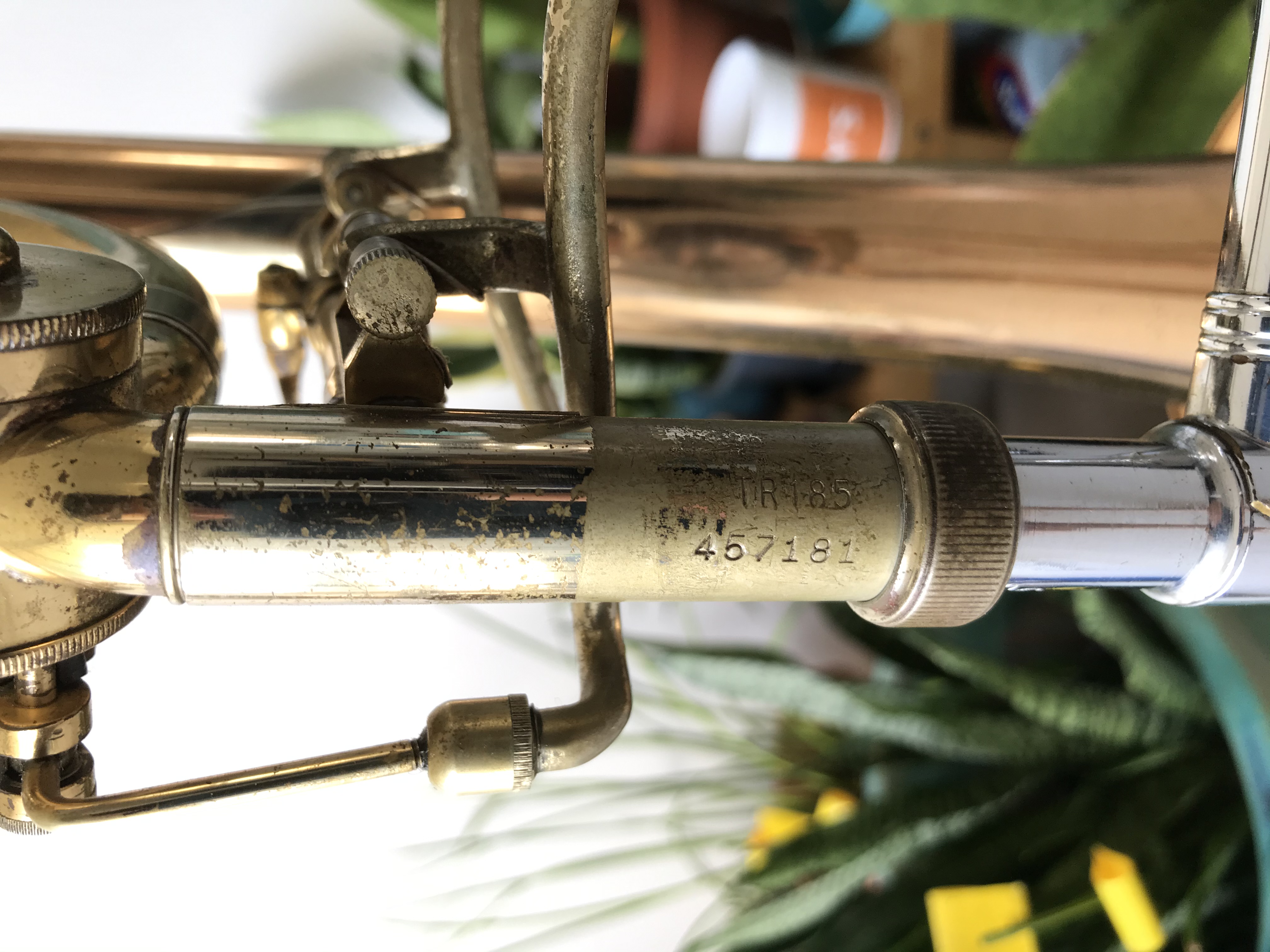
[URL=https://imgbox.com/VFNKeZu7]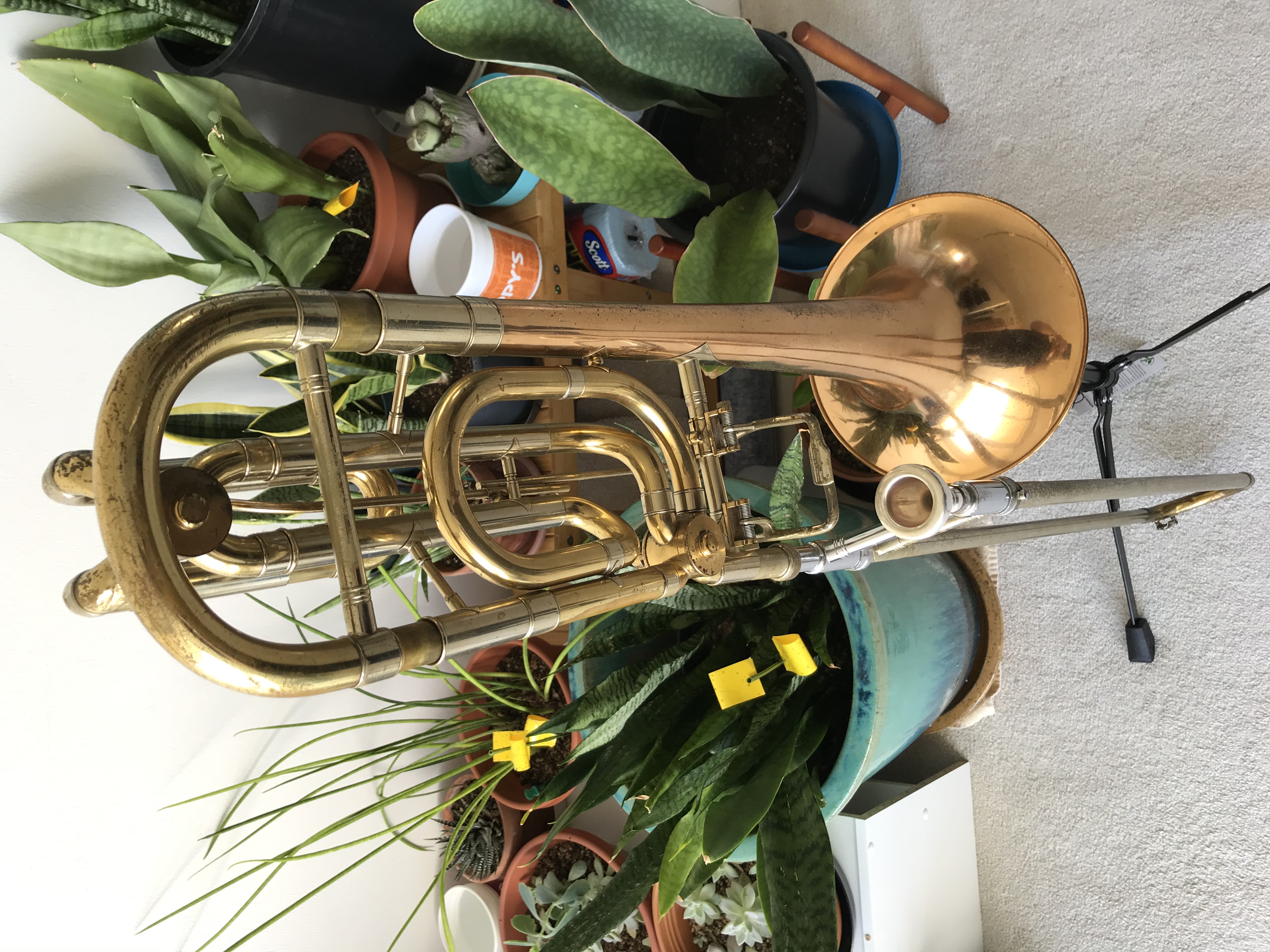
[URL=https://imgbox.com/3Nciguq4]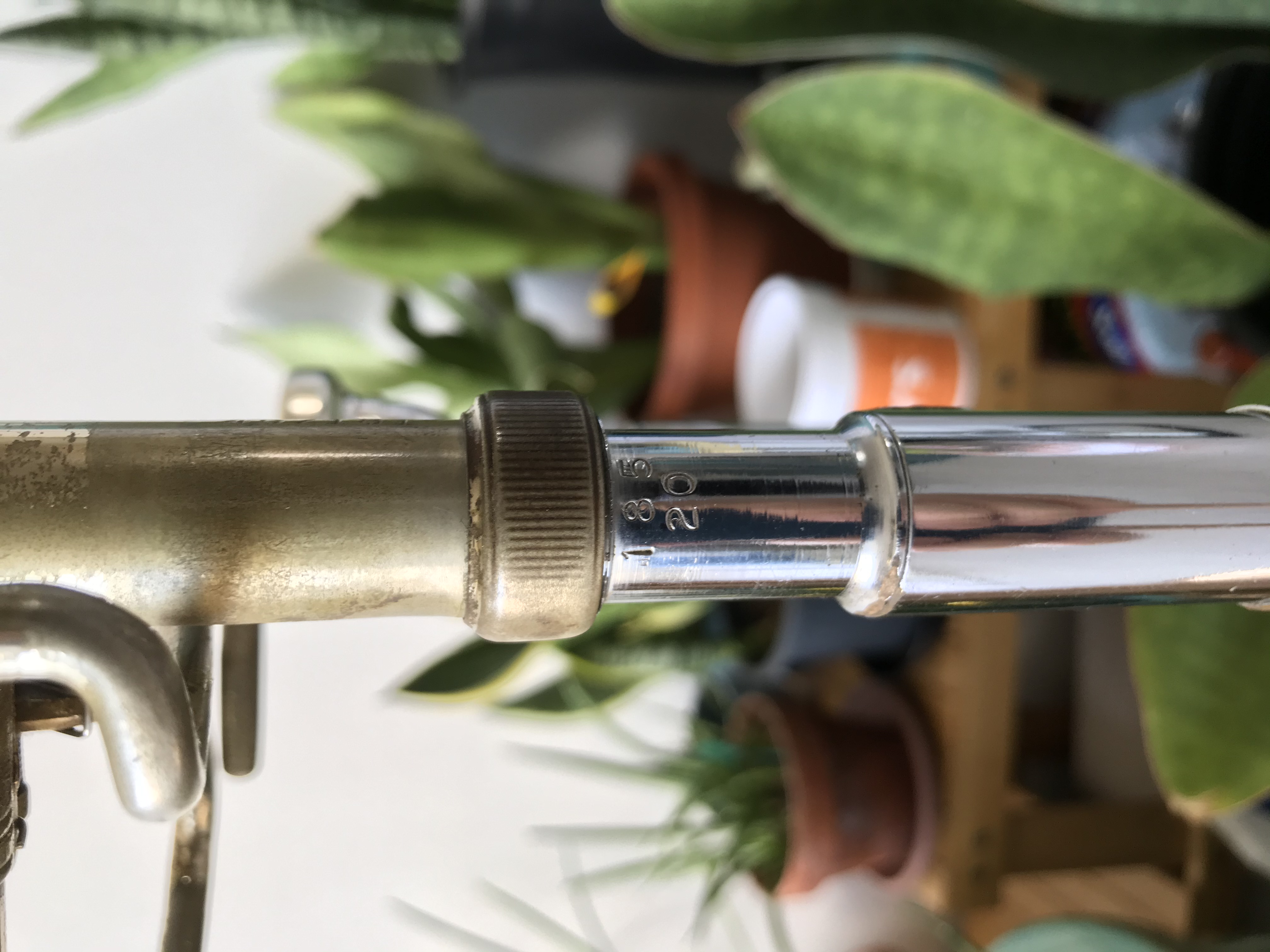
Picked up a TR185 with the second rotor this morning and am hoping the shipping time won’t be too long as it’s coming international. Excited to receive the horn as I’ve never played a Holton bass before.[/quote]
I'm hoping one day in the future I can find me a TR185 and my wife won't kick me out for getting another trombone. Would love to see some pictures and hear your thoughts on the one you picked up once you get some time with it!
</QUOTE>
Horn arrived today from Japan via DHL. It arrived rather quickly considering it was an international package and was shipped out on the 28th of August. Anyways, here’s some photos. This one has a 9 3/8” bell and will be sent to my local tech for a chem cleaning once they open back up. Slides and valves seem fine, but I’m sure it’ll be better once my tech goes through it. It does have a small repair on the bell where it looks like it was previously creased. Even then, I got this horn at a heck of a price so I’m a happy camper!
- imsevimse
- Posts: 1765
- Joined: Apr 29, 2018
Congratulations! :good:
I can see it has the optional second valve in Eb that slts in the tuningslide of the first valve; what I've heard labelled as "birds nest". I don't know if this is the correct nomenclature though? I think it is a good name that describes that configuration.
One of my TR185 is like that. The other is converted to use the middle finger with the second valve and also uses a D-slide. Those two conversions are good to make it a lot easier to play and more usable. Then it can compete with any other double valve horn.
I said earlier I could not see why I would need to use the factitious notes on a double. Well, I had forgotten about this one.
When I play a horn where the triggers are so old fashion and so difficult to switch between then the factitious notes are also a savoir on the double. That second valve solves my problem with loud long sustained C's and B's but fast switching between valves are nearly impossible.
If I have to switch fast back and fourth between triggers, like B, D, B, D in sixteenth then the factitious note for B is the solution. The original trigger system of the TR185 is really terrible for a fast switch. With a little bit of "factitious notes" it is a very nice horn and can be very usable even in original setup.
/Tom
I can see it has the optional second valve in Eb that slts in the tuningslide of the first valve; what I've heard labelled as "birds nest". I don't know if this is the correct nomenclature though? I think it is a good name that describes that configuration.
One of my TR185 is like that. The other is converted to use the middle finger with the second valve and also uses a D-slide. Those two conversions are good to make it a lot easier to play and more usable. Then it can compete with any other double valve horn.
I said earlier I could not see why I would need to use the factitious notes on a double. Well, I had forgotten about this one.
When I play a horn where the triggers are so old fashion and so difficult to switch between then the factitious notes are also a savoir on the double. That second valve solves my problem with loud long sustained C's and B's but fast switching between valves are nearly impossible.
If I have to switch fast back and fourth between triggers, like B, D, B, D in sixteenth then the factitious note for B is the solution. The original trigger system of the TR185 is really terrible for a fast switch. With a little bit of "factitious notes" it is a very nice horn and can be very usable even in original setup.
/Tom