How to restore a silver trombone?
- darklordofapathy
- Posts: 5
- Joined: Mar 04, 2023
I recently inherited a Conn silver valve trombone, I believe it was made in 1918 based on the serial number, that my great grandmother used to play. It hasn't been used in probably 40 years. I checked the valves and they're slow but don't have hard spots. The solder joint on one of the braces is broken and has been tied on with string. Also the instrument is very heavily soiled and tarnished.
I'd like to be able to fix the brace and clean the trombone without losing a lot of the patina. Is there a way I can do that at home? I'm very mechanically inclined and I thought about silver soldering it myself. As far as the patina I feel like if I used a damp cloth, too much of the patina would come off with the dirt.
I've included some pictures. Your advice would be greatly appreciated!
Best regards,
--H
The album:
[url]https://photos.app.goo.gl/Yi66ERqcarAa5XFf6
Photos:
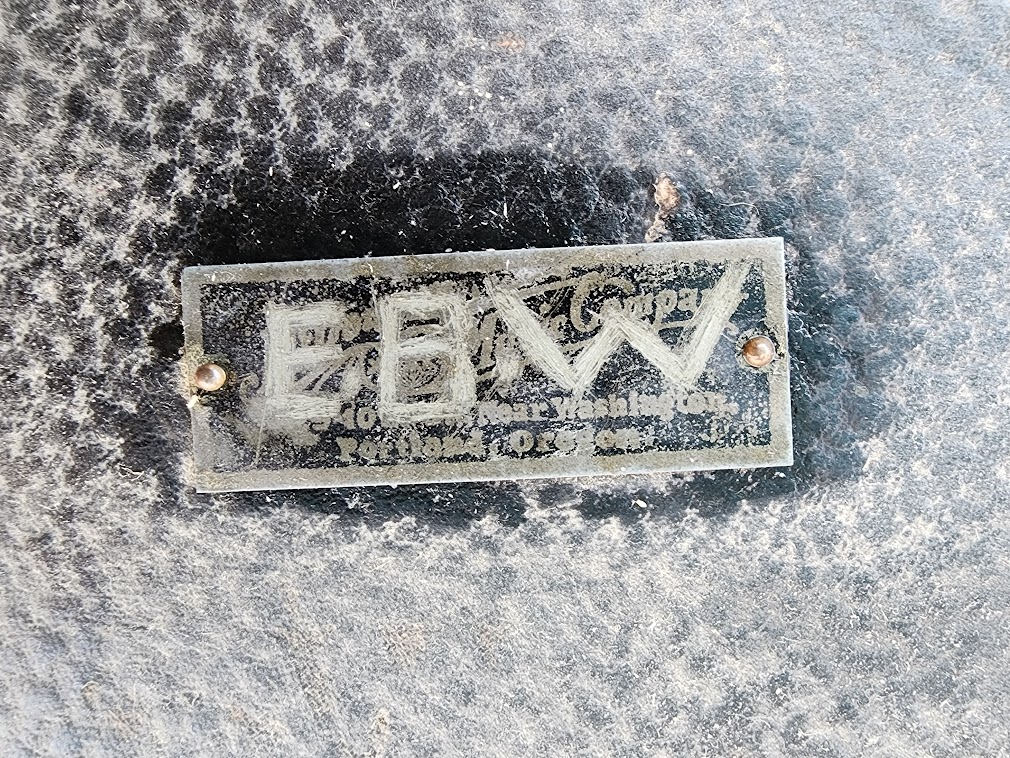


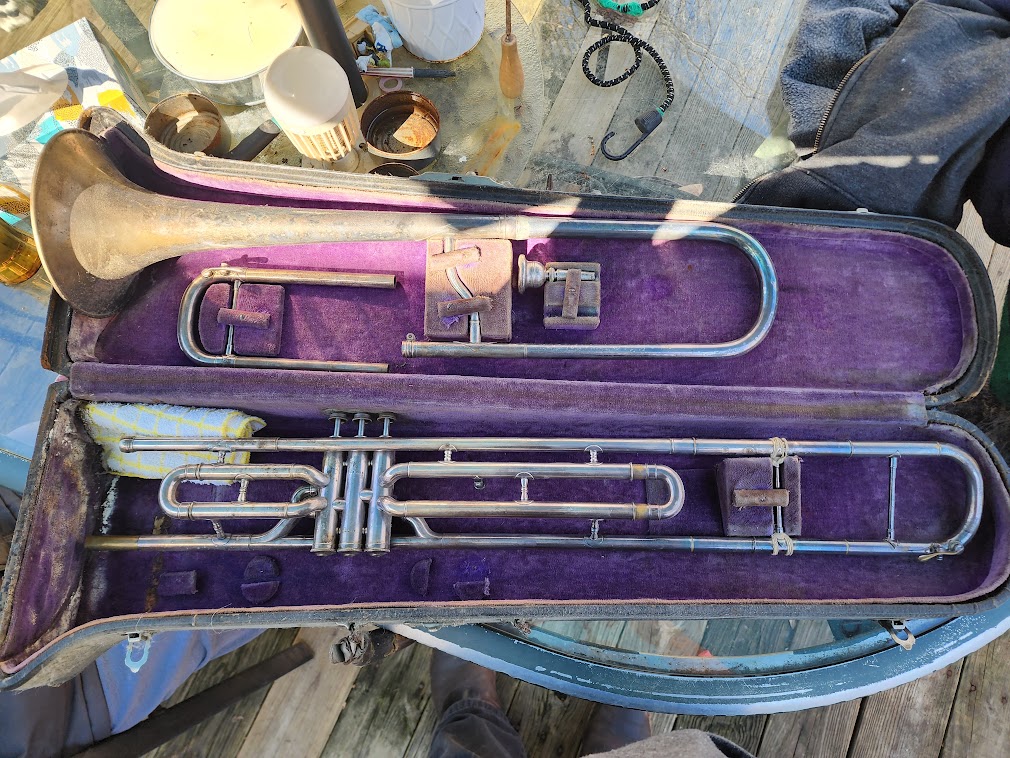
I'd like to be able to fix the brace and clean the trombone without losing a lot of the patina. Is there a way I can do that at home? I'm very mechanically inclined and I thought about silver soldering it myself. As far as the patina I feel like if I used a damp cloth, too much of the patina would come off with the dirt.
I've included some pictures. Your advice would be greatly appreciated!
Best regards,
--H
The album:
Photos:
- Doug_Elliott
- Posts: 4155
- Joined: Mar 22, 2018
I have a Conn Eb alto valve trombone that looks exactly like it and by the serial number it's just a little newer.
DO NOT do any soldering on it yourself unless you really know what you're doing with brass instruments. There are different kinds of solder used in different places, for a reason.
There's a method of removing silver tarnish involving hot water, baking soda, and aluminum foil, that works really well but you have to submerge it on top of the aluminum foil. The black sulfur tarnish transfers to the foil, and you don't lose any of the silver like you would with polishing.
DO NOT do any soldering on it yourself unless you really know what you're doing with brass instruments. There are different kinds of solder used in different places, for a reason.
There's a method of removing silver tarnish involving hot water, baking soda, and aluminum foil, that works really well but you have to submerge it on top of the aluminum foil. The black sulfur tarnish transfers to the foil, and you don't lose any of the silver like you would with polishing.
- DougHulme
- Posts: 558
- Joined: Apr 27, 2018
Just to emphasise what Doug just said and by way of illustration, Silver Solder melts at a much higher temerature than the silver plating so before you could solder it the plating would have melted. You almost certainly want 'soft solder' for that job which has a much higher lead content and therefore lower melting point than the plating - get a tech to do it its only a 5 minute job... Doug
- darklordofapathy
- Posts: 5
- Joined: Mar 04, 2023
Thanks Dougs!
I'll look and see if there's a repair shop around here.
I'll look and see if there's a repair shop around here.
- tbonesullivan
- Posts: 1959
- Joined: Jul 02, 2019
If you want to keep that tarnished patina, cleaning with a damp cloth and maybe some dish detergent shouldn't affect it, unless you really go to town.
If it needs a solder repair, as others have said, I would leave that to professionals. You can possibly also have it serviced but definitely let them know that you don't want it chem cleaned, because that would take the tarnish right off.
If it needs a solder repair, as others have said, I would leave that to professionals. You can possibly also have it serviced but definitely let them know that you don't want it chem cleaned, because that would take the tarnish right off.
- darklordofapathy
- Posts: 5
- Joined: Mar 04, 2023
I'm up in the air about whether or not to remove the tarnish. On one hand I think it would be nice to show it's age, but on the other hand, I think it would look great cleaned up. From what I have been able to find out, it seems the silver plating on the pre 1920 instruments was more satin or matte finished. So figuring out how to clean it without polishing might be a chore.
I'm wiped some dust off with a damp tissue and it seemed to take off some of the tarnish but not all. I may do that for now and then make a final decision later.
side note: I can't find a model number anywhere on it. I measured the bell and it's 7" diameter. The only markings besides the engraving is the serial number, patented below that, and the valve numbering.
I'm wiped some dust off with a damp tissue and it seemed to take off some of the tarnish but not all. I may do that for now and then make a final decision later.
side note: I can't find a model number anywhere on it. I measured the bell and it's 7" diameter. The only markings besides the engraving is the serial number, patented below that, and the valve numbering.
- BGuttman
- Posts: 7368
- Joined: Mar 22, 2018
Conn model numbers don't appear until 1919 and yours is clearly older than that.
According to the Conn Loyalist serial number list your horn dates to 1918. I believe those horns were the New Wonder models.
This image from Conn Loyalist should look a lot like yours (It's a 4G New Wonder from 1920):
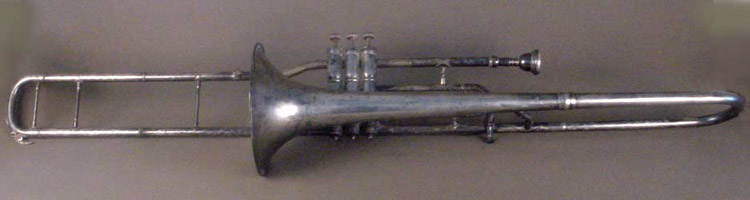
According to the Conn Loyalist serial number list your horn dates to 1918. I believe those horns were the New Wonder models.
This image from Conn Loyalist should look a lot like yours (It's a 4G New Wonder from 1920):
- Doug_Elliott
- Posts: 4155
- Joined: Mar 22, 2018
I already said how to remove the tarnish -. Look it up if you don't believe me. I've done it and it works, especially on matte finish it's by far the best way.
- CharlieB
- Posts: 434
- Joined: Mar 29, 2018
The horn is silver plate over brass.
From the pictures, it looks like it has three problems: surface tarnished silver, exposed brass areas, and tarnished brass under the silver plate. Doug's aluminum foil, hot water and baking soda method works great for cleaning up the silver plate. You'd need to submerge the horn. More info about that here:
<LINK_TEXT text="https://www.armandhammer.com/articles/h ... ish-silver">https://www.armandhammer.com/articles/how-to-polish-silver</LINK_TEXT>
Once the silver is clean you can decide how to deal with the brass. if you plan to play the horn, you don't want green hands and shirt collars. :biggrin:
From the pictures, it looks like it has three problems: surface tarnished silver, exposed brass areas, and tarnished brass under the silver plate. Doug's aluminum foil, hot water and baking soda method works great for cleaning up the silver plate. You'd need to submerge the horn. More info about that here:
<LINK_TEXT text="https://www.armandhammer.com/articles/h ... ish-silver">https://www.armandhammer.com/articles/how-to-polish-silver</LINK_TEXT>
Once the silver is clean you can decide how to deal with the brass. if you plan to play the horn, you don't want green hands and shirt collars. :biggrin:
- darklordofapathy
- Posts: 5
- Joined: Mar 04, 2023
I'm definitely going to play it.
Doug: I'm not comfortable with submerging it, inside the bell, where some gold looking coating ends, it's green and I don't want to make it worse. Also there's some poor looking repairs that I spotted (globby solder) so I think I'll have a pro look at it.
I found a music/repair shop nearby that I'm going to take it to. The name is Shivelbine's I'm not sure if they're a chain or privately owned, but it looks like they've been around for a long time.
Doug: I'm not comfortable with submerging it, inside the bell, where some gold looking coating ends, it's green and I don't want to make it worse. Also there's some poor looking repairs that I spotted (globby solder) so I think I'll have a pro look at it.
I found a music/repair shop nearby that I'm going to take it to. The name is Shivelbine's I'm not sure if they're a chain or privately owned, but it looks like they've been around for a long time.
- CharlieB
- Posts: 434
- Joined: Mar 29, 2018
- Doug_Elliott
- Posts: 4155
- Joined: Mar 22, 2018
It won't hurt the gold wash and it probably won't take off the green either. All it does is remove silver tarnish without affecting the silver itself.
- darklordofapathy
- Posts: 5
- Joined: Mar 04, 2023
Thanks for the info, Doug, I really appreciate it!