Think that leather guard is protecting your finish?
- brassmedic
- Posts: 1447
- Joined: Dec 14, 2018
Think again. :eek:
<ATTACHMENT filename="20240209_134125.jpg" index="1">[attachment=1]20240209_134125.jpg</ATTACHMENT>
<ATTACHMENT filename="20240209_134145.jpg" index="0">[attachment=0]20240209_134145.jpg</ATTACHMENT>
<ATTACHMENT filename="20240209_134125.jpg" index="1">
<ATTACHMENT filename="20240209_134145.jpg" index="0">
- Doug_Elliott
- Posts: 4155
- Joined: Mar 22, 2018
I have never understood the fascination with grips covers.
- Matt_K
- Posts: 4809
- Joined: Mar 21, 2018
Grip, definitely not. Maybe I have small hands, but I find all of them uncomfortably large.
- Posaunus
- Posts: 5018
- Joined: Mar 23, 2018
The tannins in many leather products can really do a number on certain finishes. :horror: Will almost certainly promote silver tarnish. I avoid leather touching anything except for gold plate (mouthpieces).
- bassclef
- Posts: 337
- Joined: Mar 23, 2018
I've been using the Leather Specialties left hand guards for way more than a decade on all of my horns.
While I do have the body chemistry which eats through horns faster than normal, I primarily use them for increased grip. Without them, I find that a little perspiration causes the horn to start slipping out of my grip during long passages and therefore causing both some embouchure problems as well as increased strain from using extra strength to try to keep the horn from moving in my hand.
My grips come off every year or two when I take the horns in for professional cleaning and I have never seen anything remotely resembling that photo above! Looks like that grip hasn't been removed for more than a decade, maybe closer to two!
While I do have the body chemistry which eats through horns faster than normal, I primarily use them for increased grip. Without them, I find that a little perspiration causes the horn to start slipping out of my grip during long passages and therefore causing both some embouchure problems as well as increased strain from using extra strength to try to keep the horn from moving in my hand.
My grips come off every year or two when I take the horns in for professional cleaning and I have never seen anything remotely resembling that photo above! Looks like that grip hasn't been removed for more than a decade, maybe closer to two!
- ghmerrill
- Posts: 2193
- Joined: Apr 02, 2018
It depends on the type of lacquer -- and possibly on the way the leather was tanned. I had leather guards on one tuba for about 20 years, and have had a leather guard on my euph for over 10. But those horns had modern epoxy lacquer. I did check under the guards a couple of times, but there was absolutely no sign of a problem. I make my own guards and always used to use leather, but moved about 10 years ago (for my tuba and my trombones) to using that fairly heavy "drawer liner" (or shelf liner) available in a lot of places like Lowes, Home Depot, Amazon, etc. It's the same stuff I use for cleaning/servicing pads for instruments and firearms. Very easy to use, very flexible, and relatively inexpensive, and impervious to just about everything. Also totally waterproof. In terms of fastening it on, I just use super glue. Not to the instrument! -- but to itself. :roll: That avoids having to punch holes and make some kind of stitching. If/when I should need to take it off, I just cut it off. I've made patterns of the pieces, and so I just make new pieces from the patterns and glue them on (again -- NOT to the instrument!). I think it even has a noticeably better feel to it than leather does -- and it's neither rough nor slippery, and doesn't stain.
- Macbone1
- Posts: 501
- Joined: Oct 01, 2019
[quote="Doug Elliott"]I have never understood the fascination with grips covers.[/quote]
I have an Olds Opera (bought used) that is absolutely pitted at all contact points. The metal itself is corroded; otherwise a decent looking horn. I use leather guards to hide the ugliness and to prevent further wear. Think of all the wear that could have been avoided if the original owner had bought some guards.
Also, during military service overseas, saw a fine player in a Russian army band who had a Holton 69. The slide grip/cork barrel brace was corroded all the way through to the hollow inside. His slide handle wasn't much better. The rest of the horn was fine.
I have an Olds Opera (bought used) that is absolutely pitted at all contact points. The metal itself is corroded; otherwise a decent looking horn. I use leather guards to hide the ugliness and to prevent further wear. Think of all the wear that could have been avoided if the original owner had bought some guards.
Also, during military service overseas, saw a fine player in a Russian army band who had a Holton 69. The slide grip/cork barrel brace was corroded all the way through to the hollow inside. His slide handle wasn't much better. The rest of the horn was fine.
- ghmerrill
- Posts: 2193
- Joined: Apr 02, 2018
Often this is also a function of the degree of acidity of the player's perspiration. I remember that when I started playing saxophone in the 6th grade, my hand sweat was degrading the finish on the old Buescher sax my parents were renting for me. And the same thing happened with the (new) Conn Artiste tenor that we got later. You used to see a bunch of trumpet players using a handkerchief in the left hand to hold the horn -- and this wasn't just to mop their brows. A good friend that I played with in a combo in high school was one of these -- with his Bach Strad trumpet. He also had one of the worst cases of acne that I've ever seen. I never (decades later) had any problems with any of my tubas or trombones -- but by then a lot of makers had moved to the epoxy finishes -- or at least to finishes more resistant to perspiration chemistry.
- harrisonreed
- Posts: 6479
- Joined: Aug 17, 2018
The guards definitely can protect your collar from bass trombone valve oil. And from a raw brass neck pipe turning the collar green. And your hands from the raw nickel smell from the slide grip on a 3B.
They're supposed to protect your horn from you?? I got that wrong, I guess, lol!
They're supposed to protect your horn from you?? I got that wrong, I guess, lol!
- ghmerrill
- Posts: 2193
- Joined: Apr 02, 2018
[quote="harrisonreed"]They're supposed to protect your horn from you?? I got that wrong, I guess, lol![/quote]
I think valved instrument players may be a little more sensitive to that perspective. And on valved instruments it is also more a matter of grip vs. slip (especially on large tubas and 3+1 euphs). At least for me, it can make quite a difference between constantly wrestling with the instrument vs. achieving a comfortable and neutral playing position -- which is not a problem I have on trombone (at least not one that a "guard" can help).
I think valved instrument players may be a little more sensitive to that perspective. And on valved instruments it is also more a matter of grip vs. slip (especially on large tubas and 3+1 euphs). At least for me, it can make quite a difference between constantly wrestling with the instrument vs. achieving a comfortable and neutral playing position -- which is not a problem I have on trombone (at least not one that a "guard" can help).
- brassmedic
- Posts: 1447
- Joined: Dec 14, 2018
[quote="Macbone1"]<QUOTE author="Doug Elliott" post_id="234583" time="1708325456" user_id="51">
I have never understood the fascination with grips covers.[/quote]
I have an Olds Opera (bought used) that is absolutely pitted at all contact points. The metal itself is corroded; otherwise a decent looking horn. I use leather guards to hide the ugliness and to prevent further wear. Think of all the wear that could have been avoided if the original owner had bought some guards.
</QUOTE>
Looking at the pictures I posted, would you say the leather guard prevented corrosion?
I have never understood the fascination with grips covers.[/quote]
I have an Olds Opera (bought used) that is absolutely pitted at all contact points. The metal itself is corroded; otherwise a decent looking horn. I use leather guards to hide the ugliness and to prevent further wear. Think of all the wear that could have been avoided if the original owner had bought some guards.
</QUOTE>
Looking at the pictures I posted, would you say the leather guard prevented corrosion?
- Macbone1
- Posts: 501
- Joined: Oct 01, 2019
Looking at the pictures I posted, would you say the leather guard prevented corrosion?
I don't have an explanation for that. I just know that they seem to work okay for me
- elmsandr
- Posts: 1373
- Joined: Mar 23, 2018
I mean, we don’t know what the scenario in this horn was before the guard was on? Was it super nasty and that is why the guard was applied? (That said, I would guess it was fine with some lacquer wear before the grip was attached.)
I don’t know, I don’t have these issues with the ones that I’ve been using on about a dozen slides over 30 years… I’d say this is operator error. You can’t give the horn a bath with them and expect that to not do something stupid. And they are mainly there so my hands don’t stink after playing horns that are 40+ years old and mostly raw anyway.
Cheers,
Andy
I don’t know, I don’t have these issues with the ones that I’ve been using on about a dozen slides over 30 years… I’d say this is operator error. You can’t give the horn a bath with them and expect that to not do something stupid. And they are mainly there so my hands don’t stink after playing horns that are 40+ years old and mostly raw anyway.
Cheers,
Andy
- LeTromboniste
- Posts: 1634
- Joined: Apr 11, 2018
The guards can definitely trap moisture against the brass if the moisture-wicking layer is absent or saturated, and corrode brass. A colleague with extremely acidic sweat (his hands were always dark green after playing sessions before he put guards on) removed his (non-lined) guards once in the middle of rehearsal, and the horn looked like the pictures above.
I have very non-acidic hands, to the point where the friction from manipulating the slide polishes the brass more than I oxidize it – where my fingers brush against the lower slide tube is polished bright, only the areas that are just occasionally touched have heavier patina, and if my horn sits untouched for a while, the next time I play fingers on my slide hand will go black, rather than green or blue. Yet my bass sackbut has some fairly bad oxidation where the leather sling/strap I use wraps around the brace, surely from trapped moisture.
I have very non-acidic hands, to the point where the friction from manipulating the slide polishes the brass more than I oxidize it – where my fingers brush against the lower slide tube is polished bright, only the areas that are just occasionally touched have heavier patina, and if my horn sits untouched for a while, the next time I play fingers on my slide hand will go black, rather than green or blue. Yet my bass sackbut has some fairly bad oxidation where the leather sling/strap I use wraps around the brace, surely from trapped moisture.
- Posaunus
- Posts: 5018
- Joined: Mar 23, 2018
So many variables -
:idk:
- Body chemistry
- Leather type
- Leather tanning procedure / residue
- Lacquer type and condition
- Underlying metal composition
- Usage and hygiene history
- ...
:idk:
- brassmedic
- Posts: 1447
- Joined: Dec 14, 2018
[quote="Posaunus"]So many variables -
:idk:[/quote]
So you think people are taking all that into consideration when they install a leather guard?
- Body chemistry
- Leather type
- Leather tanning procedure / residue
- Lacquer type and condition
- Underlying metal composition
- Usage and hygiene history
- ...
:idk:[/quote]
So you think people are taking all that into consideration when they install a leather guard?
- Posaunus
- Posts: 5018
- Joined: Mar 23, 2018
[quote="brassmedic"]<QUOTE author="Posaunus" post_id="234941" time="1708634771" user_id="158">
So many variables -
:idk:[/quote]
So you think people are taking all that into consideration when they install a leather guard?
</QUOTE>
Of course not. We (many of us) are just following a trend, or looking for a quick fix. Until something happens! :shuffle:
So many variables -
- Body chemistry
- Leather type
- Leather tanning procedure / residue
- Lacquer type and condition
- Underlying metal composition
- Usage and hygiene history
- ...
:idk:[/quote]
So you think people are taking all that into consideration when they install a leather guard?
</QUOTE>
Of course not. We (many of us) are just following a trend, or looking for a quick fix. Until something happens! :shuffle:
- elmsandr
- Posts: 1373
- Joined: Mar 23, 2018
[quote="brassmedic"]<QUOTE author="Posaunus" post_id="234941" time="1708634771" user_id="158">
So many variables -
:idk:[/quote]
So you think people are taking all that into consideration when they install a leather guard?
</QUOTE>
No… people are idiots. But I also don’t generally blame the wrench when somebody strips a bolt.
The leather guard can protect the finish, but it can also damage it if not used or maintained properly. Just like a wrench can strip a screw head. Note for any leather grip manufacturers…. Let’s use something other than laces? Make it easier to get on and off. I much prefer my neck guards that are Velcro, but that would need to be a bit different on the slide to provide a robust grip.
Cheers,
Andy
So many variables -
- Body chemistry
- Leather type
- Leather tanning procedure / residue
- Lacquer type and condition
- Underlying metal composition
- Usage and hygiene history
- ...
:idk:[/quote]
So you think people are taking all that into consideration when they install a leather guard?
</QUOTE>
No… people are idiots. But I also don’t generally blame the wrench when somebody strips a bolt.
The leather guard can protect the finish, but it can also damage it if not used or maintained properly. Just like a wrench can strip a screw head. Note for any leather grip manufacturers…. Let’s use something other than laces? Make it easier to get on and off. I much prefer my neck guards that are Velcro, but that would need to be a bit different on the slide to provide a robust grip.
Cheers,
Andy
- harrisonreed
- Posts: 6479
- Joined: Aug 17, 2018
<ATTACHMENT filename="giphy.gif" index="0">[attachment=0]giphy.gif</ATTACHMENT>
- brassmedic
- Posts: 1447
- Joined: Dec 14, 2018
[quote="elmsandr"]
The leather guard can protect the finish, but it can also damage it if not used or maintained properly. Just like a wrench can strip a screw head.[/quote]
What is the proper maintenance and usage routine for a leather slide grip, that you feel people aren't following?
The leather guard can protect the finish, but it can also damage it if not used or maintained properly. Just like a wrench can strip a screw head.[/quote]
What is the proper maintenance and usage routine for a leather slide grip, that you feel people aren't following?
- elmsandr
- Posts: 1373
- Joined: Mar 23, 2018
[quote="brassmedic"]<QUOTE author="elmsandr" post_id="235028" time="1708710067" user_id="147">
The leather guard can protect the finish, but it can also damage it if not used or maintained properly. Just like a wrench can strip a screw head.[/quote]
What is the proper maintenance and usage routine for a leather slide grip, that you feel people aren't following?
</QUOTE>
Take it off once every now and then. Don’t let it get wet and nasty. The leather specialties wraps have a layer of plastic in the middle… if you get moisture under there, it isn’t getting out unless you take the grip off.
Cheers,
Andy
The leather guard can protect the finish, but it can also damage it if not used or maintained properly. Just like a wrench can strip a screw head.[/quote]
What is the proper maintenance and usage routine for a leather slide grip, that you feel people aren't following?
</QUOTE>
Take it off once every now and then. Don’t let it get wet and nasty. The leather specialties wraps have a layer of plastic in the middle… if you get moisture under there, it isn’t getting out unless you take the grip off.
Cheers,
Andy
- whitbey
- Posts: 654
- Joined: Mar 23, 2018
I have this plastic wire covering stuff I put on the tube that my fingers pull against.
It gives, so it has real cushion. and air gets in the the tube, so there is not rot.
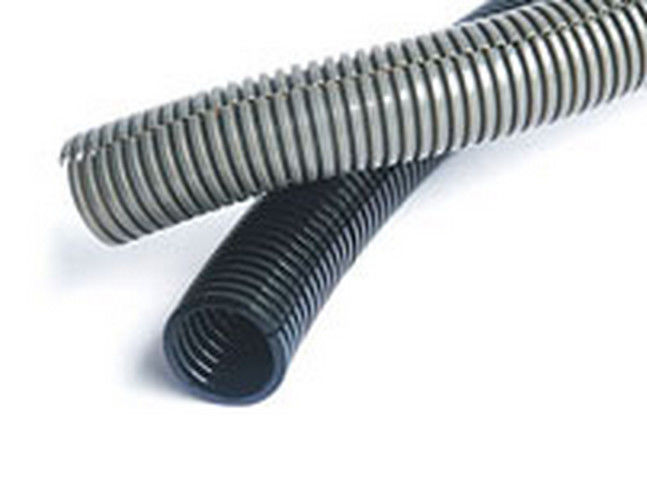
It gives, so it has real cushion. and air gets in the the tube, so there is not rot.
- Blabberbucket
- Posts: 305
- Joined: Oct 09, 2022
Lacquer is not meant to be a permanent protective layer on the metals of your instrument. It is simply meant to preserve the temporary shine of a color buff that is appealing to the "shiny monkey brain" part of your mind. Metal will corrode through contact with sweat and acid. Lacquer will do very little to slow that.
Leather guards trap moisture between the leather and the lacquer/metal and accelerate the wear.
Leather guards trap moisture between the leather and the lacquer/metal and accelerate the wear.