What features have the most effect on timbre?
- Reedman1
- Posts: 310
- Joined: Apr 14, 2018
Speaking specifically about instruments, not about mouthpieces or technique:
Which aspects of a trombone have the greatest effect on timbre? Bore size, bell flare, overall weight, outer slide composition and weight, or the materials used to make the horn? I know bell materials and leadpipe materials have discernible effects - for example, red brass bells add warmth, silver leadpipes increase clarity at the expense of warmth. Bigger horns have a fuller sound than smaller ones. But some smaller horns have a pretty warm, or dark, sound...
I'm sure many of you have some well-informed thoughts. What do you say?
Which aspects of a trombone have the greatest effect on timbre? Bore size, bell flare, overall weight, outer slide composition and weight, or the materials used to make the horn? I know bell materials and leadpipe materials have discernible effects - for example, red brass bells add warmth, silver leadpipes increase clarity at the expense of warmth. Bigger horns have a fuller sound than smaller ones. But some smaller horns have a pretty warm, or dark, sound...
I'm sure many of you have some well-informed thoughts. What do you say?
- mgladdish
- Posts: 155
- Joined: Oct 10, 2021
I have no idea. E.g. I've spoken to people who say silver bells brighten the sound, others that it makes it more mellow.
I've been meaning to get around to measuring it for ages. I.e. with an identical recording setup, record a bunch of single notes. First with different embouchures to produce various different tones - bright, dark, furry, airy, direct, fizzy, etc. And then with different instruments and/or components. Then the differences can be measured. I'm far from convinced any two people mean the same thing when talking about tone or timbre, and I'd love to have something tangible I can point to to meaningully demonstrate the difference.
I've been meaning to get around to measuring it for ages. I.e. with an identical recording setup, record a bunch of single notes. First with different embouchures to produce various different tones - bright, dark, furry, airy, direct, fizzy, etc. And then with different instruments and/or components. Then the differences can be measured. I'm far from convinced any two people mean the same thing when talking about tone or timbre, and I'd love to have something tangible I can point to to meaningully demonstrate the difference.
- Burgerbob
- Posts: 6327
- Joined: Apr 23, 2018
Honestly? Too hard a question to really answer. It's not so simple (as someone that has never built an instrument).
- Reedman1
- Posts: 310
- Joined: Apr 14, 2018
[quote="JohnL"]It's the squishy part just before the mouthpiece.[/quote]
Once again: Specifically about the instrument, NOT about mouthpiece or technique.
The next one who mentions technique gets a free ride to practicing two-way false pedal to altissimo leaps on a manufacturer’s accessory 12C.
Once again: Specifically about the instrument, NOT about mouthpiece or technique.
The next one who mentions technique gets a free ride to practicing two-way false pedal to altissimo leaps on a manufacturer’s accessory 12C.
- Reedman1
- Posts: 310
- Joined: Apr 14, 2018
[quote="Burgerbob"]Honestly? Too hard a question to really answer. It's not so simple (as someone that has never built an instrument).[/quote]
But you’ve played hundreds of them!
But you’ve played hundreds of them!
- WilliamLang
- Posts: 636
- Joined: Nov 22, 2019
Some good food for thought that Dave Finlayson shared with me - the closer something is to the face the more difference it'll make. So mouthpiece/leadpipe/slide/valve/bell (though I would personally put bell in front of valve) would be one way to answer your question.
And yes the player makes the most difference - don't threaten me with a good time (practicing crazy stuff)
And yes the player makes the most difference - don't threaten me with a good time (practicing crazy stuff)
- atopper333
- Posts: 377
- Joined: Mar 09, 2022
[quote="Reedman1"]The next one who mentions technique gets a free ride to practicing two-way false pedal to altissimo leaps on a manufacturer’s accessory 12C.[/quote]
I’ll see your 12c and raise you a poorly copied Wick 12cs!
All kidding aside…I’ve played a number of horns and am by no means a professional, but my experience is no matter what I pick up I mostly sound…like me. Some instruments make things feel easier to do, and some have much better response for me as a player.
There is a difference in some though. My wife does say I sound brighter on my King 4BF than on my Conn 88H where the Conn sounds more mellow. Could it be the bell material? Maybe. I’d like to think the taper on the bell has more of an effect than the actual material used in construction. I’ve been able to play a bit on a Conn 88H bell marked with a ‘9’ and while the bell does feel heavier, it sounds pretty close to the Elkhart bell on my 88H which was not all that different from the early Abilene Conn 88H I had. Now the difference in feedback to me while playing is quite different between the horns.
I noticed a drastic difference between my King 2B and King Tempo 1305. Changing slides didn’t make much of a difference in how they sounded, but the 1305 sound more full to others listening while the 2B sounded more brassy. Both seemed to be similarly constructed in the bell section with the only difference being weight and that the 1305 was a plated bell, so I think construction does play a part.
I do think WilliamLang makes a great point which makes me realize what I was writing talked about comparing horns of a similar slide construction, leadpipe, bore size, etc.
I think, as mentioned in some previous discussions on the forum, while these elements may cause a difference in timbre, overall the biggest differences come in player feedback as most of those listening may not pick up on the subtle differences between bell construction, bell material, valve, tuning slide material…etc. How much of it comes down to marketing and a perceived change in sounds is definitely a much larger debate! In the end I think the biggest change on the list provided would be the bore size though. I never sound the same on large vs small bore instruments…
I’ll see your 12c and raise you a poorly copied Wick 12cs!
All kidding aside…I’ve played a number of horns and am by no means a professional, but my experience is no matter what I pick up I mostly sound…like me. Some instruments make things feel easier to do, and some have much better response for me as a player.
There is a difference in some though. My wife does say I sound brighter on my King 4BF than on my Conn 88H where the Conn sounds more mellow. Could it be the bell material? Maybe. I’d like to think the taper on the bell has more of an effect than the actual material used in construction. I’ve been able to play a bit on a Conn 88H bell marked with a ‘9’ and while the bell does feel heavier, it sounds pretty close to the Elkhart bell on my 88H which was not all that different from the early Abilene Conn 88H I had. Now the difference in feedback to me while playing is quite different between the horns.
I noticed a drastic difference between my King 2B and King Tempo 1305. Changing slides didn’t make much of a difference in how they sounded, but the 1305 sound more full to others listening while the 2B sounded more brassy. Both seemed to be similarly constructed in the bell section with the only difference being weight and that the 1305 was a plated bell, so I think construction does play a part.
I do think WilliamLang makes a great point which makes me realize what I was writing talked about comparing horns of a similar slide construction, leadpipe, bore size, etc.
I think, as mentioned in some previous discussions on the forum, while these elements may cause a difference in timbre, overall the biggest differences come in player feedback as most of those listening may not pick up on the subtle differences between bell construction, bell material, valve, tuning slide material…etc. How much of it comes down to marketing and a perceived change in sounds is definitely a much larger debate! In the end I think the biggest change on the list provided would be the bore size though. I never sound the same on large vs small bore instruments…
- Burgerbob
- Posts: 6327
- Joined: Apr 23, 2018
[quote="Reedman1"]<QUOTE author="Burgerbob" post_id="288912" time="1762878423" user_id="3131">
Honestly? Too hard a question to really answer. It's not so simple (as someone that has never built an instrument).[/quote]
But you’ve played hundreds of them!
</QUOTE>
Yes, and I've learned that so few generalizations can be made that they are basically useless.
Honestly? Too hard a question to really answer. It's not so simple (as someone that has never built an instrument).[/quote]
But you’ve played hundreds of them!
</QUOTE>
Yes, and I've learned that so few generalizations can be made that they are basically useless.
- Reedman1
- Posts: 310
- Joined: Apr 14, 2018
[quote="Burgerbob"]<QUOTE author="Reedman1" post_id="288920" time="1762882028" user_id="3067">
But you’ve played hundreds of them![/quote]
Yes, and I've learned that so few generalizations can be made that they are basically useless.
</QUOTE>
That may be so... but manufacturers make some generalizations about all those factors and then dial in the specifics when they go to production. Presumably (I know, not verified) they have a particular sonic character, skill level, comfort level, and budget level in mind when they design and make a new horn, and presumably (ditto) they have some idea of what they're doing.
I'm interested in the sonic character. But you don't have to make any unwelcome generalizations.
But you’ve played hundreds of them![/quote]
Yes, and I've learned that so few generalizations can be made that they are basically useless.
</QUOTE>
That may be so... but manufacturers make some generalizations about all those factors and then dial in the specifics when they go to production. Presumably (I know, not verified) they have a particular sonic character, skill level, comfort level, and budget level in mind when they design and make a new horn, and presumably (ditto) they have some idea of what they're doing.
I'm interested in the sonic character. But you don't have to make any unwelcome generalizations.
- Reedman1
- Posts: 310
- Joined: Apr 14, 2018
[quote="WilliamLang"]Some good food for thought that Dave Finlayson shared with me - the closer something is to the face the more difference it'll make. So mouthpiece/leadpipe/slide/valve/bell (though I would personally put bell in front of valve) would be one way to answer your question.
And yes the player makes the most difference - don't threaten me with a good time (practicing crazy stuff)[/quote]
Curses! Foiled!
Actually, Dave Finlayson's advice is testable, so that's good.
And yes the player makes the most difference - don't threaten me with a good time (practicing crazy stuff)[/quote]
Curses! Foiled!
Actually, Dave Finlayson's advice is testable, so that's good.
- Kbiggs
- Posts: 1768
- Joined: Mar 24, 2018
[quote="WilliamLang"]Some good food for thought that Dave Finlayson shared with me - the closer something is to the face the more difference it'll make. So mouthpiece/leadpipe/slide/valve/bell (though I would personally put bell in front of valve) would be one way to answer your question.
And yes the player makes the most difference - don't threaten me with a good time (practicing crazy stuff)[/quote]
Exactly.
Re: the soft squishy part before the mouthpiece—what the player listens to and copies/emulates greatly affects timbre.
And yes the player makes the most difference - don't threaten me with a good time (practicing crazy stuff)[/quote]
Exactly.
Re: the soft squishy part before the mouthpiece—what the player listens to and copies/emulates greatly affects timbre.
- Reedman1
- Posts: 310
- Joined: Apr 14, 2018
If the soft squishy part (referring, in fact, to the entire person) is so overwhelmingly important, then why do we have so many different sizes of trombone, made with such a variety of materials, and with such a variety of weights? Why don't they all sound exactly the same when played by the same person, and if possible with the same mouthpiece? Why are there a King 2B or a Conn 4H and also a Bach 42B? Why does an Olds Recording, with its relatively small, dual bore, sound (slightly) darker than a 3B?
Of course the player will have a characteristic sound, and will sound about the same on most similar instrument/mouthpiece combinations - but the instrument will have a characteristic timbral tendency, too.
Or no?
Of course the player will have a characteristic sound, and will sound about the same on most similar instrument/mouthpiece combinations - but the instrument will have a characteristic timbral tendency, too.
Or no?
- mbarbier
- Posts: 367
- Joined: May 17, 2018
I've been doing some experiments the last few years with measuring the resonance of unplayed brass instruments and the thing I've found is that bore size and cylindro/conical relationships make the biggest measurable effects. To a wild degree.
For example the difference in wave form between small tenor, large tenor, alto, and bass all on the same overtone series is wildly different. When I put the results into spear it's shockingly different from horns that have relatively similar sizes whereas two large tenors have significantly less variation (though still definitely have it).
Similarly the difference between relatively similar basses that are TIS and regular or a euphonium with a valve down vs not is even bigger cause of the shift in cylindro/conical relations. To the point where they sound like completely different things.
I'm hoping to do more experiments on instruments with very little material deviation to see where it appears, but so far bore size and shape seems to be the biggest factors.
I'm working on organizing it all info coherent research, but right now it's all unusably messy. I'll share when I get it organized. But if you're curious about the sound:
[url]
https://on.soundcloud.com/hKkOjnKd4HC5edUq5m
The first five or so minutes is just unplayed tenor and bass trombone on a Bb overtone series- it's pretty shocking what pitch material an instrument resonates at without the squishy part. though obviously agree with so many other that the squishy part and its brain having the biggest effect, it's been interesting to see what's there without the squishy part.
For example the difference in wave form between small tenor, large tenor, alto, and bass all on the same overtone series is wildly different. When I put the results into spear it's shockingly different from horns that have relatively similar sizes whereas two large tenors have significantly less variation (though still definitely have it).
Similarly the difference between relatively similar basses that are TIS and regular or a euphonium with a valve down vs not is even bigger cause of the shift in cylindro/conical relations. To the point where they sound like completely different things.
I'm hoping to do more experiments on instruments with very little material deviation to see where it appears, but so far bore size and shape seems to be the biggest factors.
I'm working on organizing it all info coherent research, but right now it's all unusably messy. I'll share when I get it organized. But if you're curious about the sound:
https://on.soundcloud.com/hKkOjnKd4HC5edUq5m
The first five or so minutes is just unplayed tenor and bass trombone on a Bb overtone series- it's pretty shocking what pitch material an instrument resonates at without the squishy part. though obviously agree with so many other that the squishy part and its brain having the biggest effect, it's been interesting to see what's there without the squishy part.
- Kbiggs
- Posts: 1768
- Joined: Mar 24, 2018
All excellent points/questions. Of course, material affects sound. I don’t think anyone is denying that.
So, why so many different combinations of bore and bell sizes, mouthpieces, tapers, materials?
Curiosity: humans are always interested in testing limits.
Aesthetics: a multi-colored horn is, for some people, really nice to see. Others, not so much.
Tradition/provenance: In Orchestra XYZ, we play this make and model. In the ABC Orchestra, they play another make and model.
Psychology: The placebo effects is real.
Marketing: Wanna sound like Joe Alessi? Buy his horn. Wanna sound like Michael Davis? Buy his horn. Wanna sound like Christian Lindberg, Marshall Gilkes, George Curran, Blair Bollinger? Buy their horn.
Personal belief: design, composition and manufacture can help a player sound a certain way. Generally speaking, a narrower leadpipe will create a little more resistance, will allow the upper harmonics to be more present, will be easier to produce an “edge” to the sound, might sound more focused, while a wider leadpipe will generally do the opposite. But that’s only 10% (if that) of what “creates” or “makes” or “influences” the sound.
So, why so many different combinations of bore and bell sizes, mouthpieces, tapers, materials?
Curiosity: humans are always interested in testing limits.
Aesthetics: a multi-colored horn is, for some people, really nice to see. Others, not so much.
Tradition/provenance: In Orchestra XYZ, we play this make and model. In the ABC Orchestra, they play another make and model.
Psychology: The placebo effects is real.
Marketing: Wanna sound like Joe Alessi? Buy his horn. Wanna sound like Michael Davis? Buy his horn. Wanna sound like Christian Lindberg, Marshall Gilkes, George Curran, Blair Bollinger? Buy their horn.
Personal belief: design, composition and manufacture can help a player sound a certain way. Generally speaking, a narrower leadpipe will create a little more resistance, will allow the upper harmonics to be more present, will be easier to produce an “edge” to the sound, might sound more focused, while a wider leadpipe will generally do the opposite. But that’s only 10% (if that) of what “creates” or “makes” or “influences” the sound.
- JTeagarden
- Posts: 625
- Joined: Feb 24, 2025
Trombone is amazingly colorable in comparison to a euphonium, say, that I think trombonists are all quite adept at changing our airstream to achieve the sound we want, mostly without too much thought, so every trombone I play sounds dark, but Bachs work best.
Nearly any set-up sounds like a version of me, some just make the job much easier.
Nearly any set-up sounds like a version of me, some just make the job much easier.
- atopper333
- Posts: 377
- Joined: Mar 09, 2022
[quote="Reedman1"]If the soft squishy part (referring, in fact, to the entire person) is so overwhelmingly important, then why do we have so many different sizes of trombone, made with such a variety of materials, and with such a variety of weights? Why don't they all sound exactly the same when played by the same person, and if possible with the same mouthpiece? Why are there a King 2B or a Conn 4H and also a Bach 42B? Why does an Olds Recording, with its relatively small, dual bore, sound (slightly) darker than a 3B?
Of course the player will have a characteristic sound, and will sound about the same on most similar instrument/mouthpiece combinations - but the instrument will have a characteristic timbral tendency, too.
Or no?[/quote]
I would venture to say…yes, there are different models with similar specs just like we have many different models of full sized trucks which all do a relatively similar function.
Marketing/Capitalism has a pull on this, everyone wants a piece of the action and to make a buck. Some do it for profit, others do it for art, some yet cause they know they can put a better product out there that’ll last longer and play better than others.
On the flip side, there are so many variations which I would compare to the variations inherent in embouchure difference which I would same comes back again to feedback to the player…
But also yes, different construction methods must have a different effect on sound from 4H to 2B to Bach 12, etc. Why seems always up to an endless debate. I would tend to think the structural changes in an instrument, leadpipe, end crook design, bell taper, weight of materials utilized in construction, all of these physical change logically should have more of an effect than just using different sheet materials, but the placebo effect is also very real. Now add in mouthpieces and suddenly there are even more endless possibilities and add endless more variables in regards to player/instrument relationship…
Of course the player will have a characteristic sound, and will sound about the same on most similar instrument/mouthpiece combinations - but the instrument will have a characteristic timbral tendency, too.
Or no?[/quote]
I would venture to say…yes, there are different models with similar specs just like we have many different models of full sized trucks which all do a relatively similar function.
Marketing/Capitalism has a pull on this, everyone wants a piece of the action and to make a buck. Some do it for profit, others do it for art, some yet cause they know they can put a better product out there that’ll last longer and play better than others.
On the flip side, there are so many variations which I would compare to the variations inherent in embouchure difference which I would same comes back again to feedback to the player…
But also yes, different construction methods must have a different effect on sound from 4H to 2B to Bach 12, etc. Why seems always up to an endless debate. I would tend to think the structural changes in an instrument, leadpipe, end crook design, bell taper, weight of materials utilized in construction, all of these physical change logically should have more of an effect than just using different sheet materials, but the placebo effect is also very real. Now add in mouthpieces and suddenly there are even more endless possibilities and add endless more variables in regards to player/instrument relationship…
- brassmedic
- Posts: 1447
- Joined: Dec 14, 2018
Taper. Why doesn't a trombone sound like a french horn? Why doesn't a bass trombone sound like a tuba? They used to make double bell euphoniums with a trombone taper and a euphonium taper, because of the stark contrast in timbre. They never made a double leadpipe euphonium, because the difference is much more subtle. (But as someone who makes custom leadpipes: more subtle but not negligible.)
- Reedman1
- Posts: 310
- Joined: Apr 14, 2018
Now we're beginning to get somewhere.
I imagine that softer brass will dampen some frequencies and reduce brilliance and projection compared to harder brass. Carbon fiber is almost completely inert, and seems not to dampen the sound energy, but is still (in my limited experience) a little less brilliant. That might be because the sound doesn't radiate backwards from the bell as easily.
I don't know how much difference different alloys make, or where one alloy is used and not another.
I have heard that a heavier instrument will produce a beefier tone, but that sounds unlikely to me. I am ready to get educated, though.
Press on! (Please)
I imagine that softer brass will dampen some frequencies and reduce brilliance and projection compared to harder brass. Carbon fiber is almost completely inert, and seems not to dampen the sound energy, but is still (in my limited experience) a little less brilliant. That might be because the sound doesn't radiate backwards from the bell as easily.
I don't know how much difference different alloys make, or where one alloy is used and not another.
I have heard that a heavier instrument will produce a beefier tone, but that sounds unlikely to me. I am ready to get educated, though.
Press on! (Please)
- jonathanharker
- Posts: 139
- Joined: Aug 14, 2022
Here's my unpopular take:
The biggest factor determining timbre? For blind-tested, repeatably discernible differences out the front? Bore profile. That is, the combination of bore diameter and rate of expansion, throughout the instrument, from the leadpipe (or possibly the mouthpiece shank) to the bell. Most other things like materials, weight, bracing, arrangement or presence/absence of valves, and so on can definitely change how it feels to the player, how easy or hard things are to play, and even how it sounds locally to the player, given bone conduction, nodal vibration, bell ring, and other factors that may or may not make it out to the audience.
Cliff Bevan in The Tuba Family mentions experiments done with bells made of concrete, wood, and possibly cheese(!) that groups of brass players were unable to be reliably differentiate blind. This tracks with Murray Campbell and Arnold Myers' various[url=https://www.ph.ed.ac.uk/people/murray-campbell/publications]published findings from investigating brass instrument acoustics at U. of Edinburgh, and similar results from blind testing done with audiophile hifi equipment and wine tasting show that much of our experience is actually going on inside our heads.
The biggest factor determining timbre? For blind-tested, repeatably discernible differences out the front? Bore profile. That is, the combination of bore diameter and rate of expansion, throughout the instrument, from the leadpipe (or possibly the mouthpiece shank) to the bell. Most other things like materials, weight, bracing, arrangement or presence/absence of valves, and so on can definitely change how it feels to the player, how easy or hard things are to play, and even how it sounds locally to the player, given bone conduction, nodal vibration, bell ring, and other factors that may or may not make it out to the audience.
Cliff Bevan in The Tuba Family mentions experiments done with bells made of concrete, wood, and possibly cheese(!) that groups of brass players were unable to be reliably differentiate blind. This tracks with Murray Campbell and Arnold Myers' various
- LeTromboniste
- Posts: 1634
- Joined: Apr 11, 2018
Definitely internal geometry. Including the mouthpiece (one of the single most impactful element). Bore profile: presence or absence of venturi, conical vs cylindrical ratio and placement of conical portions, steps in bore, rate of expansion and bell taper...
Modern mouthpiece designs vary in size and small details, but they are all variations on the same shape, so they don't always make as huge a difference. But if you compared cup and throat geometries that are fundamentally different (e.g. purely conical cup vs completely hemispherical cup, sudden throat with sharp edges vs completely smooth transition from cup to backbore), you'd get immense timbre differences without changing anything in the instrument itself.
Modern mouthpiece designs vary in size and small details, but they are all variations on the same shape, so they don't always make as huge a difference. But if you compared cup and throat geometries that are fundamentally different (e.g. purely conical cup vs completely hemispherical cup, sudden throat with sharp edges vs completely smooth transition from cup to backbore), you'd get immense timbre differences without changing anything in the instrument itself.
- Burgerbob
- Posts: 6327
- Joined: Apr 23, 2018
[quote="jonathanharker"]Here's my unpopular take:
The biggest factor determining timbre? For blind-tested, repeatably discernible differences out the front? Bore profile.[/quote]
This I can agree with.
The biggest factor determining timbre? For blind-tested, repeatably discernible differences out the front? Bore profile.[/quote]
This I can agree with.
- harrisonreed
- Posts: 6479
- Joined: Aug 17, 2018
What affects timber? Climate and water and soil conditions. Also let the wildfires run their course naturally.
But seriously, electrical tape some small weights to the throat of your bell as tight as you can. That will affect the timbre enough to give you an idea about how at least one aspect in an instrument's design affects the timbre. And you can easily take it off again. With no harm done.
There are plenty of reversible changes you can do to your own instrument for not a lot of money that will help you see what affects the timbre *for you*. There are so many designs out there because everyone is different. I think, to at least some extent, for example in large bore world, that the differences in different designs are to get different types of players to generally the same place.
But seriously, electrical tape some small weights to the throat of your bell as tight as you can. That will affect the timbre enough to give you an idea about how at least one aspect in an instrument's design affects the timbre. And you can easily take it off again. With no harm done.
There are plenty of reversible changes you can do to your own instrument for not a lot of money that will help you see what affects the timbre *for you*. There are so many designs out there because everyone is different. I think, to at least some extent, for example in large bore world, that the differences in different designs are to get different types of players to generally the same place.
- Posaunus
- Posts: 5018
- Joined: Mar 23, 2018
And on another level, I wonder how much the acoustic environment (room size, shape, materials - e.g., practice room vs jazz club vs concert hall vs outdoors, ...) may subtly affect perceived timbre. :idk:
- Burgerbob
- Posts: 6327
- Joined: Apr 23, 2018
[quote="Posaunus"]And on another level, I wonder how much the acoustic environment (room size, shape, materials - e.g., practice room vs jazz club vs concert hall vs outdoors, ...) may subtly affect perceived timbre. :idk:[/quote]
Massively
Massively
- LeTromboniste
- Posts: 1634
- Joined: Apr 11, 2018
[quote="Posaunus"]And on another level, I wonder how much the acoustic environment (room size, shape, materials - e.g., practice room vs jazz club vs concert hall vs outdoors, ...) may subtly affect perceived timbre. :idk:[/quote]
A ton! Timbre is determined in great part by the overtone content of the sound. Any material reflects some frequencies and absorbs others. Lower frequencies diffract around obstacles more than higher frequencies. Different surface materials and shapes favour some frequencies over others, so the environment affects the overtone content of the sound the listener receives (and therefore the perceived timbre).
A ton! Timbre is determined in great part by the overtone content of the sound. Any material reflects some frequencies and absorbs others. Lower frequencies diffract around obstacles more than higher frequencies. Different surface materials and shapes favour some frequencies over others, so the environment affects the overtone content of the sound the listener receives (and therefore the perceived timbre).
- harrisonreed
- Posts: 6479
- Joined: Aug 17, 2018
[quote="Posaunus"]And on another level, I wonder how much the acoustic environment (room size, shape, materials - e.g., practice room vs jazz club vs concert hall vs outdoors, ...) may subtly affect perceived timbre. :idk:[/quote]
You really play the room, not the trombone, is what I say. And you pick equipment to suit the room you play in. None of my equipment sounds good in small practice rooms, but I never play in them so it's okay.
You really play the room, not the trombone, is what I say. And you pick equipment to suit the room you play in. None of my equipment sounds good in small practice rooms, but I never play in them so it's okay.
- timothy42b
- Posts: 1812
- Joined: Mar 27, 2018
[quote="mbarbier"]The first five or so minutes is just unplayed tenor and bass trombone on a Bb overtone series- it's pretty shocking what pitch material an instrument resonates at without the squishy part. though obviously agree with so many other that the squishy part and its brain having the biggest effect, it's been interesting to see what's there without the squishy part.[/quote]
If I play a note away from where the trombone wants to resonate, It will force my squishy part to comply.
I've never seen that sensation or the neurological component discussed.
If I play a note away from where the trombone wants to resonate, It will force my squishy part to comply.
I've never seen that sensation or the neurological component discussed.
- MitchellAcoustics
- Posts: 3
- Joined: Oct 18, 2024
[quote="jonathanharker"]Here's my unpopular take:
The biggest factor determining timbre? For blind-tested, repeatably discernible differences out the front? Bore profile. That is, the combination of bore diameter and rate of expansion, throughout the instrument, from the leadpipe (or possibly the mouthpiece shank) to the bell. Most other things like materials, weight, bracing, arrangement or presence/absence of valves, and so on can definitely change how it feels to the player, how easy or hard things are to play, and even how it sounds locally to the player, given bone conduction, nodal vibration, bell ring, and other factors that may or may not make it out to the audience.
Cliff Bevan in The Tuba Family mentions experiments done with bells made of concrete, wood, and possibly cheese(!) that groups of brass players were unable to be reliably differentiate blind. This tracks with Murray Campbell and Arnold Myers' various[url=https://www.ph.ed.ac.uk/people/murray-campbell/publications]published findings from investigating brass instrument acoustics at U. of Edinburgh, and similar results from blind testing done with audiophile hifi equipment and wine tasting show that much of our experience is actually going on inside our heads.[/quote]
I'd agree here. When I was doing my first degree in acoustics, I did my dissertation on the effects of mouthpiece dimensions on timbre. In my review, it was pretty clear the consensus from acousticians at the time was the shape of the instrument is really all that matters. It wasn't uncommon to see an attitude that musicians' constant debates over material were mostly irrelevant and they should just listen to us scientists when we tell them what's acoustically important. This might be out of date with the field since it was a decade ago and my research has taken me out of musical acoustics since.
But my suspicion is part of this is due to acoustics (and musical acoustics particularly) still being a bit of an underdeveloped field. I honestly think the field was just limited and isn't able to scientifically describe all the things that go into a musician's perception of the timbre of instruments. So bore and profile definitely have the biggest impact, but when some acousticians flippantly claim material differences are just in the players heads, it's more of a reflection of the limitations of acoustical science. We just can't fully characterise and investigate everything else that determines this acoustically yet.
Interestingly, my mouthpiece study showed results in conflict with the literature. Generally it's accepted that the resonance (or popping) frequency of the mouthpiece has the biggest impact on timbre. But my (admittedly flawed which is why I've never tried to publish that work) results showed it was actually the cup volume. And that a larger cup volume actually resulted in more presence of higher harmonics in the final sound, rather than more low harmonics as expected. My hypothesis is this is because my study was done with real players, rather than the more controlled mechanical lips. When I asked them all to play at mf, larger cup volumes required more energy to resonate at the same perceived dynamic. So the players were effectively playing at a higher dynamic, which itself introduced more high frequencies to the timbre. So large volume cup = brighter timbre, specifically because of how players reacted to the feedback from the instrument. When musical acoustics experiments are done purely with mechanical lips, they may get more consistent results and a better understanding of the physics, but the music of an instrument isn't a physical result, it's the result of the relationship between player and the acoustical and physical properties of the instrument. That relationship can actually change how the instrument as a musical object actually behaves.
The biggest factor determining timbre? For blind-tested, repeatably discernible differences out the front? Bore profile. That is, the combination of bore diameter and rate of expansion, throughout the instrument, from the leadpipe (or possibly the mouthpiece shank) to the bell. Most other things like materials, weight, bracing, arrangement or presence/absence of valves, and so on can definitely change how it feels to the player, how easy or hard things are to play, and even how it sounds locally to the player, given bone conduction, nodal vibration, bell ring, and other factors that may or may not make it out to the audience.
Cliff Bevan in The Tuba Family mentions experiments done with bells made of concrete, wood, and possibly cheese(!) that groups of brass players were unable to be reliably differentiate blind. This tracks with Murray Campbell and Arnold Myers' various
I'd agree here. When I was doing my first degree in acoustics, I did my dissertation on the effects of mouthpiece dimensions on timbre. In my review, it was pretty clear the consensus from acousticians at the time was the shape of the instrument is really all that matters. It wasn't uncommon to see an attitude that musicians' constant debates over material were mostly irrelevant and they should just listen to us scientists when we tell them what's acoustically important. This might be out of date with the field since it was a decade ago and my research has taken me out of musical acoustics since.
But my suspicion is part of this is due to acoustics (and musical acoustics particularly) still being a bit of an underdeveloped field. I honestly think the field was just limited and isn't able to scientifically describe all the things that go into a musician's perception of the timbre of instruments. So bore and profile definitely have the biggest impact, but when some acousticians flippantly claim material differences are just in the players heads, it's more of a reflection of the limitations of acoustical science. We just can't fully characterise and investigate everything else that determines this acoustically yet.
Interestingly, my mouthpiece study showed results in conflict with the literature. Generally it's accepted that the resonance (or popping) frequency of the mouthpiece has the biggest impact on timbre. But my (admittedly flawed which is why I've never tried to publish that work) results showed it was actually the cup volume. And that a larger cup volume actually resulted in more presence of higher harmonics in the final sound, rather than more low harmonics as expected. My hypothesis is this is because my study was done with real players, rather than the more controlled mechanical lips. When I asked them all to play at mf, larger cup volumes required more energy to resonate at the same perceived dynamic. So the players were effectively playing at a higher dynamic, which itself introduced more high frequencies to the timbre. So large volume cup = brighter timbre, specifically because of how players reacted to the feedback from the instrument. When musical acoustics experiments are done purely with mechanical lips, they may get more consistent results and a better understanding of the physics, but the music of an instrument isn't a physical result, it's the result of the relationship between player and the acoustical and physical properties of the instrument. That relationship can actually change how the instrument as a musical object actually behaves.
- davdud101
- Posts: 96
- Joined: Dec 06, 2023
[quote="mbarbier"]I've been doing some experiments the last few years with measuring the resonance of unplayed brass instruments and the thing I've found is that bore size and cylindro/conical relationships make the biggest measurable effects.
[url]
https://on.soundcloud.com/hKkOjnKd4HC5edUq5m[/quote]
Seems like the link to the recording is dead. I definitely would love to hear this.
https://on.soundcloud.com/hKkOjnKd4HC5edUq5m[/quote]
Seems like the link to the recording is dead. I definitely would love to hear this.
- mbarbier
- Posts: 367
- Joined: May 17, 2018
[quote="davdud101"]<QUOTE author="mbarbier" post_id="288940" time="1762893911" user_id="3300">
I've been doing some experiments the last few years with measuring the resonance of unplayed brass instruments and the thing I've found is that bore size and cylindro/conical relationships make the biggest measurable effects.
[url]
https://on.soundcloud.com/hKkOjnKd4HC5edUq5m[/quote]
Seems like the link to the recording is dead. I definitely would love to hear this.
</QUOTE>
Apologies- had to move some things around for a release. It should now be track two on the below link (entitled teeth of the second range).
[url]https://on.soundcloud.com/b8ww3aYxs81TawPWDH
I've been doing some experiments the last few years with measuring the resonance of unplayed brass instruments and the thing I've found is that bore size and cylindro/conical relationships make the biggest measurable effects.
https://on.soundcloud.com/hKkOjnKd4HC5edUq5m[/quote]
Seems like the link to the recording is dead. I definitely would love to hear this.
</QUOTE>
Apologies- had to move some things around for a release. It should now be track two on the below link (entitled teeth of the second range).
- GabrielRice
- Posts: 1496
- Joined: Mar 23, 2018
[quote="WilliamLang"]Some good food for thought that Dave Finlayson shared with me - the closer something is to the face the more difference it'll make. So mouthpiece/leadpipe/slide/valve/bell (though I would personally put bell in front of valve) would be one way to answer your question.[/quote]
With all respect to Dave Finlayson, I helped people pick out modular instruments for a living for five years, and I can't agree with this statement at all. It's a pretty good guideline for dialing in the feel of an instrument - the feedback to the player - but not really the sound for the listener. And even then, you can change the feel of an instrument significantly by changing bells.
All else being equal, different bells can sound radically different. All else being equal, different leadpipes make more subtle differences in sound - sometimes noticeable to the listener, sometimes not - and bigger differences in feel. Likewise for slide dimensions and materials and valve choices, and those are usually more noticeable to the listener than small leadpipe adjustments.
With all respect to Dave Finlayson, I helped people pick out modular instruments for a living for five years, and I can't agree with this statement at all. It's a pretty good guideline for dialing in the feel of an instrument - the feedback to the player - but not really the sound for the listener. And even then, you can change the feel of an instrument significantly by changing bells.
All else being equal, different bells can sound radically different. All else being equal, different leadpipes make more subtle differences in sound - sometimes noticeable to the listener, sometimes not - and bigger differences in feel. Likewise for slide dimensions and materials and valve choices, and those are usually more noticeable to the listener than small leadpipe adjustments.
- imsevimse
- Posts: 1765
- Joined: Apr 29, 2018
[quote="WilliamLang"]Some good food for thought that Dave Finlayson shared with me - the closer something is to the face the more difference it'll make. So mouthpiece/leadpipe/slide/valve/bell (though I would personally put bell in front of valve) would be one way to answer your question.
And yes the player makes the most difference - don't threaten me with a good time (practicing crazy stuff)[/quote]
I agree. As a guy who owns too many horns , leadpipes and mouthpieces I totally agree. It's funny how a horn that you just think is real bad can change into a dimond with another leadpipe/mouthpiece. Some sell their mouthpieces. I say keep them, they might be just what you want later on.
/Tom
And yes the player makes the most difference - don't threaten me with a good time (practicing crazy stuff)[/quote]
I agree. As a guy who owns too many horns , leadpipes and mouthpieces I totally agree. It's funny how a horn that you just think is real bad can change into a dimond with another leadpipe/mouthpiece. Some sell their mouthpieces. I say keep them, they might be just what you want later on.
/Tom
- Sesquitone
- Posts: 291
- Joined: Apr 25, 2022
[quote="JohnL"]It's the squishy part just before the mouthpiece.[/quote]
This is generally true for all wind instruments. The very thorough study of seven identically built flutes made from a wide variety of materials showed that three different professional players each had their own very specific frequency-spectrum 'signature' that hardly varied between any of the different materials used. Each diagram shows recorded sound energy of a chromatic scale played at what the player considered to be constant effort. The study did not specifically address timbre, but these individual signatures hint at how each player's 'tone' would sound—regardless of the particular instrument used.
See: "Silver, Gold, Platinum—and the Sound of the Flute" Extended version (2020), by Widholm, Linortner, Kausel and Berttsch.
.
This is generally true for all wind instruments. The very thorough study of seven identically built flutes made from a wide variety of materials showed that three different professional players each had their own very specific frequency-spectrum 'signature' that hardly varied between any of the different materials used. Each diagram shows recorded sound energy of a chromatic scale played at what the player considered to be constant effort. The study did not specifically address timbre, but these individual signatures hint at how each player's 'tone' would sound—regardless of the particular instrument used.
See: "Silver, Gold, Platinum—and the Sound of the Flute" Extended version (2020), by Widholm, Linortner, Kausel and Berttsch.
.
- harrisonreed
- Posts: 6479
- Joined: Aug 17, 2018
I still hold that the bell is the absolute least interesting thing about the trombone. It does have a bit of an effect on the feedback but changing a bell out doesn't have any kind of *exciting* effect on playing the trombone.
The whole system has just gotta work together.
The whole system has just gotta work together.
- LeTromboniste
- Posts: 1634
- Joined: Apr 11, 2018
[quote="harrisonreed"]I still hold that the bell is the absolute least interesting thing about the trombone. It does have a bit of an effect on the feedback but changing a bell out doesn't have any kind of *exciting* effect on playing the trombone.
The whole system has just gotta work together.[/quote]
Depends what you change about the bell. Just material? yeah I'm with you. But bell profile? If, using exactly the same mouthpiece and the same slide, instead of this bell
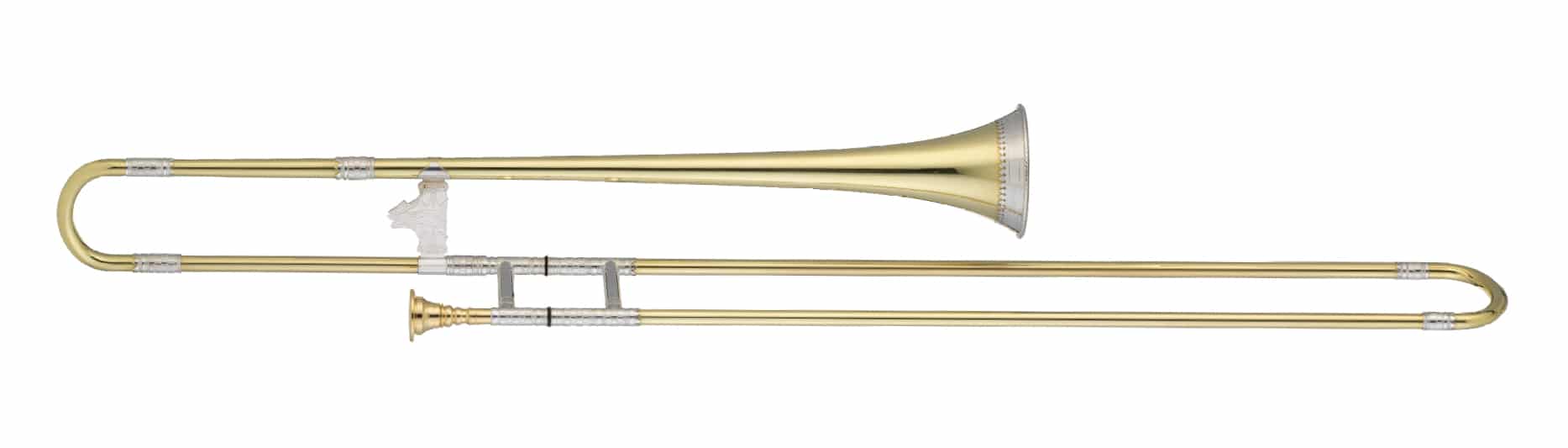
I put this bell onto my slide
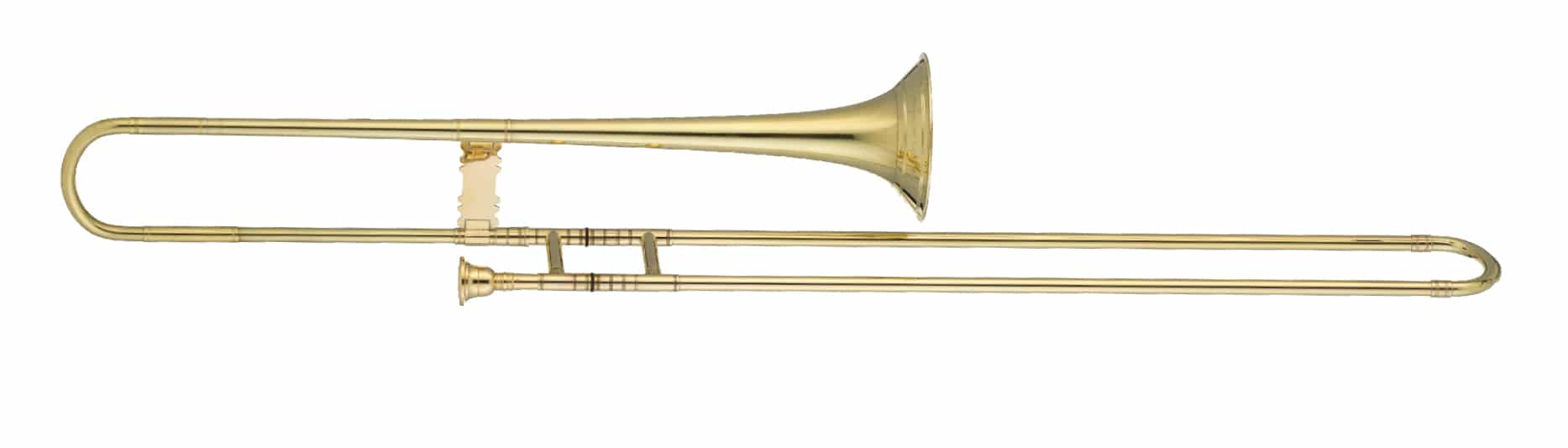
it plays like a completely different different instrument. Much more than if I combine the first bell with the second slide (even though the first slide is dual bore .394"-.413" while the second is single bore .421", which is a pretty decent difference)
Of course this is proportionally a bigger change than between most modern bells, but it just illustrates that it's a question of degrees.
The whole system has just gotta work together.[/quote]
Depends what you change about the bell. Just material? yeah I'm with you. But bell profile? If, using exactly the same mouthpiece and the same slide, instead of this bell
I put this bell onto my slide
it plays like a completely different different instrument. Much more than if I combine the first bell with the second slide (even though the first slide is dual bore .394"-.413" while the second is single bore .421", which is a pretty decent difference)
Of course this is proportionally a bigger change than between most modern bells, but it just illustrates that it's a question of degrees.
- harrisonreed
- Posts: 6479
- Joined: Aug 17, 2018
To say nothing of using this bell:
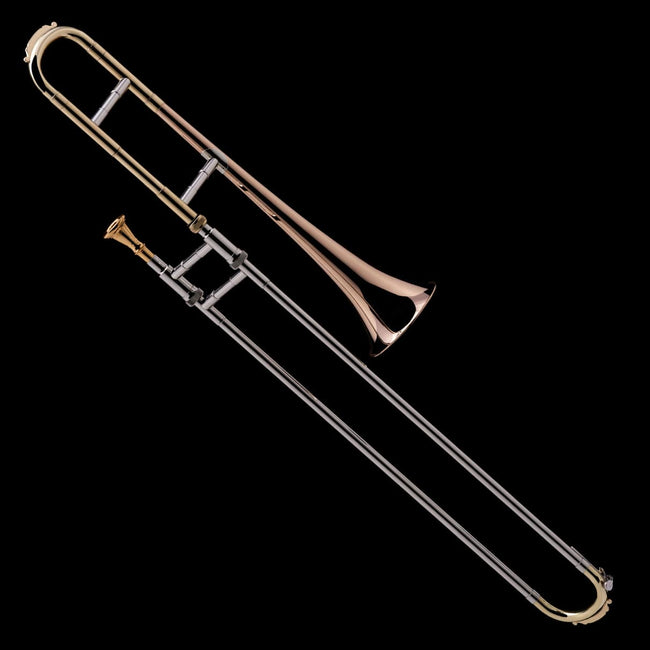
Sure. I'm with you too. If you use a completely different instrument, it will play different. I was talking more about bell construction and materials. A la whatever boutique shop you want to talk about. You spin a bell on the same mandrel but use a different brass or slightly different construction ... It's not really that exciting of a change to me vs a slide crook or lead pipe.
I guess to counter myself, changing those components is a much bigger physical change than changing the bell material on a bell that is otherwise made the same way.
I've seen too many people chasing "the sound" through bells. They gotta play some Mt. Vernon bell or whatever because that's the sound. Brother, sister, you sound like you. Find something easy to play. You can change the timbre yourself, especially if the horn is easy to play.
Sure. I'm with you too. If you use a completely different instrument, it will play different. I was talking more about bell construction and materials. A la whatever boutique shop you want to talk about. You spin a bell on the same mandrel but use a different brass or slightly different construction ... It's not really that exciting of a change to me vs a slide crook or lead pipe.
I guess to counter myself, changing those components is a much bigger physical change than changing the bell material on a bell that is otherwise made the same way.
I've seen too many people chasing "the sound" through bells. They gotta play some Mt. Vernon bell or whatever because that's the sound. Brother, sister, you sound like you. Find something easy to play. You can change the timbre yourself, especially if the horn is easy to play.
- Burgerbob
- Posts: 6327
- Joined: Apr 23, 2018
In my experience, bells make a massive difference. Going from one Corp 50 bell to another on the same chassis was like night and day- both sound and playability.
And before we only talk about Bachs, same thing with a Shires VNY I had for a bit- for me, a total dud with the 5Y taper bell, amazing with a 7YLW.
And before we only talk about Bachs, same thing with a Shires VNY I had for a bit- for me, a total dud with the 5Y taper bell, amazing with a 7YLW.
- LeTromboniste
- Posts: 1634
- Joined: Apr 11, 2018
[quote="harrisonreed"]To say nothing of using this bell:
Sure. I'm with you too. If you use a completely different instrument, it will play different. I was talking more about bell construction and materials. A la whatever boutique shop you want to talk about. You spin a bell on the same mandrel but use a different brass or slightly different construction ... It's not really that exciting of a change to me vs a slide crook or lead pipe.
I guess to counter myself, changing those components is a much bigger physical change than changing the bell material on a bell that is otherwise made the same way.
I've seen too many people chasing "the sound" through bells. They gotta play some Mt. Vernon bell or whatever because that's the sound. Brother, sister, you sound like you. Find something easy to play. You can change the timbre yourself, especially if the horn is easy to play.[/quote]
In my example the biggest change between the two bells is the taper profile, and then the style of rim wire. Otherwise same materials, same techniques (and same person making them), Yes it's a more extreme change than the most typical changes between bells on modern trombone, but it's not like swapping between bells of different taper and diameter is uncommon either. And the point was also that switching between those bells make a bigger difference than switching between the slides, that are also quite different.
And to Aidan's point about even identical bells making a huge difference: I have gone through the process several times of choosing instruments with colleagues and students. There will typically be 3-5 identical bells to choose from and ad many or more slides. The bells always play and sound very different from one another. Our process is we use my instrument as a constant, that luckily has both a very good bell and a very good slide, and we try every bell using my slide, and every slide using my bell, writing down notes and rating them. We then compare notes and can already eliminate most of the options, which usually brings us down to a single clearly better choice for the bell and a couple of options for the slides. It's telling to me that there's always a clear winner for the bell at that stage as they're all clearly different, whereas for slides its more subtle and we can only narrow it down, and then we have to spend a lot of time trying the different slides with the bell we chose to find which combination is best. We do control all the other bells with the best slide(s), and again, the bell that was best with my slide is always clearly the best with every slide, yet the best slide with my bell may or may not be the best slide for the bell we chose. And that's all with bells of the same model, same taper, same size, same materials. You throw in other options, which all have the same taper and size but use different materials and different metal treatments, and again some pretty clear differences in feel and sound for both the listener and player. You switch between chrome-plated nickel silver inners and raw brass inners, and there's for sure a difference too, but really not that big.
With a different maker, we go several times as he builds batches of every component. He always wants us to start with bells, because that's where there's the most variability. We'll try 6-7 "identical" bell flares on his prototype chassis, and they'll play and sound like completely different instruments.
So, yeah I don't think one should chase specific bell materials per se. But the bell overall does make a huge difference on the instrument, and the "closest to the face makes the biggest difference" idea just doesn't match my experience. But I agree the primary choice should be how it plays and feels. I'll always take a bell (or whole instrument) that has great response across the whole range, projects with the least effort and has good intonation, over one that has a slightly nicer sound quality but lacks in those other respects.
Sure. I'm with you too. If you use a completely different instrument, it will play different. I was talking more about bell construction and materials. A la whatever boutique shop you want to talk about. You spin a bell on the same mandrel but use a different brass or slightly different construction ... It's not really that exciting of a change to me vs a slide crook or lead pipe.
I guess to counter myself, changing those components is a much bigger physical change than changing the bell material on a bell that is otherwise made the same way.
I've seen too many people chasing "the sound" through bells. They gotta play some Mt. Vernon bell or whatever because that's the sound. Brother, sister, you sound like you. Find something easy to play. You can change the timbre yourself, especially if the horn is easy to play.[/quote]
In my example the biggest change between the two bells is the taper profile, and then the style of rim wire. Otherwise same materials, same techniques (and same person making them), Yes it's a more extreme change than the most typical changes between bells on modern trombone, but it's not like swapping between bells of different taper and diameter is uncommon either. And the point was also that switching between those bells make a bigger difference than switching between the slides, that are also quite different.
And to Aidan's point about even identical bells making a huge difference: I have gone through the process several times of choosing instruments with colleagues and students. There will typically be 3-5 identical bells to choose from and ad many or more slides. The bells always play and sound very different from one another. Our process is we use my instrument as a constant, that luckily has both a very good bell and a very good slide, and we try every bell using my slide, and every slide using my bell, writing down notes and rating them. We then compare notes and can already eliminate most of the options, which usually brings us down to a single clearly better choice for the bell and a couple of options for the slides. It's telling to me that there's always a clear winner for the bell at that stage as they're all clearly different, whereas for slides its more subtle and we can only narrow it down, and then we have to spend a lot of time trying the different slides with the bell we chose to find which combination is best. We do control all the other bells with the best slide(s), and again, the bell that was best with my slide is always clearly the best with every slide, yet the best slide with my bell may or may not be the best slide for the bell we chose. And that's all with bells of the same model, same taper, same size, same materials. You throw in other options, which all have the same taper and size but use different materials and different metal treatments, and again some pretty clear differences in feel and sound for both the listener and player. You switch between chrome-plated nickel silver inners and raw brass inners, and there's for sure a difference too, but really not that big.
With a different maker, we go several times as he builds batches of every component. He always wants us to start with bells, because that's where there's the most variability. We'll try 6-7 "identical" bell flares on his prototype chassis, and they'll play and sound like completely different instruments.
So, yeah I don't think one should chase specific bell materials per se. But the bell overall does make a huge difference on the instrument, and the "closest to the face makes the biggest difference" idea just doesn't match my experience. But I agree the primary choice should be how it plays and feels. I'll always take a bell (or whole instrument) that has great response across the whole range, projects with the least effort and has good intonation, over one that has a slightly nicer sound quality but lacks in those other respects.
- GabrielRice
- Posts: 1496
- Joined: Mar 23, 2018
I'll say it again.
I did this for a living.
Changing the bell can make an enormous difference in both the timbre and the feel for the player. The more change you make - taper, weight, material, construction, soldered or unsoldered bead, bead material and size - the bigger the difference.
I did this for a living.
Changing the bell can make an enormous difference in both the timbre and the feel for the player. The more change you make - taper, weight, material, construction, soldered or unsoldered bead, bead material and size - the bigger the difference.
- hornbuilder
- Posts: 1384
- Joined: May 02, 2018
Plus 1 to what Gabe said
- harrisonreed
- Posts: 6479
- Joined: Aug 17, 2018
[quote="LeTromboniste"]But I agree the primary choice should be how it plays and feels. I'll always take a bell (or whole instrument) that has great response across the whole range, projects with the least effort and has good intonation, over one that has a slightly nicer sound quality but lacks in those other respects.[/quote]
Yes! <EMOJI seq="1f44d-1f3fc" tseq="1f44d-1f3fc">👍🏼</EMOJI>
Yes! <EMOJI seq="1f44d-1f3fc" tseq="1f44d-1f3fc">👍🏼</EMOJI>
- Kbiggs
- Posts: 1768
- Joined: Mar 24, 2018
<ATTACHMENT filename="IMG_0482.png" index="0">[attachment=0]IMG_0482.png</ATTACHMENT>
This is <I>very</I> interesting. It gives a lot of weight to the adage that no matter what you play, you still sound like yourself…
…and in light of what Gabe said, I’ll have to rethink how my set-up works for me.
This is <I>very</I> interesting. It gives a lot of weight to the adage that no matter what you play, you still sound like yourself…
…and in light of what Gabe said, I’ll have to rethink how my set-up works for me.
- Sesquitone
- Posts: 291
- Joined: Apr 25, 2022
[quote="Kbiggs"]IMG_0482.png
This is <I>very</I> interesting. It gives a lot of weight to the adage that no matter what you play, you still sound like yourself…[/quote]
Here are four more flute-player "signatures". It's probably a fair bet, for example, that Player-5 "sounds a lot like" Player-1 (on any of the instruments).
Although this study addressed only different materials of "identically built" instruments, whereas the current discussion has mainly focussed on the geometry of various components of the trombone, especially bell shapes, it would be interesting to settle the "material debate" for brass instruments by conducting a similarly constructed comparison. One problem may be that "identically built" [meaning the same tools and processes] may not necessarily result in "identical geometry" of brass instruments—because of the way different sheet metals respond. Presumably, in a well-designed (and very well funded) study, this could be accounted for.
.
This is <I>very</I> interesting. It gives a lot of weight to the adage that no matter what you play, you still sound like yourself…[/quote]
Here are four more flute-player "signatures". It's probably a fair bet, for example, that Player-5 "sounds a lot like" Player-1 (on any of the instruments).
Although this study addressed only different materials of "identically built" instruments, whereas the current discussion has mainly focussed on the geometry of various components of the trombone, especially bell shapes, it would be interesting to settle the "material debate" for brass instruments by conducting a similarly constructed comparison. One problem may be that "identically built" [meaning the same tools and processes] may not necessarily result in "identical geometry" of brass instruments—because of the way different sheet metals respond. Presumably, in a well-designed (and very well funded) study, this could be accounted for.
.
- Sesquitone
- Posts: 291
- Joined: Apr 25, 2022
Regarding "problems" causing (unwanted) changes in timbre, apart from pin-hole leaks (or a leaky spit-key) and bad soldering joints, a misaligned valve can have a serious effect. Of course, a "half-valve" position, where the sound-path can split between two air columns of different lengths, results in an uncentered Kazoo-like "tone". A very poorly aligned valve, where there is some (small) internal "leakage" between the two air columns will result in unfocussed "slotting" and lack of clarity to the overtones forming the timbre—i.e. "wide" peaks in the frequency response. But even a very slight misalignment may cause unwanted reflections off sharp edges within the valve, and this can affect timbre and (especially) attack response—because "good" reflections in the full air column are mixed with "bad" reflections from the misaligned valve.
So: check (and if necessary, correct) the precise alignment of your valves.
So: check (and if necessary, correct) the precise alignment of your valves.
- imsevimse
- Posts: 1765
- Joined: Apr 29, 2018
Everyone I’ve talked to experiences differences in sound between trombones when they change components, but at the same time there’s also the belief that no matter what equipment a musician switches to, he will sound more or less the same after a while, regardless of what he played on before. That’s contradictory. I believe that materials and construction have great significance, and that the outcome of a change depends more on what you make of it. If you are advanced and have a clear idea of how you want to sound, you will likely push the instrument in your direction so that you end up sounding the way you did before, because you already had a well-defined concept. Such a musician will always end up sounding similar on whatever he plays after some time.
If, on the other hand, you have a different attitude and let the instrument guide you—if you search for something new and adapt yourself while emphasizing the characteristics that are unique to that particular instrument—then you will probably sound different when you change components. Some players swap parts because they want to move closer to a sound they imagine. If they want a big sound, they might switch to a larger instrument, and to sound even bigger they might choose a dual-bore slide and a large, open leadpipe. They might then choose a big/deep mouthpiece as well. If they feel the sound becomes too spread, they can add a heavy weight to the mouthpiece to get a more focused tone. I imagine many players would sound big with such a setup. For some it would be totally wrong. They choose to sound big on small equipment instead, like Raymond Premru. Others choose large equipment that would be heavy load for most, but are handled with ease and doesn't make them sund very big, like Jay Freeman
A skilled musician can still produce his own sound even on an instrument that isn’t configured to his preferences, but would probably not enjoy an instrument that works against the sound he wants. I tend to switch instruments often, and right now I’m in a period where I bring out different horns and reevaluate them to find the right combination of mouthpiece and leadpipe for each specific trombone. For me, a Bach 11C is my main mouthpiece, but some trombones prefer a Marcinkiewicz Lloyd Uluate (a Bach 12C Mount Vernon copy). Some horns want a Denis Wick weight added to it. I experiment a lot. At the moment it's just the small bores. It takes a few days before I decide on the best combination for a special horn in a special context. When I’ve made my choice, I write it down so I’ll remember it next time.
What this leads me too is it all depends on you, what you want it to be and what kind of a player you are. I don't think everybody can adopt to anything or are prepared to adopt. To me the cheapest and easiest thing to modify for effect is to switch the mouthpiece. Could switch to a deeper or more shallow or/and add a weight to it too for more choices and next is to get a few leadpipes. The Brad Close 32H pipe in cupper is a good one.
/Tom
If, on the other hand, you have a different attitude and let the instrument guide you—if you search for something new and adapt yourself while emphasizing the characteristics that are unique to that particular instrument—then you will probably sound different when you change components. Some players swap parts because they want to move closer to a sound they imagine. If they want a big sound, they might switch to a larger instrument, and to sound even bigger they might choose a dual-bore slide and a large, open leadpipe. They might then choose a big/deep mouthpiece as well. If they feel the sound becomes too spread, they can add a heavy weight to the mouthpiece to get a more focused tone. I imagine many players would sound big with such a setup. For some it would be totally wrong. They choose to sound big on small equipment instead, like Raymond Premru. Others choose large equipment that would be heavy load for most, but are handled with ease and doesn't make them sund very big, like Jay Freeman
A skilled musician can still produce his own sound even on an instrument that isn’t configured to his preferences, but would probably not enjoy an instrument that works against the sound he wants. I tend to switch instruments often, and right now I’m in a period where I bring out different horns and reevaluate them to find the right combination of mouthpiece and leadpipe for each specific trombone. For me, a Bach 11C is my main mouthpiece, but some trombones prefer a Marcinkiewicz Lloyd Uluate (a Bach 12C Mount Vernon copy). Some horns want a Denis Wick weight added to it. I experiment a lot. At the moment it's just the small bores. It takes a few days before I decide on the best combination for a special horn in a special context. When I’ve made my choice, I write it down so I’ll remember it next time.
What this leads me too is it all depends on you, what you want it to be and what kind of a player you are. I don't think everybody can adopt to anything or are prepared to adopt. To me the cheapest and easiest thing to modify for effect is to switch the mouthpiece. Could switch to a deeper or more shallow or/and add a weight to it too for more choices and next is to get a few leadpipes. The Brad Close 32H pipe in cupper is a good one.
/Tom
- harrisonreed
- Posts: 6479
- Joined: Aug 17, 2018
My experience is more in line with that scientific analysis of the same group of players playing a variety of different flutes. I have no doubt they *felt* a significant difference when they were playing, but I also have no doubt that the audience would perceive nearly the same sound coming out of each individual player, regardless of flute used.
This difference in feel might work to change the players approach or even what they are capable of technically, which will change the whole of the end product, but in terms of timbre and tone ... say you were to take a note arbitrarily out of a recording on any given piece of equipment and then you take a sampled slice out of a note to analyze as was done above with the flute ... it would be exactly the same both on the spectrograph and to the audience's ear.
I would argue that on trombone, given 5 players and 5 different makes of trombone, we'd get a graph as seen above. Play an excerpt and slice the same note for every player, on each instrument, and nobody would be able to tell the difference between horns, though possibly different players would be distinguished. But I also think that the overall performance of an excerpt would be different from horn to horn, owing to response and what it takes to get the horn to do what you want it to do.
This difference in feel might work to change the players approach or even what they are capable of technically, which will change the whole of the end product, but in terms of timbre and tone ... say you were to take a note arbitrarily out of a recording on any given piece of equipment and then you take a sampled slice out of a note to analyze as was done above with the flute ... it would be exactly the same both on the spectrograph and to the audience's ear.
I would argue that on trombone, given 5 players and 5 different makes of trombone, we'd get a graph as seen above. Play an excerpt and slice the same note for every player, on each instrument, and nobody would be able to tell the difference between horns, though possibly different players would be distinguished. But I also think that the overall performance of an excerpt would be different from horn to horn, owing to response and what it takes to get the horn to do what you want it to do.