Bass Trombones- Single vs Dependent vs Independent
- boomski
- Posts: 19
- Joined: Mar 23, 2018
I'm sure there is a wealth of knowledge from those more experienced than I am on the subject... so I'm hoping you guys can fill me in (since I can't search ttf for it anymore...).
I'm looking at getting a bass trombone sometime in the next 6-9 months, and for me the hunt is half the fun. I've never played a bass trombone before, and currently play either a Bach 42 or King 3b. I would like to expand my trombone horizons and I love the bass trombone sound. That said, I have no idea what to get, what to try, how to try, etc. I haven't found any in the shops near my house (though I've only been to 2...) so at some point I'll venture out and see if any other shops have some to try. My budget will be somewhere between 2-3k, but I'd like to stay closer to the low end.
Talking about (and learning about!) these things is fun, so I'm hoping you'll indulge me in this discussion.
According to the internet, single valve's are easier to hold (lighter), can be more free blowing, but can't play all of the notes. If you believe Doug Yeo's page, 90% of the Bass Trombone rep can be covered by a single valve. I just don't know if a single valve could be the only bass trombone in my stable... you know, for those times when you need to play the notes it won't cover.
So I've narrowed it to a dependent or independent double valve (I think, still open to the idea of single valve). This is where I could use your infinite wisdom... what have you played? what did you like about it, what do wish it could do differently? What would be your pick of available options in the price point?
Thanks for playing along!
I'm looking at getting a bass trombone sometime in the next 6-9 months, and for me the hunt is half the fun. I've never played a bass trombone before, and currently play either a Bach 42 or King 3b. I would like to expand my trombone horizons and I love the bass trombone sound. That said, I have no idea what to get, what to try, how to try, etc. I haven't found any in the shops near my house (though I've only been to 2...) so at some point I'll venture out and see if any other shops have some to try. My budget will be somewhere between 2-3k, but I'd like to stay closer to the low end.
Talking about (and learning about!) these things is fun, so I'm hoping you'll indulge me in this discussion.
According to the internet, single valve's are easier to hold (lighter), can be more free blowing, but can't play all of the notes. If you believe Doug Yeo's page, 90% of the Bass Trombone rep can be covered by a single valve. I just don't know if a single valve could be the only bass trombone in my stable... you know, for those times when you need to play the notes it won't cover.
So I've narrowed it to a dependent or independent double valve (I think, still open to the idea of single valve). This is where I could use your infinite wisdom... what have you played? what did you like about it, what do wish it could do differently? What would be your pick of available options in the price point?
Thanks for playing along!
- Neo_Bri
- Posts: 1342
- Joined: Mar 21, 2018
Well - Just because 90% of the rep CAN be played with a single doesn't mean it SHOULD be.
I also believe that these days a dependent system has no benefits over an independent system. And really the only benefits of a single are weight, and sometimes ergonomics.
Independent all the way.
Also - I have a bunch for sale if you're interested. Look in the Classifieds or email me. I don't have them all listed.
I also believe that these days a dependent system has no benefits over an independent system. And really the only benefits of a single are weight, and sometimes ergonomics.
Independent all the way.
Also - I have a bunch for sale if you're interested. Look in the Classifieds or email me. I don't have them all listed.
- PhilipEdCarlson
- Posts: 111
- Joined: Mar 23, 2018
I've played a 72H single valve bass with my community orchestra for a couple of years now. It's been great. I've never had a note I couldn't reach (B) presented yet.
That said I've just gotten my first double valve horn (a TR-181) at my instructor's advice, and that's a lot of fun too. It's an independent and I'm working on using the valves as much as is practical. Not sure my teacher would approve of thinking this way, but I think of it as playing a valve trombone, I guess like a Bass Superbone! Only two valves and they're not the same ones as as one THE "Superbone". It's like having a euphonium 4th valve plus a valve combo 2nd/3rd (D-/G-) plus the slide.
Aadded latter: oh, look! My instructor already commented about it!. He really does have some great horns!
That said I've just gotten my first double valve horn (a TR-181) at my instructor's advice, and that's a lot of fun too. It's an independent and I'm working on using the valves as much as is practical. Not sure my teacher would approve of thinking this way, but I think of it as playing a valve trombone, I guess like a Bass Superbone! Only two valves and they're not the same ones as as one THE "Superbone". It's like having a euphonium 4th valve plus a valve combo 2nd/3rd (D-/G-) plus the slide.
Aadded latter: oh, look! My instructor already commented about it!. He really does have some great horns!
- BGuttman
- Posts: 7368
- Joined: Mar 22, 2018
You will hear a chorus of people swearing by one option and swearing at the other. They are all correct. :evil:
I bought an indie. I've learned how to use it. The 2nd valve alone can sometimes be very useful. For example, if you tune so C is in tune in 1st F is usually just too flat for the slide springs (and worse if you don't have slide springs). So you can play F on the 2nd valve and it comes in almost where 2nd is on a straight horn. There are times when a Gb or Db is followed by an F. Having the 2nd valve lets you "cheat".
There are some advantages to different dependents. For example, the old dependent with the 2nd valve being equivalent to the E pull lets you play the Bartok Gliss (low B to low F and back down) by starting on both valves and releasing the 2nd valve while you move up and re-engaging it while you move down. There are probably uses for other setups but not owning one I can't describe them.
Whatever you buy, you will get used to it and will love it.
Note that there are other parts of the horn than the valve arrangement that can make you like one over another.
Don't go overboard on mouthpiece size. Most of us start out on a 2G or 1 1/2 G. If you play it a lot you can explore larger ones, but when you are having problems with notes above the staff being flat you have gone too big. And a lot of the music goes above the staff, even for bass trombone.
I bought an indie. I've learned how to use it. The 2nd valve alone can sometimes be very useful. For example, if you tune so C is in tune in 1st F is usually just too flat for the slide springs (and worse if you don't have slide springs). So you can play F on the 2nd valve and it comes in almost where 2nd is on a straight horn. There are times when a Gb or Db is followed by an F. Having the 2nd valve lets you "cheat".
There are some advantages to different dependents. For example, the old dependent with the 2nd valve being equivalent to the E pull lets you play the Bartok Gliss (low B to low F and back down) by starting on both valves and releasing the 2nd valve while you move up and re-engaging it while you move down. There are probably uses for other setups but not owning one I can't describe them.
Whatever you buy, you will get used to it and will love it.
Note that there are other parts of the horn than the valve arrangement that can make you like one over another.
Don't go overboard on mouthpiece size. Most of us start out on a 2G or 1 1/2 G. If you play it a lot you can explore larger ones, but when you are having problems with notes above the staff being flat you have gone too big. And a lot of the music goes above the staff, even for bass trombone.
- Matt_K
- Posts: 4809
- Joined: Mar 21, 2018
Single Valve
[*]Pro: Lighter than other offerings
[*]Pro: Extra few inches of tapered tubing (where on an independent a rotor/valve would be in that spot)
[*]Pro: Often much cheaper than two valved instruments
[*]Con: C and B natural need special tuning and extra effort to play
Dependent
[*]Pro: Extra few inches of tapered tubing (the tubing is inside the F attachment wrap so it is the same bore size from start to finish)
[*]Pro: Additional facility in the lower register including closer access to D, Db, C, and B and sometimes Eb, but at the expense of the low B.
[*]Con: Not as many valve combinations as an independent
[*]Con: Heavier than single
Independent
[*]Pro: Extra valve combinations! There can be many with varying alterations. Bb/F/Gb/D, Bb/F/G/Eb, Bb/F/bF/Db, etc.
[*]Pro: Extra valve combinations!
[*]Pro: Did I mention extra valve combinations!? For real though, the implications of this go beyond the dependent and let you play things like middle staff Db in 1st or basically 4th position in 1st if you elect for a G attachment.
[*]Pro: Flexibility in choice for tunings. It is possible to make the 2nd valve G pullable to Gb giving more tuning options as the music suits needs.
[*]Con: Heavier than single.
[*]Con: Particularly for larger valves, like Thayers and Tru-bores, the entire neckpipe might be largely untapered. See below for more details.
[*]Con: Particularly on horns with stuffier valves (or valves not installed properly) there is more room for error; twice as many opportunities for leaks, etc.
So as you can see, one isn't wrong for choosing any options. There are very reasonable pros and cons for each. I just picked up a single that I need to pick up from the shop actually because I'm low on bone funds right now. (Bach 50B). If I like it, I may keep it. I doubt it though. Even my tenor has two rotors (in the dependent configuration). But there are definitely times where I just want a physically lighter horn. (When I'm walking around the apartment in my robe playing flexibilities on my silent brass...)
The tapered tubing is actually something that you won't notice unless you're quite a seasoned player and I wouldn't consider it a factor in your first bass. However, when you do get there, you are likely to at least notice a little bit of a difference. Is it enough to make you choose one over the other? Maybe. You do lose some flexibility in valve offerings. AND you may even prefer less tapered tubing! There's lots that goes into what makes a horn tick for you.
If I were choosing a first horn, I'd stick with independent and then later you can go a different direction. When you're learning low range flexibility, the G or Gb valve makes a huge difference and if you're not spending a decent amount of time trying to get those fingerings under control, then it is harder to learn them. I know because that's what I did. I played all dependent up until well.. okay I've actually only owned an independent for maybe 2 months total in my life. But my next bass will be a Bb/F/G (pullable to Gb) / (Eb/D) independent for sure.
There are lots of models you can choose from with that budget. If you want new, I'd urge you to save a few hundred more and go for a Shires Q. They're currently ca. $3600ish. That's a heck of a deal. But that is also the low end of a botique bass too so you're only a few hundred away from some really stellar options. It is n't unusual for a Yamaha Xeno to fall into your current budget used too fwiw. You can get a really good horn used though well within your budget and that's probably what I'd do, especially if you can play it first. Although even if you don't, if you get it at a low enough price you can still come in under budget with some well aimed repairs and have it be a great horn.
[*]Pro: Lighter than other offerings
[*]Pro: Extra few inches of tapered tubing (where on an independent a rotor/valve would be in that spot)
[*]Pro: Often much cheaper than two valved instruments
[*]Con: C and B natural need special tuning and extra effort to play
Dependent
[*]Pro: Extra few inches of tapered tubing (the tubing is inside the F attachment wrap so it is the same bore size from start to finish)
[*]Pro: Additional facility in the lower register including closer access to D, Db, C, and B and sometimes Eb, but at the expense of the low B.
[*]Con: Not as many valve combinations as an independent
[*]Con: Heavier than single
Independent
[*]Pro: Extra valve combinations! There can be many with varying alterations. Bb/F/Gb/D, Bb/F/G/Eb, Bb/F/bF/Db, etc.
[*]Pro: Extra valve combinations!
[*]Pro: Did I mention extra valve combinations!? For real though, the implications of this go beyond the dependent and let you play things like middle staff Db in 1st or basically 4th position in 1st if you elect for a G attachment.
[*]Pro: Flexibility in choice for tunings. It is possible to make the 2nd valve G pullable to Gb giving more tuning options as the music suits needs.
[*]Con: Heavier than single.
[*]Con: Particularly for larger valves, like Thayers and Tru-bores, the entire neckpipe might be largely untapered. See below for more details.
[*]Con: Particularly on horns with stuffier valves (or valves not installed properly) there is more room for error; twice as many opportunities for leaks, etc.
So as you can see, one isn't wrong for choosing any options. There are very reasonable pros and cons for each. I just picked up a single that I need to pick up from the shop actually because I'm low on bone funds right now. (Bach 50B). If I like it, I may keep it. I doubt it though. Even my tenor has two rotors (in the dependent configuration). But there are definitely times where I just want a physically lighter horn. (When I'm walking around the apartment in my robe playing flexibilities on my silent brass...)
The tapered tubing is actually something that you won't notice unless you're quite a seasoned player and I wouldn't consider it a factor in your first bass. However, when you do get there, you are likely to at least notice a little bit of a difference. Is it enough to make you choose one over the other? Maybe. You do lose some flexibility in valve offerings. AND you may even prefer less tapered tubing! There's lots that goes into what makes a horn tick for you.
If I were choosing a first horn, I'd stick with independent and then later you can go a different direction. When you're learning low range flexibility, the G or Gb valve makes a huge difference and if you're not spending a decent amount of time trying to get those fingerings under control, then it is harder to learn them. I know because that's what I did. I played all dependent up until well.. okay I've actually only owned an independent for maybe 2 months total in my life. But my next bass will be a Bb/F/G (pullable to Gb) / (Eb/D) independent for sure.
There are lots of models you can choose from with that budget. If you want new, I'd urge you to save a few hundred more and go for a Shires Q. They're currently ca. $3600ish. That's a heck of a deal. But that is also the low end of a botique bass too so you're only a few hundred away from some really stellar options. It is n't unusual for a Yamaha Xeno to fall into your current budget used too fwiw. You can get a really good horn used though well within your budget and that's probably what I'd do, especially if you can play it first. Although even if you don't, if you get it at a low enough price you can still come in under budget with some well aimed repairs and have it be a great horn.
- elmsandr
- Posts: 1373
- Joined: Mar 23, 2018
So, I am a bass trombonist at the decent amateur level. I mostly do Band stuff, occasionally orchestra, jazz band, and musical stuff. If you only have one horn, get a double. Sure 90%+ can be done on a single, but there always seems to be one number on the concert where I would feel more comfortable with the double. Note, I often don’t use the double there, but that’s really only because I have a couple of great single valve horns and I prefer to play them. And on that rare occasion where you absolutely need the double, you would be hosed if you don’t have one.
Now for dependent versus independent.... I’ve played pretty much as many valve types as exist in the world... I have never played any type that doesn’t sound better as a dependent than it does as an indi. How big is the difference? Insignificant, mostly. I’d probably make more of a change by brushing my teeth before playing. That said, I’ve owned dependent rotors, Thayers, and Trubores. There are a few little tricks that are kinda handy on dependents as well, provided you aren’t set on using those G or Gb alternates a ton. That said, I still have a set of indi Thayers that I haven’t yet converted because it can be just that convenient to have those extra few notes in the staff.
So, all that typing aside, get the best horn you can afford. If you are looking blindly, I’d say pick any decent independent double. Don’t sleep on the dependents, sometimes they can be undervalued and you can get a better horn for the money.
Cheers,
Andy
Now for dependent versus independent.... I’ve played pretty much as many valve types as exist in the world... I have never played any type that doesn’t sound better as a dependent than it does as an indi. How big is the difference? Insignificant, mostly. I’d probably make more of a change by brushing my teeth before playing. That said, I’ve owned dependent rotors, Thayers, and Trubores. There are a few little tricks that are kinda handy on dependents as well, provided you aren’t set on using those G or Gb alternates a ton. That said, I still have a set of indi Thayers that I haven’t yet converted because it can be just that convenient to have those extra few notes in the staff.
So, all that typing aside, get the best horn you can afford. If you are looking blindly, I’d say pick any decent independent double. Don’t sleep on the dependents, sometimes they can be undervalued and you can get a better horn for the money.
Cheers,
Andy
- Dennis
- Posts: 404
- Joined: Mar 24, 2018
I'm going to put out a slightly different opinion. I think at the learning stage you need to pick a layout and tuning and stick with it.
There are plenty of fine players who play stacked (dependent) systems, and plenty of fine players who play in-line (independent) systems. I think there is a generational difference, with younger players tending towards in-line systems but I wouldn't bet my next paycheck on it.
I think what you choose depends on the literature you intend to play and your personal preferences. If your focus is on the orchestral and wind ensemble canon you may not need a double at all. As Doug Yeo put it, "Show me something [in that lit.] I can't play on a single!" There are a very few works that can't be done on a single (two by Bela Bartok). That said, no student of the instrument today can afford to go all-in on a single.
If your focus is on new literature (say, since 1980 or so) you'll have to have a double. Composers assume that the bass trombone is chromatic from somewhere around D0 to D4 (or higher). The money register is from D1-F3 or so, but composers are prone to write stupid stuff (e.g. a B1 with a plunger) because they don't understand the instrument.
I play an in-line (tuned Bb-F-sharp Gb), but I started out on a stacked system (tuned Bb-F-Eb). Getting used to the in-line took some time, not least because I was accustomed to being able to engage the finger valve while on the Bb horn and go directly to Eb without having to synchronize 2 valves. It took a while to become accustomed to playing Db/Gb, C/F, B/E, Bb/Eb on the finger, too. Now when I pick up a stacked horn, I go looking for those notes and nothing happens when I engage the finger valve... The in-line can make some very technical passages easier, but you'll still have to practice them. The in-line eliminates the vexing question of tuning the F attachment to F or C.
My guess is that you'll end up on an in-line system because they are more commonly available. But I wouldn't rule out stacked horns, either. Just pick one, and stick with it.
There are plenty of fine players who play stacked (dependent) systems, and plenty of fine players who play in-line (independent) systems. I think there is a generational difference, with younger players tending towards in-line systems but I wouldn't bet my next paycheck on it.
I think what you choose depends on the literature you intend to play and your personal preferences. If your focus is on the orchestral and wind ensemble canon you may not need a double at all. As Doug Yeo put it, "Show me something [in that lit.] I can't play on a single!" There are a very few works that can't be done on a single (two by Bela Bartok). That said, no student of the instrument today can afford to go all-in on a single.
If your focus is on new literature (say, since 1980 or so) you'll have to have a double. Composers assume that the bass trombone is chromatic from somewhere around D0 to D4 (or higher). The money register is from D1-F3 or so, but composers are prone to write stupid stuff (e.g. a B1 with a plunger) because they don't understand the instrument.
I play an in-line (tuned Bb-F-sharp Gb), but I started out on a stacked system (tuned Bb-F-Eb). Getting used to the in-line took some time, not least because I was accustomed to being able to engage the finger valve while on the Bb horn and go directly to Eb without having to synchronize 2 valves. It took a while to become accustomed to playing Db/Gb, C/F, B/E, Bb/Eb on the finger, too. Now when I pick up a stacked horn, I go looking for those notes and nothing happens when I engage the finger valve... The in-line can make some very technical passages easier, but you'll still have to practice them. The in-line eliminates the vexing question of tuning the F attachment to F or C.
My guess is that you'll end up on an in-line system because they are more commonly available. But I wouldn't rule out stacked horns, either. Just pick one, and stick with it.
- Neo_Bri
- Posts: 1342
- Joined: Mar 21, 2018
As far as I can see it, it's about options. And an indy gives you every option.
- Basbasun
- Posts: 496
- Joined: Mar 26, 2018
The most easy bass to get to know and be able to play all the tones is a stacked, I think Bb-F-D is the most practically. There is some practically and most usefull tricks using the stacked that does not work on the indy. The indy does have lots possibilitys that are good, if you can use them, that does take some practise, if you start with just learning how to play the low C and B, you can get by until you have time to learn the rest. Many basstrombonists do have more then one horn. Yes you can play everything on a single, but it does take more effort. But lighter horn. And more feeblowing.
I played singles, independants, dependants over about 50 years, fo now I own four singles and one dependant, I do much prefer single, but to get to be able to gig in short time the stacked is the easiest way. Get a good used one, you may get another horn in a few years anyway.
I played singles, independants, dependants over about 50 years, fo now I own four singles and one dependant, I do much prefer single, but to get to be able to gig in short time the stacked is the easiest way. Get a good used one, you may get another horn in a few years anyway.
- boomski
- Posts: 19
- Joined: Mar 23, 2018
These responses are great! I love reading about other's experiences, preferences and suggestions.
Are the Shires Q series worth busting the budget for a new one? or am I better off looking at used?
Neo- I saw the bass trombones you have in the classifieds, but assumed they are out of my budget. I'll email you to take the discussion off-line.
Are the Shires Q series worth busting the budget for a new one? or am I better off looking at used?
Neo- I saw the bass trombones you have in the classifieds, but assumed they are out of my budget. I'll email you to take the discussion off-line.
- Matt_K
- Posts: 4809
- Joined: Mar 21, 2018
[quote="boomski"]These responses are great! I love reading about other's experiences, preferences and suggestions.
Are the Shires Q series worth busting the budget for a new one? or am I better off looking at used?
Neo- I saw the bass trombones you have in the classifieds, but assumed they are out of my budget. I'll email you to take the discussion off-line.[/quote]
The ones that I've played, absolutely. They're really good horns. And they're fully modular with the other Shires components. So you can trade around if you later decide that one component doesn't work as well as another. But those components are a collection of the more popular components at Shires so it isn't as likely that you'll need to do that. The rotary Shires Q is among the best playing basses I've played. But I really like Shires stuff!
Is it "worth it"? That's harder to answer. It will depreciate in value almost immediately if you go new. A used horn tends to stay roughly the same value. You can get a really good playing horn if you're lucky for $1200, though it would probably be dependent. A better lower estimate for a good horn is $2k or so. I the additional $1600-$2400 worth an extra couple % on the top? Lots of players think so. But then again lots of other players don't think so. You can also calculate the cost over the intended time span. Lets say you play the horn for 20 years and never fiddle around with it because you got something good right out of the gate. That's, worst case scenario, $120 a year. Does it get you a single gig a year? Or more importantly if yo'ure getting into this full time, is the extra bump what got you the full time gig over someone else? Then it payed for it self a million times over!
Another scenario, lets say you pick the Q up (or another used Shires at a similar price point) and end up swapping the slide out. You can usually sell those for $600-900 maybe even more depending on condition. So your swap only cost a few hundred... but you could also do that with Bach or maybe some other basses (though it becomes more difficult on some horns because of the receiver). What about bells? Same deal with Shires bells although I've yet to see a Q for sale so who knows how much it would fetch. Let's say you can sell it. Well, you're still only down $1300ish vs. if you wanted to do the same thing on a fixed horn.
Some argue that you shouldn't really play around with the equipment. Just practice until the plating or laquer wears off because equipment is largely or perhaps exclusively a mind game. My observations are to the contrary but it isn't an unfair point. The placebo effect is extremely powerful, even if you know that you are receiving the placebo! (Sidenote: good use of science, related to the trombone). If you're of that persuasion... just don't swap out the equipment! :biggrin:
I'm an amateur at the moment in the sense that I make my money almost exclusively from doing something totally not music related. Yet I still play mostly Shires instruments because they're a lot of fun to play and they seem to get in the way least out of any other instruments that I've played. So to me, they're worth it. Your calculus may be different! Ideally you'd try something before buying to figure out if it is worth it and then go through the dollar figures and see if you can make the same choices or if it doesn't make sense for you.
Are the Shires Q series worth busting the budget for a new one? or am I better off looking at used?
Neo- I saw the bass trombones you have in the classifieds, but assumed they are out of my budget. I'll email you to take the discussion off-line.[/quote]
The ones that I've played, absolutely. They're really good horns. And they're fully modular with the other Shires components. So you can trade around if you later decide that one component doesn't work as well as another. But those components are a collection of the more popular components at Shires so it isn't as likely that you'll need to do that. The rotary Shires Q is among the best playing basses I've played. But I really like Shires stuff!
Is it "worth it"? That's harder to answer. It will depreciate in value almost immediately if you go new. A used horn tends to stay roughly the same value. You can get a really good playing horn if you're lucky for $1200, though it would probably be dependent. A better lower estimate for a good horn is $2k or so. I the additional $1600-$2400 worth an extra couple % on the top? Lots of players think so. But then again lots of other players don't think so. You can also calculate the cost over the intended time span. Lets say you play the horn for 20 years and never fiddle around with it because you got something good right out of the gate. That's, worst case scenario, $120 a year. Does it get you a single gig a year? Or more importantly if yo'ure getting into this full time, is the extra bump what got you the full time gig over someone else? Then it payed for it self a million times over!
Another scenario, lets say you pick the Q up (or another used Shires at a similar price point) and end up swapping the slide out. You can usually sell those for $600-900 maybe even more depending on condition. So your swap only cost a few hundred... but you could also do that with Bach or maybe some other basses (though it becomes more difficult on some horns because of the receiver). What about bells? Same deal with Shires bells although I've yet to see a Q for sale so who knows how much it would fetch. Let's say you can sell it. Well, you're still only down $1300ish vs. if you wanted to do the same thing on a fixed horn.
Some argue that you shouldn't really play around with the equipment. Just practice until the plating or laquer wears off because equipment is largely or perhaps exclusively a mind game. My observations are to the contrary but it isn't an unfair point. The placebo effect is extremely powerful, even if you know that you are receiving the placebo! (Sidenote: good use of science, related to the trombone). If you're of that persuasion... just don't swap out the equipment! :biggrin:
I'm an amateur at the moment in the sense that I make my money almost exclusively from doing something totally not music related. Yet I still play mostly Shires instruments because they're a lot of fun to play and they seem to get in the way least out of any other instruments that I've played. So to me, they're worth it. Your calculus may be different! Ideally you'd try something before buying to figure out if it is worth it and then go through the dollar figures and see if you can make the same choices or if it doesn't make sense for you.
- hyperbolica
- Posts: 3990
- Joined: Mar 23, 2018
I'm a tenor player who went through the whole bass selection thing myself a year or so ago, so I'm familiar with the question and the trepidation all the options brings. In the end, I wound up with a Kanstul 1662i independent double.
First, I thank God every day that I'm not a tuba player. Those options are truly head-splitting.
The only real downsides to independent are: weight, blowing through 2 valves instead of 1 (again reference tuba), and the added confusion of a second valve and all the alternate positions.
The downsides to the dependent are: sometimes the trigger layouts on the older horns are pretty wonky, you don't have all the second trigger alone options (although that could be a plus or a minus).
There are other options, however, but they're a little off the beaten path.
Plug in valve replaces the tuning slide of the F attachment. You need a strap-on lever, and it;s a little wonky, but it can work.

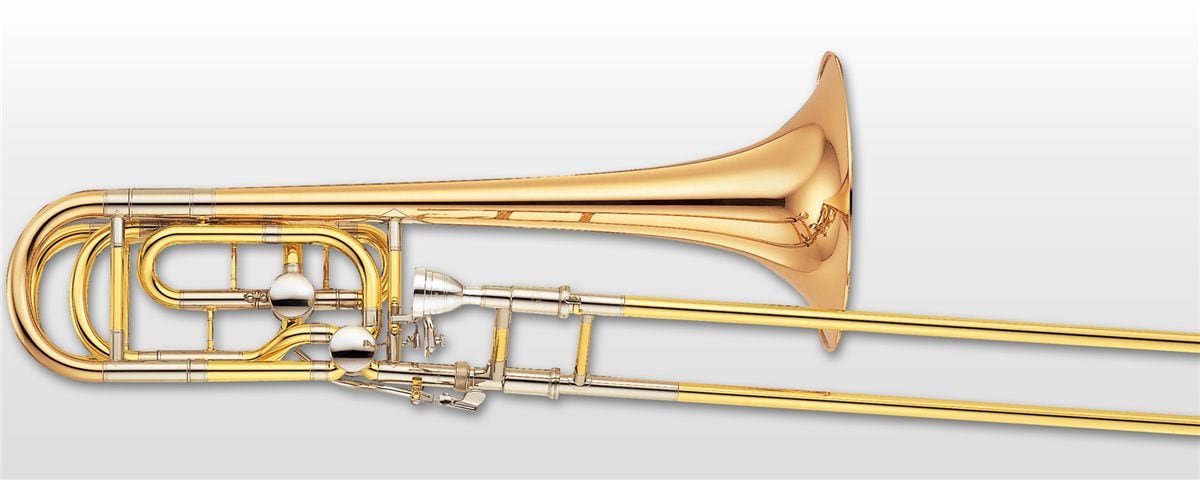
The Yamaha YBH622 and I think 822 have removable second valves, so you only put it on when you need it, and you have a dependent system.
I had a 70h (single) and had an Eb slide made for it. That is the only tuning that will give you full chromatic access. But, (and a lot of double plug players can't stand this) you have to use all 7 positions to get all the notes. So E natural is 7th position. Eb is first. F is 6th. On the upside you have only one trigger, and a better balanced horn.
I saw on Brass Ark a "Bartok valve". This replaced the second valve with a linkage mechanism that pushed the slide out for the F attachment to Eb tuning. I personally have never played this, but it sounds like the best of both worlds. The Thein price might be a mitigating factor, however. The one I saw on Brass Ark was a Shires modified Yamaha.

First, I thank God every day that I'm not a tuba player. Those options are truly head-splitting.
The only real downsides to independent are: weight, blowing through 2 valves instead of 1 (again reference tuba), and the added confusion of a second valve and all the alternate positions.
The downsides to the dependent are: sometimes the trigger layouts on the older horns are pretty wonky, you don't have all the second trigger alone options (although that could be a plus or a minus).
There are other options, however, but they're a little off the beaten path.
Plug in valve replaces the tuning slide of the F attachment. You need a strap-on lever, and it;s a little wonky, but it can work.
The Yamaha YBH622 and I think 822 have removable second valves, so you only put it on when you need it, and you have a dependent system.
I had a 70h (single) and had an Eb slide made for it. That is the only tuning that will give you full chromatic access. But, (and a lot of double plug players can't stand this) you have to use all 7 positions to get all the notes. So E natural is 7th position. Eb is first. F is 6th. On the upside you have only one trigger, and a better balanced horn.
I saw on Brass Ark a "Bartok valve". This replaced the second valve with a linkage mechanism that pushed the slide out for the F attachment to Eb tuning. I personally have never played this, but it sounds like the best of both worlds. The Thein price might be a mitigating factor, however. The one I saw on Brass Ark was a Shires modified Yamaha.
- elmsandr
- Posts: 1373
- Joined: Mar 23, 2018
[quote="Dennis"]....
I think what you choose depends on the literature you intend to play and your personal preferences. If your focus is on the orchestral and wind ensemble canon you may not need a double at all. As Doug Yeo put it, "Show me something [in that lit.] I can't play on a single!" There are a very few works that can't be done on a single (two by Bela Bartok). That said, no student of the instrument today can afford to go all-in on a single.
If your focus is on new literature (say, since 1980 or so) you'll have to have a double. Composers assume that the bass trombone is chromatic from somewhere around D0 to D4 (or higher). The money register is from D1-F3 or so, but composers are prone to write stupid stuff (e.g. a B1 with a plunger) because they don't understand the instrument.
...
My guess is that you'll end up on an in-line system because they are more commonly available. But I wouldn't rule out stacked horns, either. Just pick one, and stick with it.[/quote]
With all due respect to Doug... Playing in a community band that often plays high-school age targeted arrangements of remotely current movie scores: every single one 'requires' a double to be at all comfortable. They all seem to have some big run and moving line that has a couple Cs & Bs running up into the staff. Could it physically be done on a single, maybe, but you wouldn't be happy. Heck, even older movie stuff (Star Wars, for example) Has a couple of monster Cs adjacent to other stuff that just isn't easy on a single. Doable? again, maybe, but it is simple on a double.
I'm not playing a bunch of out there avant garde music, just the occasional new release. They just assume that you have a double these days.
I do, however, greatly agree with your conclusion. Pick one and stick with it.
Cheers,
Andy
I think what you choose depends on the literature you intend to play and your personal preferences. If your focus is on the orchestral and wind ensemble canon you may not need a double at all. As Doug Yeo put it, "Show me something [in that lit.] I can't play on a single!" There are a very few works that can't be done on a single (two by Bela Bartok). That said, no student of the instrument today can afford to go all-in on a single.
If your focus is on new literature (say, since 1980 or so) you'll have to have a double. Composers assume that the bass trombone is chromatic from somewhere around D0 to D4 (or higher). The money register is from D1-F3 or so, but composers are prone to write stupid stuff (e.g. a B1 with a plunger) because they don't understand the instrument.
...
My guess is that you'll end up on an in-line system because they are more commonly available. But I wouldn't rule out stacked horns, either. Just pick one, and stick with it.[/quote]
With all due respect to Doug... Playing in a community band that often plays high-school age targeted arrangements of remotely current movie scores: every single one 'requires' a double to be at all comfortable. They all seem to have some big run and moving line that has a couple Cs & Bs running up into the staff. Could it physically be done on a single, maybe, but you wouldn't be happy. Heck, even older movie stuff (Star Wars, for example) Has a couple of monster Cs adjacent to other stuff that just isn't easy on a single. Doable? again, maybe, but it is simple on a double.
I'm not playing a bunch of out there avant garde music, just the occasional new release. They just assume that you have a double these days.
I do, however, greatly agree with your conclusion. Pick one and stick with it.
Cheers,
Andy
- JohnL
- Posts: 2529
- Joined: Mar 23, 2018
[quote="hyperbolica"]I saw on Brass Ark a "Bartok valve". This replaced the second valve with a linkage mechanism that pushed the slide out for the F attachment to Eb tuning.[/quote]
I believe the Bartok "valve" is just an E extension, not Eb. Just enough to be able to glissando between F and low B. I'm not sure how useful it would be for any other application. Certainly not as quick as a valve.
This is one of those discussions that will never reach a consensus. There's certain things that will always be brought up, like the fact that the vast majority of orchestral rep is entirely playable on a single, or that George Roberts used a single on all those great recordings. The "playing through two valves all the time" on an indy horn. The question of how important those couple inches of tapered neckpipe is to a horn's sound and/or feel. People will suggest a single for a starter bass (lighter, simpler, cheaper), but others will point out that it's tough to get though some of the rep without some sort of second valve, so someone should probably have some sort of double if they're only going to have one bass trombone.
This is where we miss the history of the old forum; we could just link to those old discussions and be done with...
I believe the Bartok "valve" is just an E extension, not Eb. Just enough to be able to glissando between F and low B. I'm not sure how useful it would be for any other application. Certainly not as quick as a valve.
This is one of those discussions that will never reach a consensus. There's certain things that will always be brought up, like the fact that the vast majority of orchestral rep is entirely playable on a single, or that George Roberts used a single on all those great recordings. The "playing through two valves all the time" on an indy horn. The question of how important those couple inches of tapered neckpipe is to a horn's sound and/or feel. People will suggest a single for a starter bass (lighter, simpler, cheaper), but others will point out that it's tough to get though some of the rep without some sort of second valve, so someone should probably have some sort of double if they're only going to have one bass trombone.
This is where we miss the history of the old forum; we could just link to those old discussions and be done with...
- Dennis
- Posts: 404
- Joined: Mar 24, 2018
[quote="elmsandr"]<QUOTE author="Dennis" post_id="435" time="1522120673" user_id="175">
....
If your focus is on new literature (say, since 1980 or so) you'll have to have a double. Composers assume that the bass trombone is chromatic from somewhere around D0 ...
...[/quote]
Playing in a community band that often plays high-school age targeted arrangements of remotely current movie scores: every single one 'requires' a double to be at all comfortable. They all seem to have some big run and moving line that has a couple Cs & Bs running up into the staff. Could it physically be done on a single, maybe, but you wouldn't be happy. Heck, even older movie stuff (Star Wars, for example) Has a couple of monster Cs adjacent to other stuff that just isn't easy on a single. Doable? again, maybe, but it is simple on a double.
</QUOTE>
(emphasis added)
I think recent movie scores are probably written after 1980 or so ...
With that said, being a bass trombonist is not an excuse for poor slide technique. Do I want to minimize slide movement? Of course I do, but sometimes I have to move the slide and in that case having good slide technique is helpful.
....
If your focus is on new literature (say, since 1980 or so) you'll have to have a double. Composers assume that the bass trombone is chromatic from somewhere around D0 ...
...[/quote]
Playing in a community band that often plays high-school age targeted arrangements of remotely current movie scores: every single one 'requires' a double to be at all comfortable. They all seem to have some big run and moving line that has a couple Cs & Bs running up into the staff. Could it physically be done on a single, maybe, but you wouldn't be happy. Heck, even older movie stuff (Star Wars, for example) Has a couple of monster Cs adjacent to other stuff that just isn't easy on a single. Doable? again, maybe, but it is simple on a double.
</QUOTE>
(emphasis added)
I think recent movie scores are probably written after 1980 or so ...
With that said, being a bass trombonist is not an excuse for poor slide technique. Do I want to minimize slide movement? Of course I do, but sometimes I have to move the slide and in that case having good slide technique is helpful.
- boomski
- Posts: 19
- Joined: Mar 23, 2018
[quote="JohnL"]This is where we miss the history of the old forum; we could just link to those old discussions and be done with...[/quote]
While I 100% miss the history of the old forum as well, sometimes it’s nice to get a fresh perspective. Since we don’t have access to the old forum, I’m glad everyone is responsive to answering questions that I’m sure have been asked many times before! I’m still enjoying reading everyone’s input.
While I 100% miss the history of the old forum as well, sometimes it’s nice to get a fresh perspective. Since we don’t have access to the old forum, I’m glad everyone is responsive to answering questions that I’m sure have been asked many times before! I’m still enjoying reading everyone’s input.
- blast
- Posts: 671
- Joined: Mar 22, 2018
The modern bass trombones in my collection are into double figures and I have been playing bass for over 50 years (just context)......
I can play much of the orchestra rep on a single for sure, but a double would be my choice if I only had one bass.... for those times when you need one.
More than that, as a matter of choice, it would be an Indi. I have never felt a downside compared to stacked rotors and the extra possibilities make the Indi a no-brainer.
Buy used.... there are some great old trombones out there. At the moment I am playing Indi rotors tuned Bb/F/Eb/bC..... Some real fun stuff possible... low C and B on one valve... pedal Bb,A,Ab as second harmonics. First had that setup back in 1980....great if you can hold it up !
Chris
I can play much of the orchestra rep on a single for sure, but a double would be my choice if I only had one bass.... for those times when you need one.
More than that, as a matter of choice, it would be an Indi. I have never felt a downside compared to stacked rotors and the extra possibilities make the Indi a no-brainer.
Buy used.... there are some great old trombones out there. At the moment I am playing Indi rotors tuned Bb/F/Eb/bC..... Some real fun stuff possible... low C and B on one valve... pedal Bb,A,Ab as second harmonics. First had that setup back in 1980....great if you can hold it up !
Chris
- Neo_Bri
- Posts: 1342
- Joined: Mar 21, 2018
[quote="blast"]At the moment I am playing Indi rotors tuned Bb/F/Eb/bC..... Some real fun stuff possible... low C and B on one valve... pedal Bb,A,Ab as second harmonics. First had that setup back in 1980....great if you can hold it up !
Chris[/quote]
That does sound like fun. I'd like to try that myself.
Chris[/quote]
That does sound like fun. I'd like to try that myself.
- gbedinger
- Posts: 117
- Joined: Mar 23, 2018
OK, I'll add to the pile on. I agree with Chris...most parts can be played with one valve, but there are notable (and significant) times when you'll want two.
I've played bass trombone for many (...many...) years. I had a Holton TR-185 with plug-in second valve like Dave Taylor's pictured earlier in this thread, an independent Getzen 1052, a Chuck McAlexander-modified two-valve independent Holton 169 (a great instrument), and now a Yamaha 822g with dependent, removable second valve.
I was intrigued by the independent valve thing, but in practice, didn't use it that much - don't let the 20-plus slide combinations overwhelm you...it's only for two or three notes in real world use. The oft talked about Bartok gliss is also a red-herring, so don't get wound up about that either.
I've had the Yamaha 822 for six years now, and am very happy with it. I only have one bass trombone, so with the Yamaha I can plug in the second valve when I need it, and when I don't, the horn's much lighter for my 60-plus year upper body and arms. The Yamaha slide is the best slide I've ever used, and that includes a large-bore Shires lightweight slide I wish I could use instead for bass trombone parts...but that's another story for another time.
I've played bass trombone for many (...many...) years. I had a Holton TR-185 with plug-in second valve like Dave Taylor's pictured earlier in this thread, an independent Getzen 1052, a Chuck McAlexander-modified two-valve independent Holton 169 (a great instrument), and now a Yamaha 822g with dependent, removable second valve.
I was intrigued by the independent valve thing, but in practice, didn't use it that much - don't let the 20-plus slide combinations overwhelm you...it's only for two or three notes in real world use. The oft talked about Bartok gliss is also a red-herring, so don't get wound up about that either.
I've had the Yamaha 822 for six years now, and am very happy with it. I only have one bass trombone, so with the Yamaha I can plug in the second valve when I need it, and when I don't, the horn's much lighter for my 60-plus year upper body and arms. The Yamaha slide is the best slide I've ever used, and that includes a large-bore Shires lightweight slide I wish I could use instead for bass trombone parts...but that's another story for another time.
- Basbasun
- Posts: 496
- Joined: Mar 26, 2018
[quote="gbedinger"]
I was intrigued by the independent valve thing, but in practice, didn't use it that much - don't let the 20-plus slide combinations overwhelm you...it's only for two or three notes in real world use. The oft talked about Bartok gliss is also a red-herring, so don't get wound up about that either.
. The Yamaha slide is the best slide I've ever used, and that includes[/quote]
Yes I feel the same about the indy, I only had two, the Old's 24 and a Benge. I did feel the urge to have all the possibilitys of all the slide positions, I did experiment a lot, the Old's was actually the only bass at the time with independent valves. The Benge was a great horn actually. You can agrue about if the sound is less good on a andy, I wont say it´s worse. Byt is is different. Some may like the sound better in the indy, but I prefer the dependent, or the singel. The singel is the most difficult horn to get by with, I don't recomend that as the fist bassbone. It does take time to master. In the old time you did not have the choise, there was only singel basses. Very many of fantastic bassplayers played only singels, as there was no double around. Lots of low C:s B:s.
I have tested hundreds of horns. The yammy slides are outstanding in most cases.
I was intrigued by the independent valve thing, but in practice, didn't use it that much - don't let the 20-plus slide combinations overwhelm you...it's only for two or three notes in real world use. The oft talked about Bartok gliss is also a red-herring, so don't get wound up about that either.
. The Yamaha slide is the best slide I've ever used, and that includes[/quote]
Yes I feel the same about the indy, I only had two, the Old's 24 and a Benge. I did feel the urge to have all the possibilitys of all the slide positions, I did experiment a lot, the Old's was actually the only bass at the time with independent valves. The Benge was a great horn actually. You can agrue about if the sound is less good on a andy, I wont say it´s worse. Byt is is different. Some may like the sound better in the indy, but I prefer the dependent, or the singel. The singel is the most difficult horn to get by with, I don't recomend that as the fist bassbone. It does take time to master. In the old time you did not have the choise, there was only singel basses. Very many of fantastic bassplayers played only singels, as there was no double around. Lots of low C:s B:s.
I have tested hundreds of horns. The yammy slides are outstanding in most cases.
- edgrissom
- Posts: 9
- Joined: Mar 24, 2018
Try to find a good condition used Yamaha, Jupiter, Eastman, etc. and play them yourself. There is no way to know what you want without putting them to your face.
Get something with two valves (either configuration) - this way you can gain experience with bass trombone. There is no need to drop a lot of money into something you are not sure you are going to be doing long term. If you have the patience you can find something for $2000.00 or maybe slightly less.
Get something with two valves (either configuration) - this way you can gain experience with bass trombone. There is no need to drop a lot of money into something you are not sure you are going to be doing long term. If you have the patience you can find something for $2000.00 or maybe slightly less.
- Mv2541
- Posts: 562
- Joined: Mar 29, 2018
Being mostly a tenor player, I would definitely opt for a double of some flavor. You don't want to be stuck needing it when you don't have it and it is expected you have one on most modern music. It also significantly lessens what would otherwise be very long slide movements down in the valve register (think pedal Bb to trigger C).
+1 for the flexibility of an independent setup- I find myself using the second valve alone as often as I use first valve alone.
+1 for the flexibility of an independent setup- I find myself using the second valve alone as often as I use first valve alone.
- greenbean
- Posts: 1958
- Joined: Mar 23, 2018
It is true that independent horns have more options. But dependent horns allow you to play every note you want in a position that not hard to get to. So, for me, there no real need to move from dependent to independent. I am pretty sure if I did learn to use an independent second valve, I would try using it on my dependent horns!
- tbathras
- Posts: 122
- Joined: Mar 23, 2018
It's very rare, but I've come across some things like glisses (in one case it was a very slow, exposed gliss that 'faking' would have sounded dreadful) that were only possible on the Gb side of my horn. I wouldn't use that as a determining factor alone, but things like that added up with other factors people have mentioned makes indy my fist choice, but if I came across a stacked setup that blew me away, I would not turn away from it.
- elmsandr
- Posts: 1373
- Joined: Mar 23, 2018
[quote="Basbasun"]...
You can agrue about if the sound is less good on a andy, I wont say it´s worse.
...[/quote]
Emphasis added.
/nods knowingly
Cheers,
a Andy
You can agrue about if the sound is less good on a andy, I wont say it´s worse.
...[/quote]
Emphasis added.
/nods knowingly
Cheers,
a Andy
- whitbey
- Posts: 654
- Joined: Mar 23, 2018
My Bass is dependent Bb/F/C. The big advantage I took on the dependent is the second valve tubing is larger so with two valves the horn still blows easy.
My Bass Bach 50 was bought in the 70’s from Giardinelli in New York. The sales guy I worked with said the horn was originally a single valve Mount Vernon horn that Giardinelli sent to Bach to add a second valve. He said it had been in there store for over ten years before they sent it back. There was a solder mark in the receiver. The same guy told me that was where the original lever was. With the new valve the new style twin keys were put on the bell brace. The bell was stamped Elkhorn and Corporation at that time on an angle to the original engraving. There is no serial number; it was lost when the horn was reassembled. The bell is very soft and thin and plays like a dream. The second valve was set up as a dependent Bb/F/E. I had a new tuning slide made with larger tubing in C so now the horn is Bb/F/C. Low C with both valves is in first position and plays very open. Peddle BBb is in a long 3rd and plays easy too. Low B in two trigger long 2nd position is an easy hit. So in the key of C and the sharp keys the horn is easy to play as the positions are close to the same as with the F valve for C, B, Bb, and A.
My Bass Bach 50 was bought in the 70’s from Giardinelli in New York. The sales guy I worked with said the horn was originally a single valve Mount Vernon horn that Giardinelli sent to Bach to add a second valve. He said it had been in there store for over ten years before they sent it back. There was a solder mark in the receiver. The same guy told me that was where the original lever was. With the new valve the new style twin keys were put on the bell brace. The bell was stamped Elkhorn and Corporation at that time on an angle to the original engraving. There is no serial number; it was lost when the horn was reassembled. The bell is very soft and thin and plays like a dream. The second valve was set up as a dependent Bb/F/E. I had a new tuning slide made with larger tubing in C so now the horn is Bb/F/C. Low C with both valves is in first position and plays very open. Peddle BBb is in a long 3rd and plays easy too. Low B in two trigger long 2nd position is an easy hit. So in the key of C and the sharp keys the horn is easy to play as the positions are close to the same as with the F valve for C, B, Bb, and A.
- AussieBoneCollector
- Posts: 2
- Joined: Mar 23, 2018
On the ergonomic side, my Olds P22 George Roberts Custom is light enough but so slide heavy it hurts after a while, especially with mutes. My Yamaha 830 Xeno independent is heavy but perfectly balanced, mute work is so much easier.
The Yamaha was my first bass, so learning the second valve as needed hasn't been an issue.
On valves and slide positions, I only bought my first trigger tenor, after 25 years of playing, as a step into bass trombone. With both my basses I use the open horn as much as possible and triggers when absolutely necessary for the low stuff and in faster passages as a cheat. I double small bore tenor and bass so using all seven positions is still 'normal'.
The Yamaha was my first bass, so learning the second valve as needed hasn't been an issue.
On valves and slide positions, I only bought my first trigger tenor, after 25 years of playing, as a step into bass trombone. With both my basses I use the open horn as much as possible and triggers when absolutely necessary for the low stuff and in faster passages as a cheat. I double small bore tenor and bass so using all seven positions is still 'normal'.
- Finetales
- Posts: 1482
- Joined: Mar 23, 2018
I have both single (stock) and independent Elkhart 72H bell sections that are identical other than the valves. Before I got the double I spent about a year playing exclusively on the single. I will say that except for modern pieces with glisses only possible with a double like tbathras mentioned, everything was playable on the single. Low Bs (or a lot of low Cs)? Pull to bE and go. Was it hard work? Ohhh yeah! But even some nasty licks such as low F to pedal Bb to low B (6-1-long trigger 7th) in an 8th note triplet were all playable. Playing just the single for that long did a lot for my slide technique, especially in the outer positions. But I will also say that I was very happy to have a double again.
What I can also say from having essentially the same horns, one with an extra valve, is that there are more differences to single vs. double (I have no experience with indy vs. dependent...only ever played indys) than just slide position options and weight. My double section sounds very different to my single. They both sound like Conns and they both work very well in both commercial and orchestral settings, but they sound very very different. The single section is a sports car, the double section is a muscle car. Yet the double still has a leaner, livelier sound than the giant Thayer cannons most people are using nowadays. The double is a real chameleon...but when I can get away with it I use my single in big bands because there is absolutely nothing more satisfying than that sound in that context. Even the same horn with an extra valve can't get there.
What I can also say from having essentially the same horns, one with an extra valve, is that there are more differences to single vs. double (I have no experience with indy vs. dependent...only ever played indys) than just slide position options and weight. My double section sounds very different to my single. They both sound like Conns and they both work very well in both commercial and orchestral settings, but they sound very very different. The single section is a sports car, the double section is a muscle car. Yet the double still has a leaner, livelier sound than the giant Thayer cannons most people are using nowadays. The double is a real chameleon...but when I can get away with it I use my single in big bands because there is absolutely nothing more satisfying than that sound in that context. Even the same horn with an extra valve can't get there.
- sf105
- Posts: 433
- Joined: Mar 24, 2018
[quote="blast"]More than that, as a matter of choice, it would be an Indi. I have never felt a downside compared to stacked rotors and the extra possibilities make the Indi a no-brainer.
Buy used.... there are some great old trombones out there. At the moment I am playing Indi rotors tuned Bb/F/Eb/bC..... Some real fun stuff possible... low C and B on one valve... pedal Bb,A,Ab as second harmonics. First had that setup back in 1980....great if you can hold it up ![/quote]
Interesting point, given how much time you spend with vintage horns.
I once spent an hour or so at John Packer's comparing stacked and indy new 62Hs (thanks for their forbearance). There was definitely some interference from the valves, with the Indy it felt like it was evenly spread whereas with stacked it was saved up for the double trigger notes.
S
Buy used.... there are some great old trombones out there. At the moment I am playing Indi rotors tuned Bb/F/Eb/bC..... Some real fun stuff possible... low C and B on one valve... pedal Bb,A,Ab as second harmonics. First had that setup back in 1980....great if you can hold it up ![/quote]
Interesting point, given how much time you spend with vintage horns.
I once spent an hour or so at John Packer's comparing stacked and indy new 62Hs (thanks for their forbearance). There was definitely some interference from the valves, with the Indy it felt like it was evenly spread whereas with stacked it was saved up for the double trigger notes.
S
- salsabone
- Posts: 45
- Joined: Mar 29, 2018
Boomski,
I am guessing that you are somewhat now in about the same place I was 25 years or so ago. At that time I was mostly a commercial(jazz, community bands, etc) player. My main trombones were, just like you, a Bach 42 and a King 3B. My bass trombone choice ended up being a new Yamaha 613H. It is an independent set up. Over the last 25+ years I have never encountered a situation where I found this bass lacking in any way. On the plus side it seems to me to be lighter than most other indy basses that I have tried. I think we may be on the same type of playing path. Your budget would allow for a nice used Yamaha 613 or similar model. Just my 2 cents.
I am guessing that you are somewhat now in about the same place I was 25 years or so ago. At that time I was mostly a commercial(jazz, community bands, etc) player. My main trombones were, just like you, a Bach 42 and a King 3B. My bass trombone choice ended up being a new Yamaha 613H. It is an independent set up. Over the last 25+ years I have never encountered a situation where I found this bass lacking in any way. On the plus side it seems to me to be lighter than most other indy basses that I have tried. I think we may be on the same type of playing path. Your budget would allow for a nice used Yamaha 613 or similar model. Just my 2 cents.
- Neo_Bri
- Posts: 1342
- Joined: Mar 21, 2018
Salsabone - I've never played a Yamaha bass that wasn't a great horn. Don't know why - they just know how to make 'em.
- blast
- Posts: 671
- Joined: Mar 22, 2018
[quote="Neo Bri"]Salsabone - I've never played a Yamaha bass that wasn't a great horn. Don't know why - they just know how to make 'em.[/quote]
I've played a few dogs... very old ones... and a couple of bad xenos but on the plus side I've played some new student basses that were delicious !
Chris
I've played a few dogs... very old ones... and a couple of bad xenos but on the plus side I've played some new student basses that were delicious !
Chris
- Tooloud
- Posts: 105
- Joined: Mar 31, 2018
I had been in the market for a new bass trombone for over a year. Tried a lot.
What I found was that the sound I get from a dependent/stacked setup was always superior to the independent equivalents. These unobstructed cm's of neckpipe tubing make a difference I think I can hear and feel. I admit, there were just rotors an Thayer-type valves to try, no fancy new types like Hagman (just played a few notes on such an instrument, too few to judge, for the instrument they were on was very bad to hold) and Rotax.
Don't forget the possibility, like Mr Yeo already hinted, of keeping the D-lever pressed for smooth transitions between open horn and valved notes making jumps in the low register a bit easier for me.
But: Hard to get hands on a new stacked horn today for trying, because most beginners tend to buy what's in store. Would have liked to try a Shires with stacked Trubore-valves. Sounds like ist must be a great sounding horn judging from the tenor. But they are hard to come by in europe...
What I found was that the sound I get from a dependent/stacked setup was always superior to the independent equivalents. These unobstructed cm's of neckpipe tubing make a difference I think I can hear and feel. I admit, there were just rotors an Thayer-type valves to try, no fancy new types like Hagman (just played a few notes on such an instrument, too few to judge, for the instrument they were on was very bad to hold) and Rotax.
Don't forget the possibility, like Mr Yeo already hinted, of keeping the D-lever pressed for smooth transitions between open horn and valved notes making jumps in the low register a bit easier for me.
But: Hard to get hands on a new stacked horn today for trying, because most beginners tend to buy what's in store. Would have liked to try a Shires with stacked Trubore-valves. Sounds like ist must be a great sounding horn judging from the tenor. But they are hard to come by in europe...
- Matt_K
- Posts: 4809
- Joined: Mar 21, 2018
The benefit isn't the obstruction of a second rotor, per se. As bear in mind the F attachment then also has the obstruction, if that were the cause of the difference. So the open side would play different than the F side vs. having them be consistently blown through the same obstruction on an independent. It's the taper in the tubing that makes it more cylindrical vs. conical. You can test this with modular instruments on the F side. If the F side plays differently on an independent than it does on the dependent, then you can attribute the difference, at least in part, to the neckpipe taper (as if they played the same, it would mean that the obstruction is at least in part causing the difference). Of course there are other variables so it isn't quite that simple.
To some extent that taper can be applied an independent setup; Hagmanns have a "progressive" bore valve set for bass that has the Gb valve being slightly bigger than the F valve so you still have the benefit of a taper and the independent at the same time. I'm not a huge fan of Hagmanns and never tried them personally but such a thing does exist.
To some extent that taper can be applied an independent setup; Hagmanns have a "progressive" bore valve set for bass that has the Gb valve being slightly bigger than the F valve so you still have the benefit of a taper and the independent at the same time. I'm not a huge fan of Hagmanns and never tried them personally but such a thing does exist.
- BassBoneWadie99
- Posts: 18
- Joined: Apr 03, 2018
I will be completly honest, having used both single, dependent, and independent; I personally find dependents to play better (for me at least) and don't care for the extra alternates that independents have (yes, even with the G tuning.) They honestly don't benefit me at all and I personally am not too keen on how they play from playability to blow, but that's just me. Now with dependents, I always liked the sound they produced and loved how they felt when playing them when playing low C with both valves in 4th position and Low B in flat 5th, it felt so effortless for me and just loved how it blew even in the pedal register playing pedal F to pedal C! I would when warming up play a pedal D in sharp 5th position using the F valve and would just demolish the band if I wanted to and could get a fair job with pedal Db and C and barely get a pedal B (but almost.) In summary for dependents, I love how they play and sound and jist prefer to move the slide more, they also work best for me! Just my $00.02 :mrgreen:
- blast
- Posts: 671
- Joined: Mar 22, 2018
It's strange.... must be a lack of something in me, but after more than 40 years of professional playing and swapping between dependent and independent for all that time, I cannot say that there is any lack in sound or feel that I have detected in indy trombones as a general rule. What I can say is that the indy valve setup has on many occasions allowed me to play with more ease and allowed a more musical result. I use valves as little as I have to, which at times can be a lot. I can see arguments for using a single (and I often do) but if you have to use two valves, get best value out of them.
Chris
Chris
- Neo_Bri
- Posts: 1342
- Joined: Mar 21, 2018
[quote="blast"]It's strange.... must be a lack of something in me, but after more than 40 years of professional playing and swapping between dependent and independent for all that time, I cannot say that there is any lack in sound or feel that I have detected in indy trombones as a general rule. What I can say is that the indy valve setup has on many occasions allowed me to play with more ease and allowed a more musical result. I use valves as little as I have to, which at times can be a lot. I can see arguments for using a single (and I often do) but if you have to use two valves, get best value out of them.
Chris[/quote]
Such great insight. It's funny - in one way I'm sort of opposite of you. I love using the valves and tend to use them a lot by preference. Particularly the Gb valve by itself. Pretty much every horn I've played I've noticed that the Gb valve plays better than the F valve. Not sure why. Maybe it's sort of like what Matt K was saying about where the valve lies on the gooseneck.
Chris[/quote]
Such great insight. It's funny - in one way I'm sort of opposite of you. I love using the valves and tend to use them a lot by preference. Particularly the Gb valve by itself. Pretty much every horn I've played I've noticed that the Gb valve plays better than the F valve. Not sure why. Maybe it's sort of like what Matt K was saying about where the valve lies on the gooseneck.
- Matt_K
- Posts: 4809
- Joined: Mar 21, 2018
Well, another consideration is that when you play an F in 2nd position, you've added a few inches of larger bore tubing to the equation from the slide. What is it, .590 usually for .562 inner bore slides? That's going to make a big difference!
- Basbasun
- Posts: 496
- Joined: Mar 26, 2018
Well I think the only way to find out what you like is to try all kinds of set ups. As I said before, I much prefer singel, but that is me. I do handle low C and B on my singles. With doubble valves I like the dependant, that is just me. I never said that the indy has a bad sound. But I claim it is different. Especially in very soft playing. I started my carrier as a proffesional bass tromboneplayer 1969. I tried many horns. I can see the benifits in a indy, if I hade more time and money and was not so old I might have one.
- JohnL
- Posts: 2529
- Joined: Mar 23, 2018
[quote="Matt K"]Well, another consideration is that when you play an F in 2nd position, you've added a few inches of larger bore tubing to the equation from the slide. What is it, .590 usually for .562 inner bore slides? That's going to make a big difference![/quote]
Playing the F in second-ish position on the Gb valve (or in third-ish position on a G valve) would use less of the larger-bore attachment tubing and more of the handslide than playing it in first position on the F valve (though obviously still significantly less than playing it in sixth position on the open horn). I would think that the result would be that Gb-2 would be more like playing it on the open horn compared to F-1.
There might have been something to George McCracken's idea of using .562" attachment tubing on the Duo-Gravis. It's more work when you have both valves down and the handslide most or all of the way extended, but the single valve notes where you don't have the handslide that far out might just play/sound a bit more like playing them without a valve at all...
As far as dependent vs. independent? Indy all the way for me, but I do consider it a matter of personal choice. One thing I believe very strongly is that, if you move from an indy to a dependent and aren't at least a little put out at losing that extra set of positions, you weren't using the indy to its full potential in the first place.
More food for thought...
Consider the evolution of the double-valve bass. In the beginning, there was just an F-attachment (a few horns were built with E-flat valves). Then someone had the bright idea of giving it a long pull so you could tune it to flat E, which allowed you to play the low B. The next step was to add a static valve in place of (or in addition to) the long pull. Finally, a lever and spring were added so the player could engage the second valve "on the fly".
But what if someone had leapfrogged all of that and built a bass trombone inspired by the inline-valve contrabasses that were in use in some of the opera houses of Europe? Would anyone have even thought to move the second valve from the main horn into the f-attachment?
Playing the F in second-ish position on the Gb valve (or in third-ish position on a G valve) would use less of the larger-bore attachment tubing and more of the handslide than playing it in first position on the F valve (though obviously still significantly less than playing it in sixth position on the open horn). I would think that the result would be that Gb-2 would be more like playing it on the open horn compared to F-1.
There might have been something to George McCracken's idea of using .562" attachment tubing on the Duo-Gravis. It's more work when you have both valves down and the handslide most or all of the way extended, but the single valve notes where you don't have the handslide that far out might just play/sound a bit more like playing them without a valve at all...
As far as dependent vs. independent? Indy all the way for me, but I do consider it a matter of personal choice. One thing I believe very strongly is that, if you move from an indy to a dependent and aren't at least a little put out at losing that extra set of positions, you weren't using the indy to its full potential in the first place.
More food for thought...
Consider the evolution of the double-valve bass. In the beginning, there was just an F-attachment (a few horns were built with E-flat valves). Then someone had the bright idea of giving it a long pull so you could tune it to flat E, which allowed you to play the low B. The next step was to add a static valve in place of (or in addition to) the long pull. Finally, a lever and spring were added so the player could engage the second valve "on the fly".
But what if someone had leapfrogged all of that and built a bass trombone inspired by the inline-valve contrabasses that were in use in some of the opera houses of Europe? Would anyone have even thought to move the second valve from the main horn into the f-attachment?
- Matt_K
- Posts: 4809
- Joined: Mar 21, 2018
Yes, actually I think you might be correct, since of course the tubing is often the same bore as the outer bore so it might be less of the large tubing. In either case, I do agree with Neo. On an independent, I'll very frequently use a G or Gb attachment for the F more than the F attachment, though I still heavily utilize the F attachment such that it's in no danger of being replaced by something more unorthodox like an Eb or something!
- Finetales
- Posts: 1482
- Joined: Mar 23, 2018
[quote="JohnL"]But what if someone had leapfrogged all of that and built a bass trombone inspired by the inline-valve contrabasses that were in use in some of the opera houses of Europe? Would anyone have even thought to move the second valve from the main horn into the f-attachment?[/quote]
Meaning the old school F/Eb/Bb valve type right? Last time I checked Jurgen Voigt offers at least one of their bass trombone models in this relative whole step/perfect 5th valve tuning (so Bb/Ab/Eb).
If I understand it right, the contras were made that way because the slide was too long to reach at least 7th position so they put the Eb valve on to compensate for the lost positions, and then the other valve to reach the lower notes. I don't know how useful a whole step valve would be on a Bb trombone except as a trill valve, but to be fair I've never used one.
Meaning the old school F/Eb/Bb valve type right? Last time I checked Jurgen Voigt offers at least one of their bass trombone models in this relative whole step/perfect 5th valve tuning (so Bb/Ab/Eb).
If I understand it right, the contras were made that way because the slide was too long to reach at least 7th position so they put the Eb valve on to compensate for the lost positions, and then the other valve to reach the lower notes. I don't know how useful a whole step valve would be on a Bb trombone except as a trill valve, but to be fair I've never used one.
- sf105
- Posts: 433
- Joined: Mar 24, 2018
When I was in college I experimented with a "rational" Bb/G/E/D combo. I could play 2 octaves up from trigger C barely moving the slide. I gave it up because I couldn't remember all the combinations. Nowadays, I seem to be spending most of my time on single trigger horns...
- elmsandr
- Posts: 1373
- Joined: Mar 23, 2018
[quote="sf105"]When I was in college I experimented with a "rational" Bb/G/E/D combo. I could play 2 octaves up from trigger C barely moving the slide. I gave it up because I couldn't remember all the combinations. Nowadays, I seem to be spending most of my time on single trigger horns...[/quote]
The most succinct summary I’ve ever seen about why I want this combination so much but have never taken the time to build one, even though I pretty much always have enough extra parts on hand.
Cheers,
Andy
The most succinct summary I’ve ever seen about why I want this combination so much but have never taken the time to build one, even though I pretty much always have enough extra parts on hand.
Cheers,
Andy
- JohnL
- Posts: 2529
- Joined: Mar 23, 2018
[quote="Finetales"]Meaning the old school F/Eb/Bb valve type right? Last time I checked Jurgen Voigt offers at least one of their bass trombone models in this relative whole step/perfect 5th valve tuning (so Bb/Ab/Eb).
If I understand it right, the contras were made that way because the slide was too long to reach at least 7th position so they put the Eb valve on to compensate for the lost positions, and then the other valve to reach the lower notes. I don't know how useful a whole step valve would be on a Bb trombone except as a trill valve, but to be fair I've never used one.[/quote]
If someone had tried building in indy bass in the late 1930's, I would expect they would have gone with a fourth rather than a fifth for the longer valve. Too much of an installed base with f-attachments. Since the low B was always the goal, the other valve would probably have been just long enough to make that possible - a whole step, giving you Bb/Ab/F/flat E. Pretty much the same tuning as the early dependent doubles, but with an indy valveset.
If I understand it right, the contras were made that way because the slide was too long to reach at least 7th position so they put the Eb valve on to compensate for the lost positions, and then the other valve to reach the lower notes. I don't know how useful a whole step valve would be on a Bb trombone except as a trill valve, but to be fair I've never used one.[/quote]
If someone had tried building in indy bass in the late 1930's, I would expect they would have gone with a fourth rather than a fifth for the longer valve. Too much of an installed base with f-attachments. Since the low B was always the goal, the other valve would probably have been just long enough to make that possible - a whole step, giving you Bb/Ab/F/flat E. Pretty much the same tuning as the early dependent doubles, but with an indy valveset.
- Basbasun
- Posts: 496
- Joined: Mar 26, 2018
Yesterday I tested lots of horns, about 15 before I get feed up. One thing that makes a differns between dependent and independent, that I have notice before is that on the dempendent ( and singel ) the BBb, pedal Bb you can start the tone ppp and it is absolutely steady. On all independant without exceptions the is a bit unsecure in the start. Unless you have to play that tone extremely soft (like in Verdis requiem) you may not notice that. I adress that to the shorter gooseneck. Does that make the independent a less good horn? Hell no. But I stand with my saying, depndent and independent does respond slightly different, not better or worse just slightly different.
- blast
- Posts: 671
- Joined: Mar 22, 2018
[quote="Basbasun"]Yesterday I tested lots of horns, about 15 before I get feed up. One thing that makes a differns between dependent and independent, that I have notice before is that on the dempendent ( and singel ) the BBb, pedal Bb you can start the tone ppp and it is absolutely steady. On all independant without exceptions the is a bit unsecure in the start. Unless you have to play that tone extremely soft (like in Verdis requiem) you may not notice that. I adress that to the shorter gooseneck. Does that make the independent a less good horn? Hell no. But I stand with my saying, depndent and independent does respond slightly different, not better or worse just slightly different.[/quote]
Very interesting....a specific claim. So, my first notes today were therefore pedal Bbs..... 3 indies and a single. On the rotary Indies against the single you are right, but Indi Hagmanns worked just fine on my R9. Five minutes in and everything seemed to work well, whatever the setup, but first off I noticed a difference.... you live and learn. I have an exposed pedal Ab pp after 18minutes rest tonight.... the single is tempting....
Chris.
Very interesting....a specific claim. So, my first notes today were therefore pedal Bbs..... 3 indies and a single. On the rotary Indies against the single you are right, but Indi Hagmanns worked just fine on my R9. Five minutes in and everything seemed to work well, whatever the setup, but first off I noticed a difference.... you live and learn. I have an exposed pedal Ab pp after 18minutes rest tonight.... the single is tempting....
Chris.
- blast
- Posts: 671
- Joined: Mar 22, 2018
Took the single in. Played the show.... some stuff easier... some stuff harder.... at the end of the show I asked the principal trumpet if he heard any difference.... basically, no.
These are therefore very fine details that we are talking about. Splitting hairs.
Ah well......
Chris
These are therefore very fine details that we are talking about. Splitting hairs.
Ah well......
Chris
- Matt_K
- Posts: 4809
- Joined: Mar 21, 2018
[quote="Basbasun"]Yesterday I tested lots of horns, about 15 before I get feed up. One thing that makes a difference between dependent and independent, that I have notice before is that on the dependent ( and single ) the BBb, pedal Bb you can start the tone ppp and it is absolutely steady. On all independent without exceptions the is a bit insecure in the start. Unless you have to play that tone extremely soft (like in Verdis requiem) you may not notice that. I address that to the shorter gooseneck. Does that make the independent a less good horn? Hell no. But I stand with my saying, dependent and independent does respond slightly different, not better or worse just slightly different.[/quote]
I disagree in the sense that applying categorical statements ("on all x without exceptions") because I have a Bach 50B (yes single rotor) as my main axe right now while I build up my stables after spending a lot of cash moving etc. etc. I am much more insecure on it than I am Sliphorn's Shires that he has for sale with independent axials. And the Bach is probably in slightly better condition by dint of the fact that I had the valve section deburred and rotor swapped out a few days ago. I'm sure someone who likes Bach horns might prefer my 50 to that Shires but it can be very complicated!
I disagree in the sense that applying categorical statements ("on all x without exceptions") because I have a Bach 50B (yes single rotor) as my main axe right now while I build up my stables after spending a lot of cash moving etc. etc. I am much more insecure on it than I am Sliphorn's Shires that he has for sale with independent axials. And the Bach is probably in slightly better condition by dint of the fact that I had the valve section deburred and rotor swapped out a few days ago. I'm sure someone who likes Bach horns might prefer my 50 to that Shires but it can be very complicated!
- Kbiggs
- Posts: 1768
- Joined: Mar 24, 2018
I’ve played a few singles, but I’ve played quite a few indies and several dependants. My preference is indies with a standard F and Gb tuning. It’s what I learned on, and it’s most comfortable for me. For those that learned on a dependant set-up, that would likely be most comfortable. There are many examples of “converts” to “the other” system: Dave Taylor, for example. There are many professionals who use indies and many who use dependents. They ALL sound great.
It’s possible—thought I haven’t any idea how this could be independently verified—that dependents give a different sort of feedback to the player, given the longer neckpipe. There are so many variables, including (most importantly!) the player, the specific instrument, and mindful practice time on that specific instrument, that to say one set-up is somehow better than the other is similar to saying that chocolate ice cream is better than vanilla.
Don’t discount the “new feeling” factor, either. Sometimes playing a different horn “feels” better because it will repsond differently in ways the player might prefer—in that moment. Sometimes a new horn will feel better for a few days, until things start to settle in, when the horn’s quirks and the player’s idiosyncracies start to surface.
It’s possible—thought I haven’t any idea how this could be independently verified—that dependents give a different sort of feedback to the player, given the longer neckpipe. There are so many variables, including (most importantly!) the player, the specific instrument, and mindful practice time on that specific instrument, that to say one set-up is somehow better than the other is similar to saying that chocolate ice cream is better than vanilla.
Don’t discount the “new feeling” factor, either. Sometimes playing a different horn “feels” better because it will repsond differently in ways the player might prefer—in that moment. Sometimes a new horn will feel better for a few days, until things start to settle in, when the horn’s quirks and the player’s idiosyncracies start to surface.
- tbonedude
- Posts: 17
- Joined: Mar 23, 2018
[quote="Neo Bri"]As far as I can see it, it's about options. And an indy gives you every option.[/quote]
Independent instruments give you every technical option at the expense of about 2 inches of conical tubing at a very important section of the instrument. I feel like dependent instruments sound and respond better then their independent brothers (which is why I play one currently). If I can find an indy bass with character, and sacrificed nothing with the addition of the extra valve, I'd probably buy it.
Independent instruments give you every technical option at the expense of about 2 inches of conical tubing at a very important section of the instrument. I feel like dependent instruments sound and respond better then their independent brothers (which is why I play one currently). If I can find an indy bass with character, and sacrificed nothing with the addition of the extra valve, I'd probably buy it.
- sf105
- Posts: 433
- Joined: Mar 24, 2018
[quote="blast"]Took the single in. Played the show.... some stuff easier... some stuff harder.... at the end of the show I asked the principal trumpet if he heard any difference.... basically, no.
These are therefore very fine details that we are talking about. Splitting hairs.
Ah well......
Chris[/quote]
True, but part of the issue is our own ease of playing.
I was wondering, in these days of modular horns, about a "second valve single" module, which would have just a G valve on a finger trigger. It would provide nice slide transitions around low Bb for much of the literature, but without the weight of a double.
I have a straight neckpipe I use occasionally. It's so much easier.
S
These are therefore very fine details that we are talking about. Splitting hairs.
Ah well......
Chris[/quote]
True, but part of the issue is our own ease of playing.
I was wondering, in these days of modular horns, about a "second valve single" module, which would have just a G valve on a finger trigger. It would provide nice slide transitions around low Bb for much of the literature, but without the weight of a double.
I have a straight neckpipe I use occasionally. It's so much easier.
S
- hyperbolica
- Posts: 3990
- Joined: Mar 23, 2018
On "the other" site we had a discussion about a C bass with a Bb valve normally engaged and a second valve possibly in F that a forum member had constructed from a Schiller bass bone. Had a short slide. There might have been a European maker who had a similar model. Anyone have links or pics?
With the addition of the old TTF threads to TC, I was able to find the link: http://www.trombonechat.com/viewtopic.php?f=57&t=2082&\
The horn looks like this:
<LINK_TEXT text="https://photos.google.com/share/AF1QipO ... V6Tnd6UnNR">https://photos.google.com/share/AF1QipOJTrmNkweekGpuVWJENuZgf9JWqA7h_4DuBGEM8sq0cOXzyrgffqQvwTYDxoZifA/photo/AF1QipNy1XSLlCcSVpKQ0AR3w8-00pw8jkf-g3YxLsOG?key=enJJVEp1aklyTnUyb2huMlY2RDZrZmV6Tnd6UnNR</LINK_TEXT>
With the addition of the old TTF threads to TC, I was able to find the link: http://www.trombonechat.com/viewtopic.php?f=57&t=2082&\
The horn looks like this:
<LINK_TEXT text="https://photos.google.com/share/AF1QipO ... V6Tnd6UnNR">https://photos.google.com/share/AF1QipOJTrmNkweekGpuVWJENuZgf9JWqA7h_4DuBGEM8sq0cOXzyrgffqQvwTYDxoZifA/photo/AF1QipNy1XSLlCcSVpKQ0AR3w8-00pw8jkf-g3YxLsOG?key=enJJVEp1aklyTnUyb2huMlY2RDZrZmV6Tnd6UnNR</LINK_TEXT>
- blast
- Posts: 671
- Joined: Mar 22, 2018
[quote="sf105"]<QUOTE author="blast" post_id="57683" time="1523142057" user_id="52">
Took the single in. Played the show.... some stuff easier... some stuff harder.... at the end of the show I asked the principal trumpet if he heard any difference.... basically, no.
These are therefore very fine details that we are talking about. Splitting hairs.
Ah well......
Chris[/quote]
True, but part of the issue is our own ease of playing.
I was wondering, in these days of modular horns, about a "second valve single" module, which would have just a G valve on a finger trigger. It would provide nice slide transitions around low Bb for much of the literature, but without the weight of a double.
I have a straight neckpipe I use occasionally. It's so much easier.
S
</QUOTE>
The biggest thing by far to make playing easier is always practise. We must never lose sight of that. Playing the single just made my evening different.... not better or worse , just different.
Chris
Took the single in. Played the show.... some stuff easier... some stuff harder.... at the end of the show I asked the principal trumpet if he heard any difference.... basically, no.
These are therefore very fine details that we are talking about. Splitting hairs.
Ah well......
Chris[/quote]
True, but part of the issue is our own ease of playing.
I was wondering, in these days of modular horns, about a "second valve single" module, which would have just a G valve on a finger trigger. It would provide nice slide transitions around low Bb for much of the literature, but without the weight of a double.
I have a straight neckpipe I use occasionally. It's so much easier.
S
</QUOTE>
The biggest thing by far to make playing easier is always practise. We must never lose sight of that. Playing the single just made my evening different.... not better or worse , just different.
Chris
- peteedwards
- Posts: 105
- Joined: Apr 09, 2018
[quote="hyperbolica"]On "the other" site we had a discussion about a C bass with a Bb valve normally engaged and a second valve possibly in F that a forum member had constructed from a Schiller bass bone. Had a short slide. There might have been a European maker who had a similar model. Anyone have links or pics?
With the addition of the old TTF threads to TC, I was able to find the link: http://www.trombonechat.com/viewtopic.php?f=57&t=2082&\
The horn looks like this:
<LINK_TEXT text="https://photos.google.com/share/AF1QipO ... V6Tnd6UnNR">https://photos.google.com/share/AF1QipOJTrmNkweekGpuVWJENuZgf9JWqA7h_4DuBGEM8sq0cOXzyrgffqQvwTYDxoZifA/photo/AF1QipNy1XSLlCcSVpKQ0AR3w8-00pw8jkf-g3YxLsOG?key=enJJVEp1aklyTnUyb2huMlY2RDZrZmV6Tnd6UnNR</LINK_TEXT>[/quote]
That's my horn- been using it as a daily driver now for 6 months & loving it
Its kinda the best of all worlds, light as a single, fully chromatic & with most of the facility of a double independent
plus the added bonus of a trill valve (Bach cello suites are really fun with it)
I was going to do a bigger write up on it but thankfully the archived TTF showed up- thanks to all those involved in recovering the data!
With the addition of the old TTF threads to TC, I was able to find the link: http://www.trombonechat.com/viewtopic.php?f=57&t=2082&\
The horn looks like this:
<LINK_TEXT text="https://photos.google.com/share/AF1QipO ... V6Tnd6UnNR">https://photos.google.com/share/AF1QipOJTrmNkweekGpuVWJENuZgf9JWqA7h_4DuBGEM8sq0cOXzyrgffqQvwTYDxoZifA/photo/AF1QipNy1XSLlCcSVpKQ0AR3w8-00pw8jkf-g3YxLsOG?key=enJJVEp1aklyTnUyb2huMlY2RDZrZmV6Tnd6UnNR</LINK_TEXT>[/quote]
That's my horn- been using it as a daily driver now for 6 months & loving it
Its kinda the best of all worlds, light as a single, fully chromatic & with most of the facility of a double independent
plus the added bonus of a trill valve (Bach cello suites are really fun with it)
I was going to do a bigger write up on it but thankfully the archived TTF showed up- thanks to all those involved in recovering the data!
- hyperbolica
- Posts: 3990
- Joined: Mar 23, 2018
[quote="peteedwards"]
That's my horn- been using it as a daily driver now for 6 months & loving it
Its kinda the best of all worlds, light as a single, fully chromatic & with most of the facility of a double independent
plus the added bonus of a trill valve (Bach cello suites are really fun with it)
I was going to do a bigger write up on it but thankfully the archived TTF showed up- thanks to all those involved in recovering the data![/quote]
I'd really love to borrow that horn for a month. :pant: It looks like a really good idea, I'd love to actually see how it plays.
That's my horn- been using it as a daily driver now for 6 months & loving it
Its kinda the best of all worlds, light as a single, fully chromatic & with most of the facility of a double independent
plus the added bonus of a trill valve (Bach cello suites are really fun with it)
I was going to do a bigger write up on it but thankfully the archived TTF showed up- thanks to all those involved in recovering the data![/quote]
I'd really love to borrow that horn for a month. :pant: It looks like a really good idea, I'd love to actually see how it plays.
- peteedwards
- Posts: 105
- Joined: Apr 09, 2018
I can't let you borrow it but I'm in southern PA (near Baltimore MD) if your in the area you could come & play it.
I've been thinking about building another one this summer using a Bach Holton or Yamaha if I can find a reasonably priced sample.
I've been thinking about building another one this summer using a Bach Holton or Yamaha if I can find a reasonably priced sample.
- sf105
- Posts: 433
- Joined: Mar 24, 2018
[quote="hyperbolica"]On "the other" site we had a discussion about a C bass with a Bb valve normally engaged and a second valve possibly in F that a forum member had constructed from a Schiller bass bone. Had a short slide. There might have been a European maker who had a similar model. Anyone have links or pics?
With the addition of the old TTF threads to TC, I was able to find the link: http://www.trombonechat.com/viewtopic.php?f=57&t=2082&\[/quote]
Interesting thread. Makes me wonder about whether a G/F/C contra would work? It would make those low Gb's in the Ring a bit easier and be lighter to hold.
S
With the addition of the old TTF threads to TC, I was able to find the link: http://www.trombonechat.com/viewtopic.php?f=57&t=2082&\[/quote]
Interesting thread. Makes me wonder about whether a G/F/C contra would work? It would make those low Gb's in the Ring a bit easier and be lighter to hold.
S
- brtnats
- Posts: 341
- Joined: Apr 26, 2018
I am just a dedicated amateur, but I'd like to add +1 for dependents for 2 reasons:
1. To me, dependents feel better on the double valve notes. Good modern dependent basses have second valves designed to play low D-B, and that's it. They don't have to sound good as indy valves, and there's some design magic in really well-made dependents that makes those notes feel great.
2. Dependents let you preset the second valve to slur into and out of the low register with one valve movement instead of two. I like that and like not having to coordinate 2 valves.
1. To me, dependents feel better on the double valve notes. Good modern dependent basses have second valves designed to play low D-B, and that's it. They don't have to sound good as indy valves, and there's some design magic in really well-made dependents that makes those notes feel great.
2. Dependents let you preset the second valve to slur into and out of the low register with one valve movement instead of two. I like that and like not having to coordinate 2 valves.
- Matt_K
- Posts: 4809
- Joined: Mar 21, 2018
[quote="brtnats"]I am just a dedicated amateur, but I'd like to add +1 for dependents for 2 reasons:
1. To me, dependents feel better on the double valve notes. Good modern dependent basses have second valves designed to play low D-B, and that's it. They don't have to sound good as indy valves, and there's some design magic in really well-made dependents that makes those notes feel great.[/quote]
Don't get me wrong, I enjoy a good dependent but I'm not aware of any such design elements that would optimize for those notes. Is there a horn that you can give an example of that has a unique design element that would affect those notes? That would be distinct from, say, the additional conical tubing in the neckpipe for a dependent horn as that would apply to every note. Or at least it does in my experience!
1. To me, dependents feel better on the double valve notes. Good modern dependent basses have second valves designed to play low D-B, and that's it. They don't have to sound good as indy valves, and there's some design magic in really well-made dependents that makes those notes feel great.[/quote]
Don't get me wrong, I enjoy a good dependent but I'm not aware of any such design elements that would optimize for those notes. Is there a horn that you can give an example of that has a unique design element that would affect those notes? That would be distinct from, say, the additional conical tubing in the neckpipe for a dependent horn as that would apply to every note. Or at least it does in my experience!
- boomski
- Posts: 19
- Joined: Mar 23, 2018
So I thought I would update, since I always wonder what people who ask for advice end up with... I just bought a Yamaha 622! Should be here sometime this week, but I’m very excited about it. It’s been great to read all of the thoughts around independent vs dependent, and while I’d love one of the nicer new indy’s... I’m sure I’ll be happy with the Yamaha!
- Matt_K
- Posts: 4809
- Joined: Mar 21, 2018
[quote="boomski"]So I thought I would update, since I always wonder what people who ask for advice end up with... I just bought a Yamaha 622! Should be here sometime this week, but I’m very excited about it. It’s been great to read all of the thoughts around independent vs dependent, and while I’d love one of the nicer new indy’s... I’m sure I’ll be happy with the Yamaha![/quote]
Those 622s are nice horns. You're likely to be happy with it!
Those 622s are nice horns. You're likely to be happy with it!
- Neo_Bri
- Posts: 1342
- Joined: Mar 21, 2018
[quote="boomski"]So I thought I would update, since I always wonder what people who ask for advice end up with... I just bought a Yamaha 622! Should be here sometime this week, but I’m very excited about it. It’s been great to read all of the thoughts around independent vs dependent, and while I’d love one of the nicer new indy’s... I’m sure I’ll be happy with the Yamaha![/quote]
You'll like it a lot! They make such great basses.
You'll like it a lot! They make such great basses.
- brtnats
- Posts: 341
- Joined: Apr 26, 2018
[quote="Matt K"]Don't get me wrong, I enjoy a good dependent but I'm not aware of any such design elements that would optimize for those notes. Is there a horn that you can give an example of that has a unique design element that would affect those notes? That would be distinct from, say, the additional conical tubing in the neckpipe for a dependent horn as that would apply to every note. Or at least it does in my experience![/quote]
It may BE the neckpipe; I don't know. But the Yamaha dependent basses all feel better on D/Db/C/B than the Yamaha indys I've played. That's a 620, 622, and 822 against a 613.
It may BE the neckpipe; I don't know. But the Yamaha dependent basses all feel better on D/Db/C/B than the Yamaha indys I've played. That's a 620, 622, and 822 against a 613.
- whitbey
- Posts: 654
- Joined: Mar 23, 2018
My dependent Bach does better on the low range and has more twinkle in the tenor range then any indi Bach I have tried. Much of that is the neck pipe. It might also be that Kevin Powers of Michigan Musical reassembled my horn many years ago and it got better.
- blast
- Posts: 671
- Joined: Mar 22, 2018
[quote="whitbey"]My dependent Bach does better on the low range and has more twinkle in the tenor range then any indi Bach I have tried. Much of that is the neck pipe. It might also be that Kevin Powers of Michigan Musical reassembled my horn many years ago and it got better.[/quote]
How do you know that it's the neckpipe that is responsible ? Have you conducted acoustic tests ?
Chris
How do you know that it's the neckpipe that is responsible ? Have you conducted acoustic tests ?
Chris
- sf105
- Posts: 433
- Joined: Mar 24, 2018
[quote="blast"]Took the single in. Played the show.... some stuff easier... some stuff harder.... at the end of the show I asked the principal trumpet if he heard any difference.... basically, no.
These are therefore very fine details that we are talking about. Splitting hairs.
Ah well......
Chris[/quote]
But splitting hairs is what we do :) Better than splitting notes.
These are therefore very fine details that we are talking about. Splitting hairs.
Ah well......
Chris[/quote]
But splitting hairs is what we do :) Better than splitting notes.
- blast
- Posts: 671
- Joined: Mar 22, 2018
Better than splitting hares.... animal rights people don't like that.
- blast
- Posts: 671
- Joined: Mar 22, 2018
Seriously, I have converted many trombones. I have always noticed more difference in sound and feel when I have converted a single to a dependent double than when I have converted a dependent double to an independent. It could be that it is more about weight and where it is, or even where the supporting stay-work is..... but I suspect all of this is pure conjecture.
Chris
Chris
- deanmccarty
- Posts: 224
- Joined: May 01, 2018
Just getting in on this... I have played just about all combinations over the years. Dependent Duo Gravis was my first... then, Bach side by side, then Conn independent rotors, then Bach indepedent K-Valves, then Greenhoe independent, then Shires independent Thayer, then Shires dependent rotor, then Shires single rotor... then tried out Rath Hagmann independent, but chose Rath dependent Rotax. Moral of the story... they ALL work. I’ve come to lean toward the dependent setup... but I’ve been playing a long time... and the small difference is a BIG deal to me. But whatever works for you. There is no right or wrong answer. There are pluses and minuses to each. Go with the one that fits you the best.
- imsevimse
- Posts: 1765
- Joined: Apr 29, 2018
Great interesting thread. Think it is good we have this new forum so we can get things like this discussed again.
I don't know how to add to this discussion except being very analytical.
I have lots of basses both deps, indis and singles. What horn do I bring to a gig and why?
When it is a primavista gig with a big band I always bring a double. Why? Because I dont know what to expect. What double? Always the one with easiest blow and best projection. In those situations I allways choose the dependant Kanstul 1662 or the dependant Elkhart Conn 62h (even though the latter has side by side buttons with the roll)
I do not choose the indi Olds P24G (with the optional super large second Eb valve to put it in Bb/F/Eb/bC same setup Blast talked about) or the indi Benge 290 with either Bb/F/G/Eb or Bb/F/Gb/D. The many combinations are not necessary. I do not choose the fantastic single valve Bach 50 I bought from Sven Larsson even though the blow is amazing on that horn nor the great G.Roberts Olds P21 with 9" bell or another Roberts favorite the TR183 or any of the many other great double and single basses I own.
Several old dependants could be more useful if the second trigger were converted to use the middle finger. Some dependants that needs convertion to be more useful are a Holton TR185 with a hopeless plug-in valve called the "birds nest", a King 6b "duo gravis" with buttons in front of each other, a Holton TR180 with "Glanz-bar". They could work soundwise but not as easy if there are a lot of trigger work in the part to be played. The "Glanz-bar" is what I think the next best system, but next best is of course only second best.
There, I just listed 10 of my best basses ;-)
Why (and what differences between the Kanstul 1662 and Conn 62H)?
A combination of:
1 easiest to blow (Kanstul),
2 best projection (both, but different),
3 best sound (Conn),
4. all notes easy available (Both but + for the Kanstul because I can use the middle finger for second valve).
If I would do a lot of primavista symphony orchestra bass trombone gigs I think I would use the Conn 62H because that sound is something extra. If I beforehand could know there is no need for two valves then I would choose the Bach 50.
If only one bass was my option I would choose a double and make sure it is one with the easiest possible blow and projection for the money. You need to try a lot of horns. Today there are so many choices with different valves like Hagmanns and Thayers that indis versus dependants might be secondary.
/Tom
I don't know how to add to this discussion except being very analytical.
I have lots of basses both deps, indis and singles. What horn do I bring to a gig and why?
When it is a primavista gig with a big band I always bring a double. Why? Because I dont know what to expect. What double? Always the one with easiest blow and best projection. In those situations I allways choose the dependant Kanstul 1662 or the dependant Elkhart Conn 62h (even though the latter has side by side buttons with the roll)
I do not choose the indi Olds P24G (with the optional super large second Eb valve to put it in Bb/F/Eb/bC same setup Blast talked about) or the indi Benge 290 with either Bb/F/G/Eb or Bb/F/Gb/D. The many combinations are not necessary. I do not choose the fantastic single valve Bach 50 I bought from Sven Larsson even though the blow is amazing on that horn nor the great G.Roberts Olds P21 with 9" bell or another Roberts favorite the TR183 or any of the many other great double and single basses I own.
Several old dependants could be more useful if the second trigger were converted to use the middle finger. Some dependants that needs convertion to be more useful are a Holton TR185 with a hopeless plug-in valve called the "birds nest", a King 6b "duo gravis" with buttons in front of each other, a Holton TR180 with "Glanz-bar". They could work soundwise but not as easy if there are a lot of trigger work in the part to be played. The "Glanz-bar" is what I think the next best system, but next best is of course only second best.
There, I just listed 10 of my best basses ;-)
Why (and what differences between the Kanstul 1662 and Conn 62H)?
A combination of:
1 easiest to blow (Kanstul),
2 best projection (both, but different),
3 best sound (Conn),
4. all notes easy available (Both but + for the Kanstul because I can use the middle finger for second valve).
If I would do a lot of primavista symphony orchestra bass trombone gigs I think I would use the Conn 62H because that sound is something extra. If I beforehand could know there is no need for two valves then I would choose the Bach 50.
If only one bass was my option I would choose a double and make sure it is one with the easiest possible blow and projection for the money. You need to try a lot of horns. Today there are so many choices with different valves like Hagmanns and Thayers that indis versus dependants might be secondary.
/Tom
- Burgerbob
- Posts: 6327
- Joined: Apr 23, 2018
In the last year, I have been able to use my single 60H one time in a performance setting. I never felt safe bringing it to an unknown gig or in the orchestra section.
I have noticed a couple other horns that have easier playing pedal ranges than my Bach, but never to the point that I would change. Tonight I play one of the few times you need to really play loud pedals (Symphonie Fantastique) and the Bach does it just fine.
I have noticed a couple other horns that have easier playing pedal ranges than my Bach, but never to the point that I would change. Tonight I play one of the few times you need to really play loud pedals (Symphonie Fantastique) and the Bach does it just fine.
- fwbassbone
- Posts: 131
- Joined: Apr 07, 2018
I've enjoyed reading through this post and as usual the community has covered the subject very well. Many have posted what they use and it is all over the place. I have played about everything and am playing an Edwards B502D now. I started on dependent and feel very comfortable with it but have played several independent horns including the Shires that I have. Bottom line is what do you like and of course what do you make music best with. As far as one vs two valves. When I was in the orchestra I used a single Conn on many occasions but usually a double Bach or Yamaha. Now my main gigs are a brass band and a big band and I couldn't cover the books without a double. I still miss the old Conn but wouldn't use if I had it.
- BassBoneWadie99
- Posts: 18
- Joined: Apr 03, 2018
Also, didn't the legendary bass trombonist, Edward Kleinhammer of the CSO (Chicago Symphony Orchestra) played a custom built Bb/F/D/B independent bass trombone during the 70's - mid 80's before retiring? Which would put low D and pedal D in first positon using the second valve alone, as well playing low B and pedal B in first using both valves.
I do recall Don Harwood of the New York Philharmonic using a customized Bach 50 where you can use a low C and pedal C in first using both valves, and you can play a low Eb and pedal Eb in first position using the second valve alone. Those odd systems sound interesting!
I do recall Don Harwood of the New York Philharmonic using a customized Bach 50 where you can use a low C and pedal C in first using both valves, and you can play a low Eb and pedal Eb in first position using the second valve alone. Those odd systems sound interesting!
- JohnL
- Posts: 2529
- Joined: Mar 23, 2018
Olds offered an Eb-D extension for the second valve on the P-24G. I have one. Adds a lot of weight and plays hob with the balance of the horn, as well as negating most of the technical uses for the second valve.
- imsevimse
- Posts: 1765
- Joined: Apr 29, 2018
I also have the optional second extension for my P-24G. After some experimenting with this I found the Bb/F/Eb/bC and Bb/F/D/bB to be fun to play. The advantage is you can keep within the first four regular positions, or to make it more clear you never need to pass the bell with your slide hand. You can go on within this distance until you reach pedal G, and you will also have some useful alternate positions for some of the higher pedals. The only note you need fifth for is pedal F#. A fun tuning to play but I have not found any need for these tunings in any music I've seen and the extension makes the horn heavier.
/Tom
/Tom
- BassBoneWadie99
- Posts: 18
- Joined: Apr 03, 2018
During lunch at school I decided to mess around and set my bass trombone to a Bb/F/Db tuning on my 1062FD. I swithed my F and D slides and pulled them out a good distance and the F/Db is there! It took a lot of air though but was interesting to try something different for a change. I could really play those pedal Db's and C's out and also got a decent sounding pedal B as well and almost got a double pedal Bb too!
But the drawback was mainly the music that would make it usefull, but in Whiplash, I could switch from low C to pedal Bb easy but that was about it.
Maybe I will use it for the spring concert since Whiplash is really the only song where I need two valves. None of the less it was interesting and fun to use!
But the drawback was mainly the music that would make it usefull, but in Whiplash, I could switch from low C to pedal Bb easy but that was about it.
Maybe I will use it for the spring concert since Whiplash is really the only song where I need two valves. None of the less it was interesting and fun to use!
- sf105
- Posts: 433
- Joined: Mar 24, 2018
[quote="Burgerbob"]In the last year, I have been able to use my single 60H one time in a performance setting. I never felt safe bringing it to an unknown gig or in the orchestra section.
I have noticed a couple other horns that have easier playing pedal ranges than my Bach, but never to the point that I would change. Tonight I play one of the few times you need to really play loud pedals (Symphonie Fantastique) and the Bach does it just fine.[/quote]
Did the Symphony Fanstastique recently on a small horn. The pedals cut straight through the band without killing anyone. Berlioz knew what he was doing.
S
I have noticed a couple other horns that have easier playing pedal ranges than my Bach, but never to the point that I would change. Tonight I play one of the few times you need to really play loud pedals (Symphonie Fantastique) and the Bach does it just fine.[/quote]
Did the Symphony Fanstastique recently on a small horn. The pedals cut straight through the band without killing anyone. Berlioz knew what he was doing.
S
- blast
- Posts: 671
- Joined: Mar 22, 2018
[quote="sf105"]<QUOTE author="Burgerbob" post_id="59291" time="1525556358" user_id="3131">
In the last year, I have been able to use my single 60H one time in a performance setting. I never felt safe bringing it to an unknown gig or in the orchestra section.
I have noticed a couple other horns that have easier playing pedal ranges than my Bach, but never to the point that I would change. Tonight I play one of the few times you need to really play loud pedals (Symphonie Fantastique) and the Bach does it just fine.[/quote]
Did the Symphony Fanstastique recently on a small horn. The pedals cut straight through the band without killing anyone. Berlioz knew what he was doing.
S2
</QUOTE>
Yes indeed Steve. It is miles away from the compser's concept to use large trombones for that music. Even what we now call small trombones are too big... but we live in bloated times when truth is dismissed in the worship of decibels.
Chris
In the last year, I have been able to use my single 60H one time in a performance setting. I never felt safe bringing it to an unknown gig or in the orchestra section.
I have noticed a couple other horns that have easier playing pedal ranges than my Bach, but never to the point that I would change. Tonight I play one of the few times you need to really play loud pedals (Symphonie Fantastique) and the Bach does it just fine.[/quote]
Did the Symphony Fanstastique recently on a small horn. The pedals cut straight through the band without killing anyone. Berlioz knew what he was doing.
S2
</QUOTE>
Yes indeed Steve. It is miles away from the compser's concept to use large trombones for that music. Even what we now call small trombones are too big... but we live in bloated times when truth is dismissed in the worship of decibels.
Chris
- BGuttman
- Posts: 7368
- Joined: Mar 22, 2018
[quote="sf105"]
Did the Symphony Fanstastique recently on a small horn. The pedals cut straight through the band without killing anyone. Berlioz knew what he was doing.
S[/quote]
Berlioz didn't even put the pedal Bbs in the 3rd trombone part. I think he was expecting an instrument in Eb or F.
Did the Symphony Fanstastique recently on a small horn. The pedals cut straight through the band without killing anyone. Berlioz knew what he was doing.
S[/quote]
Berlioz didn't even put the pedal Bbs in the 3rd trombone part. I think he was expecting an instrument in Eb or F.
- JohnL
- Posts: 2529
- Joined: Mar 23, 2018
One of the things about super-long attachments is that you end up with fewer slide positions. If you've got an indy set up for Bb/F/D/B, that B tuning is only going to have four usable positions.
- JoeStanko
- Posts: 135
- Joined: Apr 11, 2018
[quote="JohnL"]One of the things about super-long attachments is that you end up with fewer slide positions. If you've got an indy set up for Bb/F/D/B, that B tuning is only going to have four usable positions.[/quote]
Actually, the idea behind this is not to use the valves together - each is treated individually. My first exposure to this tuning was from Mr. Kleinhammer; he first saw this setup from a player in Europe.
When Ed Anderson switched to a Bach 50B3, he had a tuning slide made to put the second valve in independent C; this maintained the relationship of the F attachment, but down an octave (his previous dependent 50B2 was set up for C with both valves). The aforementioned reference to Don Harwood's independent C valve is the same.
Yes, the weight is cumbersome, but the open response of using one valve for a low C and B that aren't off the end of the slide is terrific. This is a different concept then using the second independent valve for alternate positions when it's in G, bG or Gb.
Actually, the idea behind this is not to use the valves together - each is treated individually. My first exposure to this tuning was from Mr. Kleinhammer; he first saw this setup from a player in Europe.
When Ed Anderson switched to a Bach 50B3, he had a tuning slide made to put the second valve in independent C; this maintained the relationship of the F attachment, but down an octave (his previous dependent 50B2 was set up for C with both valves). The aforementioned reference to Don Harwood's independent C valve is the same.
Yes, the weight is cumbersome, but the open response of using one valve for a low C and B that aren't off the end of the slide is terrific. This is a different concept then using the second independent valve for alternate positions when it's in G, bG or Gb.
- blast
- Posts: 671
- Joined: Mar 22, 2018
Thanks Joe. Nice context. You have told it as it is. I really like the idea of the two valve concept... except the weight !!! Gentlemen of a certain age.....
Chris
Chris
- imsevimse
- Posts: 1765
- Joined: Apr 29, 2018
My indi Olds P-24G responds very well when either valve is used separately or with both valves used together.
To me it does not make much sense that the use of the second valve C alone would make it blow better because the air still passes two valves and the length of the tubes engaged is the same on either valve combination :idk: The exception is pedal Bb, A and Ab on the open horn. That is a completely different blow compared to the same notes on vv3, vv4 and vv5 but Eb, D, Db, C and B are not that different. The same length of tubing and the sound still has to pass two valves. On a dependant Bb/F/D that difference do exist. If you tube the f-att flat and reach that C on v6 it is a different blow compared to the vv3.
I do see a point to play the Bb/F/Eb/bC section for another reason, because I do not need to pass the first regular fourth position with my hand except for pedal F#.
Since I mostly play on a dependant horn I do not count on having a Gb valve or G valve so on the Olds I don't miss those alternatives..
On a dependent I use both valves mostly for B and C, the same on an indi which makes Bb/F/Eb/bC more useful for me than Bb/F/Gb/D because the C and B are on vv1 and vv2. You still can use C on second valve alone on second valve position 4 and have still another B on second valve position 5. A good bonus is the contra Bb on vv3.
/Tom
To me it does not make much sense that the use of the second valve C alone would make it blow better because the air still passes two valves and the length of the tubes engaged is the same on either valve combination :idk: The exception is pedal Bb, A and Ab on the open horn. That is a completely different blow compared to the same notes on vv3, vv4 and vv5 but Eb, D, Db, C and B are not that different. The same length of tubing and the sound still has to pass two valves. On a dependant Bb/F/D that difference do exist. If you tube the f-att flat and reach that C on v6 it is a different blow compared to the vv3.
I do see a point to play the Bb/F/Eb/bC section for another reason, because I do not need to pass the first regular fourth position with my hand except for pedal F#.
Since I mostly play on a dependant horn I do not count on having a Gb valve or G valve so on the Olds I don't miss those alternatives..
On a dependent I use both valves mostly for B and C, the same on an indi which makes Bb/F/Eb/bC more useful for me than Bb/F/Gb/D because the C and B are on vv1 and vv2. You still can use C on second valve alone on second valve position 4 and have still another B on second valve position 5. A good bonus is the contra Bb on vv3.
/Tom
- blast
- Posts: 671
- Joined: Mar 22, 2018
[quote="imsevimse"]My indi Olds P-24G responds very well when either valve is used separately or with both valves used together.
To me it does not make much sense that the use of the second valve C alone would make it blow better because the air still passes two valves and the length of the tubes engaged is the same on either valve combination :idk: The exception is pedal Bb, A and Ab on the open horn. That is a completely different blow compared to the same notes on vv3, vv4 and vv5 but Eb, D, Db, C and B are not that different. The same length of tubing and the sound still has to pass two valves. On a dependant Bb/F/D that difference do exist. If you tube the f-att flat and reach that C on v6 it is a different blow compared to the vv3.
I do see a point to play the Bb/F/Eb/bC section for another reason, because I do not need to pass the first regular fourth position with my hand except for pedal F#.
Since I mostly play on a dependant horn I do not count on having a Gb valve or G valve so on the Olds I don't miss those alternatives..
On a dependent I use both valves mostly for B and C, the same on an indi which makes Bb/F/Eb/bC more useful for me than Bb/F/Gb/D because the C and B are on vv1 and vv2. You still can use C on second valve alone on second valve position 4 and have still another B on second valve position 5. A good bonus is the contra Bb on vv3.
/Tom[/quote]
Well Tom, on the trombones that I have extra tube for, I find the blow of the C and B on the second valve alone to be much better, even though it passes through the core of valve one on it's way. May be just the tube..... who knows ? In some operas where I play little, but play low, the extra tube is a lifesaver.... other times I am quite happy with the single... whatever is the best tool for the job.... and that varies.... a lot.
Chris
To me it does not make much sense that the use of the second valve C alone would make it blow better because the air still passes two valves and the length of the tubes engaged is the same on either valve combination :idk: The exception is pedal Bb, A and Ab on the open horn. That is a completely different blow compared to the same notes on vv3, vv4 and vv5 but Eb, D, Db, C and B are not that different. The same length of tubing and the sound still has to pass two valves. On a dependant Bb/F/D that difference do exist. If you tube the f-att flat and reach that C on v6 it is a different blow compared to the vv3.
I do see a point to play the Bb/F/Eb/bC section for another reason, because I do not need to pass the first regular fourth position with my hand except for pedal F#.
Since I mostly play on a dependant horn I do not count on having a Gb valve or G valve so on the Olds I don't miss those alternatives..
On a dependent I use both valves mostly for B and C, the same on an indi which makes Bb/F/Eb/bC more useful for me than Bb/F/Gb/D because the C and B are on vv1 and vv2. You still can use C on second valve alone on second valve position 4 and have still another B on second valve position 5. A good bonus is the contra Bb on vv3.
/Tom[/quote]
Well Tom, on the trombones that I have extra tube for, I find the blow of the C and B on the second valve alone to be much better, even though it passes through the core of valve one on it's way. May be just the tube..... who knows ? In some operas where I play little, but play low, the extra tube is a lifesaver.... other times I am quite happy with the single... whatever is the best tool for the job.... and that varies.... a lot.
Chris
- sf105
- Posts: 433
- Joined: Mar 24, 2018
[quote="BGuttman"]<QUOTE author="sf105" post_id="59368" time="1525720885" user_id="173">
Did the Symphony Fanstastique recently on a small horn. The pedals cut straight through the band without killing anyone. Berlioz knew what he was doing.[/quote]
Berlioz didn't even put the pedal Bbs in the 3rd trombone part. I think he was expecting an instrument in Eb or F.
</QUOTE>
??? Not in the edition I was playing.
I've also once done the same for the Grande Messe on an even smaller horn (12H) in Ely Cathedral. With the flutes picking out the harmonics, it was just right.
S
Did the Symphony Fanstastique recently on a small horn. The pedals cut straight through the band without killing anyone. Berlioz knew what he was doing.[/quote]
Berlioz didn't even put the pedal Bbs in the 3rd trombone part. I think he was expecting an instrument in Eb or F.
</QUOTE>
??? Not in the edition I was playing.
I've also once done the same for the Grande Messe on an even smaller horn (12H) in Ely Cathedral. With the flutes picking out the harmonics, it was just right.
S
- sf105
- Posts: 433
- Joined: Mar 24, 2018
[quote="JoeStanko"]
When Ed Anderson switched to a Bach 50B3, he had a tuning slide made to put the second valve in independent C; this maintained the relationship of the F attachment, but down an octave (his previous dependent 50B2 was set up for C with both valves). The aforementioned reference to Don Harwood's independent C valve is the same.
Yes, the weight is cumbersome, but the open response of using one valve for a low C and B that aren't off the end of the slide is terrific. This is a different concept then using the second independent valve for alternate positions when it's in G, bG or Gb.[/quote]
I never understood how Ed Anderson managed to hold that thing off the ground. Must have been heavier than a contra.
S
When Ed Anderson switched to a Bach 50B3, he had a tuning slide made to put the second valve in independent C; this maintained the relationship of the F attachment, but down an octave (his previous dependent 50B2 was set up for C with both valves). The aforementioned reference to Don Harwood's independent C valve is the same.
Yes, the weight is cumbersome, but the open response of using one valve for a low C and B that aren't off the end of the slide is terrific. This is a different concept then using the second independent valve for alternate positions when it's in G, bG or Gb.[/quote]
I never understood how Ed Anderson managed to hold that thing off the ground. Must have been heavier than a contra.
S
- mrdeacon
- Posts: 1225
- Joined: May 08, 2018
The way I look at it is if you can only own one horn you have to own a double, whether it is a indy or dependent doesn't really matter.
Doug Yeo is not wrong 90% of music can be played on a single. Whether it be orchestral, wind ensemble or commercial music or straight ahead jazz, pretty much all of it can be played on a single. You'll wish you had a double though in 50% of those charts. Modern jazz and most bass trombone solo rep is unplayable without a double.
If I had to restart over I'd just buy a indy horn. I personally think dependents blow better then indys and singles blow better then either of them (they all sound the same) but the added facility of the double valves is so handy it makes having a single or dependent moot.
The irony to this is I only play singles or dependents haha it's what I learned on and it's what I'm used to.
Doug Yeo is not wrong 90% of music can be played on a single. Whether it be orchestral, wind ensemble or commercial music or straight ahead jazz, pretty much all of it can be played on a single. You'll wish you had a double though in 50% of those charts. Modern jazz and most bass trombone solo rep is unplayable without a double.
If I had to restart over I'd just buy a indy horn. I personally think dependents blow better then indys and singles blow better then either of them (they all sound the same) but the added facility of the double valves is so handy it makes having a single or dependent moot.
The irony to this is I only play singles or dependents haha it's what I learned on and it's what I'm used to.
- Matt_K
- Posts: 4809
- Joined: Mar 21, 2018
To provide full context, [url=http://www.yeodoug.com/resources/faq/faq_text/valves.html]Doug's articleon this provides some fantastic insight and is worth a read in its entirety! The article itself quotes from a writing made in the ITA Journal (In Defense of the Single Valve Bass Trombone, Douglas Yeo. International Trombone Association Journal, Volume XII, No. 3, July 1984. pp. 20-23.). The 90% figure, is actually higher and comes from this passage:
(Emphasis added)
The question in this case was that [I'm now paraphrasing] that in-lines have more resistance and he, at the time of writing in 1984, had yet to hear someone who played both who sounded better on the in-line rather than the dependent or single. Additionally, the dexterity required for two valves was more difficult than on a dependent, when directly comparing the two.
He goes on to suggest that rather than framing it as the in-line solves problems, questioning whether there is a problem. At the risk of overquoting, it is hard to capture the essence of what he is saying by paraphrasing:
However, he indicates that, even in 1984 that for commercial, studio, pops, brass quintets, etc. he used a double valve instrument because "there is no denying that the double valve horn gives you greater flexibility and allows you to play difficult technical passages [easier]..."
He also includes a very lengthy passage about the benefits of in-line and concludes the article by suggesting that:
"The answer, of course, is that prehistoric dinosaur, the single valve bass trombone. I made a rather careful survey of the roughly 131 pieces of symphonic music I've played over the past three years in the Baltimore Symphony Orchestra (not including 'pops' concerts - more on them later) and I came up with a rather startling discovery - 126 of the pieces, of 96.5%, required the use of only one valve. Three pieces had isolated low B's that necessitated a 'pull' of the F slide (more on that later, too) and only two pieces (Bartok's Concerto for Orchestra and his Miraculous Mandarin ) absolutely required a double valve trombone. . . Virtually everything could be played on one valve! The choice seems clear."
(Emphasis added)
The question in this case was that [I'm now paraphrasing] that in-lines have more resistance and he, at the time of writing in 1984, had yet to hear someone who played both who sounded better on the in-line rather than the dependent or single. Additionally, the dexterity required for two valves was more difficult than on a dependent, when directly comparing the two.
He goes on to suggest that rather than framing it as the in-line solves problems, questioning whether there is a problem. At the risk of overquoting, it is hard to capture the essence of what he is saying by paraphrasing:
"Now . . . wait a minute," you may say. "Don't tell me that you can play technically difficult things on just a single valve horn." To which I will say, "Show me some in the symphonic literature I can't!" It's a myth that the orchestral literature is full of technically impossible parts to play. Among those pieces I've done with only one valve are Ein Heldenleben , Die Walkure (the complete opera), the Berg Violin Concerto , The Planets , all the Brahms symphonies, Pines of Rome ; the list goes on. Sure, it takes a little thinking, but I have never felt uncomfortable with using just one valve. It is the same logical principle tenor players that use a 'straight horn' instead of an F attachment horn use. Why play on equipment that I don't need most of the time?"
However, he indicates that, even in 1984 that for commercial, studio, pops, brass quintets, etc. he used a double valve instrument because "there is no denying that the double valve horn gives you greater flexibility and allows you to play difficult technical passages [easier]..."
He also includes a very lengthy passage about the benefits of in-line and concludes the article by suggesting that:
While each player will of course feel that the system they play is "best" for them, it is simply not possible to put an imprint on a valve set up (or mouthpiece, leadpipe, bell weight or any kind of equipment, for that matter) that is THE choice for everyone. Each person can have cogent, persuasive reasons why they like what they play and those reasons are rarely "right" and "wrong" - they are simply "different." ... There are good players on every kind, style, make, wrap, and type of trombone... It really is less what you play than how you play.
- JohnL
- Posts: 2529
- Joined: Mar 23, 2018
[quote="JoeStanko"]Actually, the idea behind this is not to use the valves together - each is treated individually. My first exposure to this tuning was from Mr. Kleinhammer; he first saw this setup from a player in Europe.[/quote]
So it might be more accurately termed a "twin single" rather than an "independent double"?
There's actually a bit of irony to be found in Doug Yeo's article. The two pieces he cites as definitively requiring a second valve (Bartok's Concerto for Orchestra and The Miraculous Mandarin) both include glissandi between the B below the staff and the F at the bottom of the staff. Regardless of whether it's played on a dependent or independent, there's a break somewhere in the gliss that the player has to somehow "smooth over", so a double isn't really the most suitable instrument for those pieces, either - it's just the least unsuitable thing that's readily available.
So it might be more accurately termed a "twin single" rather than an "independent double"?
There's actually a bit of irony to be found in Doug Yeo's article. The two pieces he cites as definitively requiring a second valve (Bartok's Concerto for Orchestra and The Miraculous Mandarin) both include glissandi between the B below the staff and the F at the bottom of the staff. Regardless of whether it's played on a dependent or independent, there's a break somewhere in the gliss that the player has to somehow "smooth over", so a double isn't really the most suitable instrument for those pieces, either - it's just the least unsuitable thing that's readily available.
- Matt_K
- Posts: 4809
- Joined: Mar 21, 2018
Perhaps even not ironic as much as illustrative in that even those two examples could arguably be discounted because of their exceptional nature.
- blast
- Posts: 671
- Joined: Mar 22, 2018
[quote="Matt K"]Perhaps even not ironic as much as illustrative in that even those two examples could arguably be discounted because of their exceptional nature.[/quote]
The concerto for orchestra gliss is the most over hyped noise in history. IT'S EASY. Get over it people.
Douglas is of course correct... far more important how you play than what you play.
Chris
The concerto for orchestra gliss is the most over hyped noise in history. IT'S EASY. Get over it people.
Douglas is of course correct... far more important how you play than what you play.
Chris
- Matt_K
- Posts: 4809
- Joined: Mar 21, 2018
Of course! By exceptional, I mean more along the lines of it being unusual, not inherently difficult. Two examples of passages that necessitate two valves out of over a century worth of music is pretty comprehensive, after all! That's one valve per century :biggrin:
- Basbasun
- Posts: 496
- Joined: Mar 26, 2018
The gliss in the concerto for orchestra is performed in different ways. I remeber the first time I did it I just lipped the (sharp) the low C down to B. No problem. Latter (many times) I played the low B as a "fake tone" on the position as the low Eb, moved the slide out in the beginnig of the gliss and then moving to F on first. For me easy.
I do not use the second valve for that gliss. Some players loch the F valve with a rubber band so the second valve is easy to open slow. (I prefer lipping).
I do not use the second valve for that gliss. Some players loch the F valve with a rubber band so the second valve is easy to open slow. (I prefer lipping).
- blast
- Posts: 671
- Joined: Mar 22, 2018
[quote="Basbasun"]The gliss in the concerto for orchestra is performed in different ways. I remeber the first time I did it I just lipped the (sharp) the low C down to B. No problem. Latter (many times) I played the low B as a "fake tone" on the position as the low Eb, moved the slide out in the beginnig of the gliss and then moving to F on first. For me easy.
I do not use the second valve for that gliss. Some players loch the F valve with a rubber band so the second valve is easy to open slow. (I prefer lipping).[/quote]
Indeed. A little technique trumps equipment every time.
Chris
I do not use the second valve for that gliss. Some players loch the F valve with a rubber band so the second valve is easy to open slow. (I prefer lipping).[/quote]
Indeed. A little technique trumps equipment every time.
Chris
- hurry
- Posts: 10
- Joined: May 21, 2018
I take my Conn62H, a dependent, because people easily recognize that it is bass trombone with double valve. When I play YBL321, a single bass, someone does not see it is bass.
If I do not need 2nd valve on the music I simply prefer single bass for rehearsals because of the weight advantage.
If I do not need 2nd valve on the music I simply prefer single bass for rehearsals because of the weight advantage.
- PhilipEdCarlson
- Posts: 111
- Joined: Mar 23, 2018
[quote="hurry"]I take my Conn62H, a dependent, because people easily recognize that it is bass trombone with double valve. When I play YBL321, a single bass, someone does not see it is bass.[/quote]
Assistant Conductor of my Community Orchestra recently raved about finally having a bass trombone when I showed up with a new to me TR181, acting relieved that we now had a complete Trombone Section. I'd been playing a 72H for a couple years with him. Any low notes I didn't hit were NOT the fault of the horn!
I started to explain it, but decided to just let him be pleased with my commitment and new capability.
The whole reason I was on 3rd in the first place was because, with that 72, I was then only one that HAD a bass trombone!
Assistant Conductor of my Community Orchestra recently raved about finally having a bass trombone when I showed up with a new to me TR181, acting relieved that we now had a complete Trombone Section. I'd been playing a 72H for a couple years with him. Any low notes I didn't hit were NOT the fault of the horn!
I started to explain it, but decided to just let him be pleased with my commitment and new capability.
The whole reason I was on 3rd in the first place was because, with that 72, I was then only one that HAD a bass trombone!
- Basbasun
- Posts: 496
- Joined: Mar 26, 2018
[quote="PhilipEdCarlson"]<QUOTE author="hurry" post_id="60123" time="1526915785" user_id="3312">
I take my Conn62H, a dependent, because people easily recognize that it is bass trombone with double valve. When I play YBL321, a single bass, someone does not see it is bass.[/quote]
Assistant Conductor of my Community Orchestra recently raved about finally having a bass trombone when I showed up with a new to me TR181, acting relieved that we now had a complete Trombone Section. I'd been playing a 72H for a couple years with him. Any low notes I didn't hit were NOT the fault of the horn!
I started to explain it, but decided to just let him be pleased with my commitment and new capability.
The whole reason I was on 3rd in the first place was because, with that 72, I was then only one that HAD a bass trombone!
</QUOTE>
Well if the conductor did´nt listen enough to hear the tones you played, there is no use to explain anything of the matter.
I take my Conn62H, a dependent, because people easily recognize that it is bass trombone with double valve. When I play YBL321, a single bass, someone does not see it is bass.[/quote]
Assistant Conductor of my Community Orchestra recently raved about finally having a bass trombone when I showed up with a new to me TR181, acting relieved that we now had a complete Trombone Section. I'd been playing a 72H for a couple years with him. Any low notes I didn't hit were NOT the fault of the horn!
I started to explain it, but decided to just let him be pleased with my commitment and new capability.
The whole reason I was on 3rd in the first place was because, with that 72, I was then only one that HAD a bass trombone!
</QUOTE>
Well if the conductor did´nt listen enough to hear the tones you played, there is no use to explain anything of the matter.
- blast
- Posts: 671
- Joined: Mar 22, 2018
Even younger trombonists are sometimes daft enough to think that ALL single valve bass trombones are smaller than ANY double valve bass trombone. Conductors are easily duped ! For some years I played a single valve,unlacquered Bach 50B when a famous conductor requested small trombones.... he even came up to me and said how much difference the small trombone made. They never think that the player can change the sound.... Duh...
Chris
Chris
- islander
- Posts: 55
- Joined: Jun 07, 2018
I think I rather prefer my single valve over my double independent. More nimble, less massive sounding - blends with the other bones better, much lighter. More...satisfactory. That said, double independent makes life much simpler. I play entire passages on the Gb valve alone sometimes, particularly in sharp keys. Probably sloppy technique, but works for me.
- brtnats
- Posts: 341
- Joined: Apr 26, 2018
I've really been enjoying my 822G in single valve mode lately. I agree that it's a more nimble "feel," but I also think the sound is wider and more malleable without that extra mass. I wish more manufacturers would offer a detachable second valve, if only so people could experiment.
Matt
Matt
- Posaunus
- Posts: 5018
- Joined: Mar 23, 2018
I have a nice Yamaha YBL-421G single-valve bass trombone, with a 0.563" bore and a 9.5" bell. It plays beautifully.
I can't tell you how many times folks (mostly fellow trombonists) have noted (sometimes disdainfully) that I am playing such a small ("pretend" ?) bass trombone. They are very surprised when I point out that its bore is probably larger than theirs (by 0.001") !. After playing it for a few years, starting on Yamaha 58 mouthpiece, I am now comfortable with a Schilke 59 - but that's as far as I'll go. I think my bass trombone sound is acceptable, and I can (usually) play the low Cs loud enough and in tune (with a long reach). Good enough for most of my playing. And (as an old guy) I don't miss the extra weight associated with the second valve, whether dependent or independent.
I can't tell you how many times folks (mostly fellow trombonists) have noted (sometimes disdainfully) that I am playing such a small ("pretend" ?) bass trombone. They are very surprised when I point out that its bore is probably larger than theirs (by 0.001") !. After playing it for a few years, starting on Yamaha 58 mouthpiece, I am now comfortable with a Schilke 59 - but that's as far as I'll go. I think my bass trombone sound is acceptable, and I can (usually) play the low Cs loud enough and in tune (with a long reach). Good enough for most of my playing. And (as an old guy) I don't miss the extra weight associated with the second valve, whether dependent or independent.
- dukesboneman
- Posts: 935
- Joined: Apr 02, 2018
I recently got back into Bass Trombone as a serious double. I used to own a Conn 72H. I bought a Yamaha 321 Single trigger bass. This is all I need for everything I play Bass-wise. I`ve worked on False tones seriously for years so I have a low "B" that rocks. If I was going full blown Bass and got rid of my tenors, I`d get a double trigger set-up. But as of now , I just don`t need it
- GBP
- Posts: 270
- Joined: Jun 05, 2018
[quote="Neo Bri"]Well - Just because 90% of the rep CAN be played with a single doesn't mean it SHOULD be.
I also believe that these days a dependent system has no benefits over an independent system. And really the only benefits of a single are weight, and sometimes ergonomics.
Independent all the way.
Also - I have a bunch for sale if you're interested. Look in the Classifieds or email me. I don't have them all listed.[/quote]
In fairness to Mr. Yeo, he was referring to standard rep. classical music.
I also believe that these days a dependent system has no benefits over an independent system. And really the only benefits of a single are weight, and sometimes ergonomics.
Independent all the way.
Also - I have a bunch for sale if you're interested. Look in the Classifieds or email me. I don't have them all listed.[/quote]
In fairness to Mr. Yeo, he was referring to standard rep. classical music.
- Savio
- Posts: 688
- Joined: Apr 26, 2018
Its never easy to answer a question about what instrument to play. We have all asked that question some times in our life. I will not give any direct answer to single, depended or Indy. For me it happens to be single, but I use a double trigger if I really have to. The strange thing is I did learn an Indy as young, then a depended, and ended up with a single!
The real trick is to follow your heart (as Chris have told some times), and really go for it! Learn one setup and go from there. There is lot of options in all setups, but the best advice I can give is to really learn one setup and go from there!
Leif
The real trick is to follow your heart (as Chris have told some times), and really go for it! Learn one setup and go from there. There is lot of options in all setups, but the best advice I can give is to really learn one setup and go from there!
Leif
- Tooloud
- Posts: 105
- Joined: Mar 31, 2018
Sorry for digging out an old thread!
But I think, my question fits in the context: Does anyone play the "Walkürenritt" like I do?
Beginning: f sharp in 5, b vv 5, f sharp 5; and so on: I use my valves - dependent setup, I'm old... - extensively during the "Ride". Watching videos I get the impression, that most bass trombonist prefer to use the slide more than I do (little adjustments have to be made, of course, but I manage to get through the ride without wiggling the slide around too much...
Sorry for the maybe stupid question, but it's been a really long time, since last I was allowed to do the "Ride" in public...
But I think, my question fits in the context: Does anyone play the "Walkürenritt" like I do?
Beginning: f sharp in 5, b vv 5, f sharp 5; and so on: I use my valves - dependent setup, I'm old... - extensively during the "Ride". Watching videos I get the impression, that most bass trombonist prefer to use the slide more than I do (little adjustments have to be made, of course, but I manage to get through the ride without wiggling the slide around too much...
Sorry for the maybe stupid question, but it's been a really long time, since last I was allowed to do the "Ride" in public...
- Burgerbob
- Posts: 6327
- Joined: Apr 23, 2018
I can't imagine getting a great downbeat accent with a good sound through both valves on Ride.
- Tooloud
- Posts: 105
- Joined: Mar 31, 2018
[quote="Burgerbob"]I can't imagine getting a great downbeat accent with a good sound through both valves on Ride.[/quote]
That is the downside, but I've worked a lot on it and the valve notes are beginning to speak. My valve range is better than ever before, now that I work on this. If it's worth the labour - most fellow trombonist seem to tend not to do ist.
When I played this in my younger days I didn't even consider that extensive use of valves - maybe I was wiser then..
Thank you!
That is the downside, but I've worked a lot on it and the valve notes are beginning to speak. My valve range is better than ever before, now that I work on this. If it's worth the labour - most fellow trombonist seem to tend not to do ist.
When I played this in my younger days I didn't even consider that extensive use of valves - maybe I was wiser then..
Thank you!
- jonathanharker
- Posts: 139
- Joined: Aug 14, 2022
I have been guilty of this! Also have a dependent set up, can mostly have the D valve engaged throughout. I can't imagine it working too well on independents, although they can use F♯ in 1st and B out somewhere around 3rd, which may or may not help...
- Tooloud
- Posts: 105
- Joined: Mar 31, 2018
[quote="jonathanharker"]I have been guilty of this! Also have a dependent set up, can mostly have the D valve engaged throughout. I can't imagine it working too well on independents, although they can use F♯ in 1st and B out somewhere around 3rd, which may or may not help...[/quote]
So this may be applicable to the question of dependent or independent setup: I bought my trombone, because the sound of the dependent setup was simply better than the sound of the independent, open oder pressed valves.
Now that I am back from several years on french horn - guilty! - I am no longer as dogmatic on using the slide vs using the valves. If I really work on it, I can eliminate the differences in the sound, most of the time on most of the notes. Maybe as a result of the french horn playing, where you have to smooth out the difference of the Bb und the f-side of the horn.
I'll try the way I practiced it and listen to what the man with the stick says - or not....
So this may be applicable to the question of dependent or independent setup: I bought my trombone, because the sound of the dependent setup was simply better than the sound of the independent, open oder pressed valves.
Now that I am back from several years on french horn - guilty! - I am no longer as dogmatic on using the slide vs using the valves. If I really work on it, I can eliminate the differences in the sound, most of the time on most of the notes. Maybe as a result of the french horn playing, where you have to smooth out the difference of the Bb und the f-side of the horn.
I'll try the way I practiced it and listen to what the man with the stick says - or not....
- tbonesullivan
- Posts: 1959
- Joined: Jul 02, 2019
[quote="jonathanharker"]I have been guilty of this! Also have a dependent set up, can mostly have the D valve engaged throughout. I can't imagine it working too well on independents, although they can use F♯ in 1st and B out somewhere around 3rd, which may or may not help...[/quote] I have done it sometimes, depending entirely on the repertoire. I have both dependent and independent horns, and I keep going back and forth between them, sometimes using different mouthpieces.
As I am primarily an orchestral player, one would think that having the Gb valve would be the most helpful for 5th position in first, but in reality I had to work to find places to use it, just like when I had the G valve on the YBL-613H. I am sure however I would have a much different opinion if I was playing more recently composed music that is written to take advantage of the use of independent valves below the staff.
As I am primarily an orchestral player, one would think that having the Gb valve would be the most helpful for 5th position in first, but in reality I had to work to find places to use it, just like when I had the G valve on the YBL-613H. I am sure however I would have a much different opinion if I was playing more recently composed music that is written to take advantage of the use of independent valves below the staff.
- CuriousKen
- Posts: 54
- Joined: Jul 04, 2021
[quote="boomski"]So I thought I would update, since I always wonder what people who ask for advice end up with... I just bought a Yamaha 622! Should be here sometime this week, but I’m very excited about it. It’s been great to read all of the thoughts around independent vs dependent, and while I’d love one of the nicer new indy’s... I’m sure I’ll be happy with the Yamaha![/quote]
I was going to suggest looking for this horn used as they are criminally undervalued (read: affordable) used. I picked up one to be my second to my custom dependent Bach 50. Getting the 622 I've come to the conclusion that it is the best off the shelf Bach 50B you can buy. An outstanding horn. For my Bach I recently had an independent valve set constructed (the horn is modular) so I now have a dependent and independent valve set for it. I made the decision to get an independent valve set b/c in over 10 years of orchestral playing, I ran into some rep in a pops concert that independent valves would have made a particular passage much easier to manage. I made due with my dependent set, but it took a lot of extra practice and fast slide work to pull it off and that experience made me see the value of independent valves. Mind you, I had played for 10 years in an orchestra that does mainly pretty standard orchestral rep and never played rep that independent valves would make a difference and I was completely happy with a dependent setup.
Now that I have an independent setup, I am seeing the value in the extra valve combinations. Jeff Reynold's book encourages using the Gb valve as the first choice/main valve and I'm starting to see the wisdom in that approach.
With the 622 I think you will get years of great service out of it before you might require a dependent setup. Congrats and enjoy a great horn!
I was going to suggest looking for this horn used as they are criminally undervalued (read: affordable) used. I picked up one to be my second to my custom dependent Bach 50. Getting the 622 I've come to the conclusion that it is the best off the shelf Bach 50B you can buy. An outstanding horn. For my Bach I recently had an independent valve set constructed (the horn is modular) so I now have a dependent and independent valve set for it. I made the decision to get an independent valve set b/c in over 10 years of orchestral playing, I ran into some rep in a pops concert that independent valves would have made a particular passage much easier to manage. I made due with my dependent set, but it took a lot of extra practice and fast slide work to pull it off and that experience made me see the value of independent valves. Mind you, I had played for 10 years in an orchestra that does mainly pretty standard orchestral rep and never played rep that independent valves would make a difference and I was completely happy with a dependent setup.
Now that I have an independent setup, I am seeing the value in the extra valve combinations. Jeff Reynold's book encourages using the Gb valve as the first choice/main valve and I'm starting to see the wisdom in that approach.
With the 622 I think you will get years of great service out of it before you might require a dependent setup. Congrats and enjoy a great horn!
- sf105
- Posts: 433
- Joined: Mar 24, 2018
[quote="tbonesullivan"]As I am primarily an orchestral player, one would think that having the Gb valve would be the most helpful for 5th position in first, but in reality I had to work to find places to use it, just like when I had the G valve on the YBL-613H. I am sure however I would have a much different opinion if I was playing more recently composed music that is written to take advantage of the use of independent valves below the staff.[/quote]
I find I get the most use of a Gb valve with the low C and F around 2nd, rather than the Gb in 1st.
I find I get the most use of a Gb valve with the low C and F around 2nd, rather than the Gb in 1st.
- WGWTR180
- Posts: 2152
- Joined: Sep 04, 2019
[quote="sf105"]<QUOTE author="tbonesullivan" post_id="259494" time="1732563713" user_id="7063">
As I am primarily an orchestral player, one would think that having the Gb valve would be the most helpful for 5th position in first, but in reality I had to work to find places to use it, just like when I had the G valve on the YBL-613H. I am sure however I would have a much different opinion if I was playing more recently composed music that is written to take advantage of the use of independent valves below the staff.[/quote]
I find I get the most use of a Gb valve with the low C and F around 2nd, rather than the Gb in 1st.
</QUOTE>
You can play a LOW C in 2nd with the Gb valve alone?
As I am primarily an orchestral player, one would think that having the Gb valve would be the most helpful for 5th position in first, but in reality I had to work to find places to use it, just like when I had the G valve on the YBL-613H. I am sure however I would have a much different opinion if I was playing more recently composed music that is written to take advantage of the use of independent valves below the staff.[/quote]
I find I get the most use of a Gb valve with the low C and F around 2nd, rather than the Gb in 1st.
</QUOTE>
You can play a LOW C in 2nd with the Gb valve alone?
- tbonesullivan
- Posts: 1959
- Joined: Jul 02, 2019
[quote="sf105"]I find I get the most use of a Gb valve with the low C and F around 2nd, rather than the Gb in 1st.[/quote] I can see that. with the late 19th century / early 20th century Russian repertoire we've played this year, especially Tschaikovsky, there are some descending chromatic lines that start on the Db/C#, or end on them.
But, I can also see how using the Gb valve for the 1st line C would help in bridge between a 1st position Bb and a 4th position D. Coming from playing tenor trombone, I use the F attachment a lot for 3rd position Bb though, so I might still use that.
But, I can also see how using the Gb valve for the 1st line C would help in bridge between a 1st position Bb and a 4th position D. Coming from playing tenor trombone, I use the F attachment a lot for 3rd position Bb though, so I might still use that.
- WGWTR180
- Posts: 2152
- Joined: Sep 04, 2019
[quote="BGuttman"]I think he means C3 :bassclef: :space2:[/quote]
ahhhhhh....
ahhhhhh....
- Finetales
- Posts: 1482
- Joined: Mar 23, 2018
[quote="sf105"]<QUOTE author="tbonesullivan" post_id="259494" time="1732563713" user_id="7063">
As I am primarily an orchestral player, one would think that having the Gb valve would be the most helpful for 5th position in first, but in reality I had to work to find places to use it, just like when I had the G valve on the YBL-613H. I am sure however I would have a much different opinion if I was playing more recently composed music that is written to take advantage of the use of independent valves below the staff.[/quote]
I find I get the most use of a Gb valve with the low C and F around 2nd, rather than the Gb in 1st.
</QUOTE>
Yep, I don't use the Gb valve for Db/Gb anywhere near as much as I use it for C/F and B/E, or even low Eb. 2nd valve is my default position for C/F and B/E, low Eb is about equal between F and Gb. Db/Gb I play in 5th much more than on the Gb valve, though of course it does happen in certain phrases.
As I am primarily an orchestral player, one would think that having the Gb valve would be the most helpful for 5th position in first, but in reality I had to work to find places to use it, just like when I had the G valve on the YBL-613H. I am sure however I would have a much different opinion if I was playing more recently composed music that is written to take advantage of the use of independent valves below the staff.[/quote]
I find I get the most use of a Gb valve with the low C and F around 2nd, rather than the Gb in 1st.
</QUOTE>
Yep, I don't use the Gb valve for Db/Gb anywhere near as much as I use it for C/F and B/E, or even low Eb. 2nd valve is my default position for C/F and B/E, low Eb is about equal between F and Gb. Db/Gb I play in 5th much more than on the Gb valve, though of course it does happen in certain phrases.