What did minick do?
- Elow
- Posts: 1924
- Joined: Mar 02, 2020
I always see horns that have been worked on or modified or something done to them by larry minick and i’m not really sure what he does. So i’m just wondering why his work was so good, was he just a good repair tech or what. I’ve heard that conn 100s were bad but when he worked on them they were super good or something. Just trying to understand why horns he worked on are better than they were originally
- Burgerbob
- Posts: 6327
- Joined: Apr 23, 2018
He was a brass tech in LA that did some pioneering with double valve basses, wraps, etc. Usually pretty good stuff.
He made plenty of horns as well, not on a large scale, but enough that there are some out there. I think most of his work was modification.
I've owned a Minick-modified Holton 180, and played a few other horns. Honestly, I think he did work all over the spectrum- I've played a modified 73H that was really quite awful, sloppy work, nothing aligned, bad solders. I've also seen and played some really stellar stuff. He was not perfect. But he moved the brass world forward a bit from his shop.
He made plenty of horns as well, not on a large scale, but enough that there are some out there. I think most of his work was modification.
I've owned a Minick-modified Holton 180, and played a few other horns. Honestly, I think he did work all over the spectrum- I've played a modified 73H that was really quite awful, sloppy work, nothing aligned, bad solders. I've also seen and played some really stellar stuff. He was not perfect. But he moved the brass world forward a bit from his shop.
- JohnL
- Posts: 2529
- Joined: Mar 23, 2018
[quote="Burgerbob"]I've played a modified 73H that was really quite awful, sloppy work, nothing aligned, bad solders.[/quote]
The question then becomes whether the sloppy work was done by Larry Minick or by someone else. I'm inclined to think that someone else worked on it after the fact.
Here's a brief write-up about him:
https://www.trombone.org/articles/view.php?id=76
Understand that he was active prior to the introduction of modular trombones. If you wanted anything beyond the standard offerings from the big companies, it was a custom job - and he was one of the go-to guys here is SoCal for that sort of thing.
He converted singles to doubles, and dependent doubles to independent doubles (indy doubles were a new thing back then). The story is that he did the first open-wrap conversion.
As I understand it, the first batch of 100H's were more or less faithful to his design and are highly sought after. The ones built after that, not so much.
His did a lot of mouthpiece work, too. Much of the Ferguson mouthpiece line (sold by hornguys.com) is based on Minick designs.
The question then becomes whether the sloppy work was done by Larry Minick or by someone else. I'm inclined to think that someone else worked on it after the fact.
Here's a brief write-up about him:
https://www.trombone.org/articles/view.php?id=76
Understand that he was active prior to the introduction of modular trombones. If you wanted anything beyond the standard offerings from the big companies, it was a custom job - and he was one of the go-to guys here is SoCal for that sort of thing.
He converted singles to doubles, and dependent doubles to independent doubles (indy doubles were a new thing back then). The story is that he did the first open-wrap conversion.
As I understand it, the first batch of 100H's were more or less faithful to his design and are highly sought after. The ones built after that, not so much.
His did a lot of mouthpiece work, too. Much of the Ferguson mouthpiece line (sold by hornguys.com) is based on Minick designs.
- Doug_Elliott
- Posts: 4155
- Joined: Mar 22, 2018
And I think he was a pioneer in interchangeable leadpipes.
During the time he was active there really weren't many (or any) others doing the kind of custom stuff that he did, at that quality level.
During the time he was active there really weren't many (or any) others doing the kind of custom stuff that he did, at that quality level.
- harrisonreed
- Posts: 6479
- Joined: Aug 17, 2018
He took Conn parts and built custom trombones. He did a lot of custom work in the LA area for musicians that he liked. He apparently was a sort of ... gruff kind of guy, and he would be blunt about if he thought you or your idea was dumb and worth working on.
He designed and made mouthpieces, some of which are available (sort of) as copies under the horn guys Ferguson line. He designed valves, and valve wraps, and leadpipes.
He made really good alto trombones.
If you want to hear his gear, listen to Christian Lindberg's "virtuoso trombone" album (Minnich [sic] 88H setup and mouthpiece), or better yet "The Winter Trombone" (Minnick [sic] alto with Bb attachment and mouthpiece, and Minnick 88H and mouthpiece). 100% Larry Minick gear, and both albums sound insane. "Criminal Trombone" is also the same instruments as Winter.
He designed and made mouthpieces, some of which are available (sort of) as copies under the horn guys Ferguson line. He designed valves, and valve wraps, and leadpipes.
He made really good alto trombones.
If you want to hear his gear, listen to Christian Lindberg's "virtuoso trombone" album (Minnich [sic] 88H setup and mouthpiece), or better yet "The Winter Trombone" (Minnick [sic] alto with Bb attachment and mouthpiece, and Minnick 88H and mouthpiece). 100% Larry Minick gear, and both albums sound insane. "Criminal Trombone" is also the same instruments as Winter.
- LeTromboniste
- Posts: 1634
- Joined: Apr 11, 2018
My understanding is some (most) horns associated with him are mods of factory-made instruments, some were Frankenbones assembled by him from second-hand parts (with mods) with some of his own parts and some were essentially new horns he made using a mix of factory parts with modifications and parts he made himself.
- harrisonreed
- Posts: 6479
- Joined: Aug 17, 2018
Interestingly, that article mentions his wife said: She says the Conn/UMI and Yamaha musical instrument companies currently use his three-port rotary valves on trombones. I have no idea about a three port valve. It can't be the axial?
Maybe she was referring to the CL2000 valve and the Bousfield Yamaha valve, which I believe are both internally different from the Minick valve. His valve, and the new Radial Flow valve depicted below, truly have a straight pipe down the middle when in the Bb position. The Minick valve design is the same as this one:
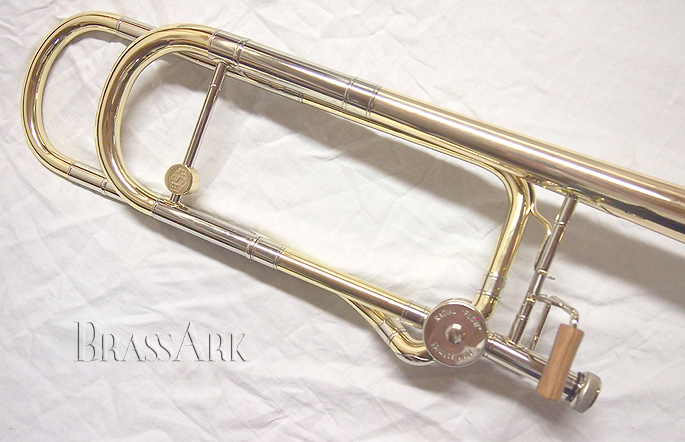
For reference, here is the Bousfield:

And CL2000:
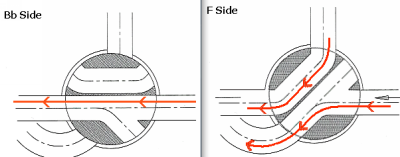
Those all look like they have 4 ports. So does an axial.
Maybe she was referring to the CL2000 valve and the Bousfield Yamaha valve, which I believe are both internally different from the Minick valve. His valve, and the new Radial Flow valve depicted below, truly have a straight pipe down the middle when in the Bb position. The Minick valve design is the same as this one:
For reference, here is the Bousfield:
And CL2000:
Those all look like they have 4 ports. So does an axial.
- GabrielRice
- Posts: 1496
- Joined: Mar 23, 2018
He was gruff. I talked with him on the phone once - called to ask if I could try his leadpipes in my Bach 50. He said "no, you can buy them." I asked if I could return the ones I didn't want to keep. He said "no." I said OK, goodbye.
- euphobone
- Posts: 47
- Joined: Jun 15, 2020
Just an observation, tangential, but related to the article. It says Minnick died on January 1999, but the article is dated January 1997. :shock:
[quote="JohnL"]The question then becomes whether the sloppy work was done by Larry Minick or by someone else. I'm inclined to think that someone else worked on it after the fact.
Here's a brief write-up about him:
https://www.trombone.org/articles/view.php?id=76
Understand that he was active prior to the introduction of modular trombones. If you wanted anything beyond the standard offerings from the big companies, it was a custom job - and he was one of the go-to guys here is SoCal for that sort of thing.
He converted singles to doubles, and dependent doubles to independent doubles (indy doubles were a new thing back then). The story is that he did the first open-wrap conversion.
As I understand it, the first batch of 100H's were more or less faithful to his design and are highly sought after. The ones built after that, not so much.
His did a lot of mouthpiece work, too. Much of the Ferguson mouthpiece line (sold by hornguys.com) is based on Minick designs.[/quote]
[quote="JohnL"]The question then becomes whether the sloppy work was done by Larry Minick or by someone else. I'm inclined to think that someone else worked on it after the fact.
Here's a brief write-up about him:
https://www.trombone.org/articles/view.php?id=76
Understand that he was active prior to the introduction of modular trombones. If you wanted anything beyond the standard offerings from the big companies, it was a custom job - and he was one of the go-to guys here is SoCal for that sort of thing.
He converted singles to doubles, and dependent doubles to independent doubles (indy doubles were a new thing back then). The story is that he did the first open-wrap conversion.
As I understand it, the first batch of 100H's were more or less faithful to his design and are highly sought after. The ones built after that, not so much.
His did a lot of mouthpiece work, too. Much of the Ferguson mouthpiece line (sold by hornguys.com) is based on Minick designs.[/quote]
- Conn100HGuy
- Posts: 126
- Joined: Oct 22, 2018
[quote="JohnL"]As I understand it, the first batch of 100H's were more or less faithful to his design and are highly sought after. The ones built after that, not so much.[/quote]
What are considered the "first batch"? My 100H was built in 1991, has all of the Minick design elements and plays great.
What are considered the "first batch"? My 100H was built in 1991, has all of the Minick design elements and plays great.
- Bach5G
- Posts: 2874
- Joined: Apr 07, 2018
I had both: a Minick and a Conn 100H.
The Minick played flat and had to be cut down. The slide on the 100H was unrepairably bad.
The Minick played flat and had to be cut down. The slide on the 100H was unrepairably bad.
- FOSSIL
- Posts: 688
- Joined: Jul 09, 2019
[quote="Bach5G"]I had both: a Minick and a Conn 100H.
The Minick played flat and had to be cut down. The slide on the 100H was unrepairably bad.[/quote]
So you liked them both then.....
Chris
The Minick played flat and had to be cut down. The slide on the 100H was unrepairably bad.[/quote]
So you liked them both then.....
Chris
- FOSSIL
- Posts: 688
- Joined: Jul 09, 2019
[quote="Bach5G"]I got tremendous satisfaction selling them.[/quote]
:D :D :D
Chris
:D :D :D
Chris
- harrisonreed
- Posts: 6479
- Joined: Aug 17, 2018
People also used to think "The Blues Brothers" was a funny movie, but if you watch it today you realize just how high people were back then...so maybe it is more of a mixed bag situation.
- andym
- Posts: 127
- Joined: Dec 23, 2018
He could be pretty direct. I talked to him once with an idea for a modification of a really nice playing Conn 50H (seriously it has a great bell). He told me it wasn’t worth doing. I’ve come to understand that he was right. I moved onto a Bach 36B and a couple of Shires instead. But I wouldn’t mind owning a Minick just for the mystique.
- brassmedic
- Posts: 1447
- Joined: Dec 14, 2018
[quote="harrisonreed"]Interestingly, that article mentions his wife said: She says the Conn/UMI and Yamaha musical instrument companies currently use his three-port rotary valves on trombones. I have no idea about a three port valve. It can't be the axial?
Maybe she was referring to the CL2000 valve and the Bousfield Yamaha valve, which I believe are both internally different from the Minick valve. His valve, and the new Radial Flow valve depicted below, truly have a straight pipe down the middle when in the Bb position. The Minick valve design is the same as this one:
For reference, here is the:
And :
Those all look like they have 4 ports. So does an axial.[/quote]
I suspect she was talking about the number of internal passages, not the number of external openings. I haven't seen one for a long time, but if I remember right, the Minick valve had a straight passage through the center of the rotor and two separate curved passages on either side of the straight passage. There was no forked, or "Y" passage, as in the CL2000 or Bousfield valves. I don't think such a thing existed at the time.
Maybe she was referring to the CL2000 valve and the Bousfield Yamaha valve, which I believe are both internally different from the Minick valve. His valve, and the new Radial Flow valve depicted below, truly have a straight pipe down the middle when in the Bb position. The Minick valve design is the same as this one:
For reference, here is the:
And :
Those all look like they have 4 ports. So does an axial.[/quote]
I suspect she was talking about the number of internal passages, not the number of external openings. I haven't seen one for a long time, but if I remember right, the Minick valve had a straight passage through the center of the rotor and two separate curved passages on either side of the straight passage. There was no forked, or "Y" passage, as in the CL2000 or Bousfield valves. I don't think such a thing existed at the time.
- harrisonreed
- Posts: 6479
- Joined: Aug 17, 2018
Yes, that first image has an internal setup that looks like this:
) ) | | ( (
) ) | | ( (
- tbonesullivan
- Posts: 1959
- Joined: Jul 02, 2019
From my understanding, a lot of the work Minick did was for the LA area professional market. While he did use a lot of off the shelf parts, he also did fabricate some items, like the Beryllium Bronze bells on some custom bass trombones. Noah Gladstone at the Brass Ark would probably be the one person to ask about Minick, as he has seen, played, and sold quite a number of Minick horns.
The valve that Minick made was from what Gladstone said, pretty much identical to the Meinlschmidt Radial Flow valve, and he may have been the first person to look into a rotary valve design with a straight shot through the middle.
One of the mods I have seen a lot of is the splitting of triggers and opening up of wraps on dependent bass trombones. All of this however was done to meet the needs of players. He also designed and made some mouthpieces, and probably did a lot of pretty standard work that no one really wrote home about. Most of what you hear about is the custom modification work he did.
The valve that Minick made was from what Gladstone said, pretty much identical to the Meinlschmidt Radial Flow valve, and he may have been the first person to look into a rotary valve design with a straight shot through the middle.
One of the mods I have seen a lot of is the splitting of triggers and opening up of wraps on dependent bass trombones. All of this however was done to meet the needs of players. He also designed and made some mouthpieces, and probably did a lot of pretty standard work that no one really wrote home about. Most of what you hear about is the custom modification work he did.
- Bonearzt
- Posts: 833
- Joined: Mar 22, 2018
[quote="euphobone"]Just an observation, tangential, but related to the article. It says Minnick died on January 1999, but the article is dated January 1997. :shock:
[/quote]
[/quote]
Hey Raul, I too thought that time discrepancy was interesting....
Eric
[/quote]
[/quote]
Hey Raul, I too thought that time discrepancy was interesting....
Eric
- LIBrassCo
- Posts: 585
- Joined: Feb 24, 2019
The cl2000 valve is the minnick valve, there's an old photo of him in his shop with it right next to him, clearly the same valve.
And yes, a lot of minnicks work was fugly. Was not known for fit and finish thats for sure. However, other horns that came out of his shop were done quite well.
And yes, a lot of minnicks work was fugly. Was not known for fit and finish thats for sure. However, other horns that came out of his shop were done quite well.
- harrisonreed
- Posts: 6479
- Joined: Aug 17, 2018
No it's not. The internal rotor is different. Straight tube through the middle. It's the same as the valve on the brass ark trombone.
CL2000:

Minnick:
You'll notice that the middle tube in the minnick is not aY piece, but a straight tube. So it's shaped like this inside:
)| |(
CL2000:
Minnick:
You'll notice that the middle tube in the minnick is not aY piece, but a straight tube. So it's shaped like this inside:
)| |(
- HawaiiTromboneGuy
- Posts: 1025
- Joined: Sep 03, 2018
One of these days I’ll have to get me a Minick horn. Never had the opportunity to try one yet.
- WGWTR180
- Posts: 2152
- Joined: Sep 04, 2019
[quote="LIBrassCo"]The cl2000 valve is the minnick valve, there's an old photo of him in his shop with it right next to him, clearly the same valve.
And yes, a lot of minnicks work was fugly. Was not known for fit and finish thats for sure. However, other horns that came out of his shop were done quite well.[/quote]
To say that a LOT of Minick's work was Fugly is incorrect. Some maybe. Much of what HE did was beautifully done. I know that there's one bass trombone being sold somewhere that the seller claims to be a Minick because of a lever but indeed is not. One has to do their homework.
And yes, a lot of minnicks work was fugly. Was not known for fit and finish thats for sure. However, other horns that came out of his shop were done quite well.[/quote]
To say that a LOT of Minick's work was Fugly is incorrect. Some maybe. Much of what HE did was beautifully done. I know that there's one bass trombone being sold somewhere that the seller claims to be a Minick because of a lever but indeed is not. One has to do their homework.
- Bach5G
- Posts: 2874
- Joined: Apr 07, 2018
I had a Minick “100H” for a while. I thought it played played a little flat. I sold it to a fellow who was with the touring Duke E orch. He tried it out during the sound check and I could see him fussing with it. His conclusion: it played flat. He bought it anyway and had it cut down a bit.
- CalgaryTbone
- Posts: 1460
- Joined: May 10, 2018
Minnick was one of the first repair guys to venture into open wraps, detachable valve sections, and removable leadpipes. Also, the making of leadpipes of his own design, and experimenting with bracing on stock horns like Conns and Bachs.
These were new innovations when I was a student, but people were already experimenting with the stock horns by swapping bells and slides. Often, they'd own a straight and trigger bell section (8H/88H, 42/42B) for different music. Players looking for an 88H at a music store would get all of the store's stock of that model in the room where they were trying the horns, and would swap parts until they found the best slide/bell combo. Stores seldom have the stock of a particular instrument anymore, and often there are serial numbers on slide and bell, so they don't encourage you to swap parts anymore.
In some ways, Minnick's innovations started the trend of modular horns that are very common now. If you want to experiment with parts, it's nice to not have to do major surgery to an instrument.
Jim Scott
These were new innovations when I was a student, but people were already experimenting with the stock horns by swapping bells and slides. Often, they'd own a straight and trigger bell section (8H/88H, 42/42B) for different music. Players looking for an 88H at a music store would get all of the store's stock of that model in the room where they were trying the horns, and would swap parts until they found the best slide/bell combo. Stores seldom have the stock of a particular instrument anymore, and often there are serial numbers on slide and bell, so they don't encourage you to swap parts anymore.
In some ways, Minnick's innovations started the trend of modular horns that are very common now. If you want to experiment with parts, it's nice to not have to do major surgery to an instrument.
Jim Scott
- mrdeacon
- Posts: 1225
- Joined: May 08, 2018
[quote="LIBrassCo"]The cl2000 valve is the minnick valve, there's an old photo of him in his shop with it right next to him, clearly the same valve.
And yes, a lot of minnicks work was fugly. Was not known for fit and finish thats for sure. However, other horns that came out of his shop were done quite well.[/quote]
Like most techs he definitely did quick jobs and sometimes did some pretty weird stuff because he was short on parts. I have a Minick Bass slide that came with my full Minick bass which has parts from at least 4 manufacturers in it. The slide looked terrible but played pretty well!
His A+ work was spotless though. When he paid attention to detail he really nailed it.
And yes, a lot of minnicks work was fugly. Was not known for fit and finish thats for sure. However, other horns that came out of his shop were done quite well.[/quote]
Like most techs he definitely did quick jobs and sometimes did some pretty weird stuff because he was short on parts. I have a Minick Bass slide that came with my full Minick bass which has parts from at least 4 manufacturers in it. The slide looked terrible but played pretty well!
His A+ work was spotless though. When he paid attention to detail he really nailed it.
- harrisonreed
- Posts: 6479
- Joined: Aug 17, 2018
<YOUTUBE id="mWAgrz8vgfM">[media]https://youtu.be/mWAgrz8vgfM</YOUTUBE>
He did this ^
What a gem of a video. Feel like I sort of met the guy. Also, bring back wax paper and brown bags for lunch. Save the earth.
He did this ^
What a gem of a video. Feel like I sort of met the guy. Also, bring back wax paper and brown bags for lunch. Save the earth.
- ithinknot
- Posts: 1339
- Joined: Jul 24, 2020
[quote="harrisonreed"]What a gem of a video. Feel like I sort of met the guy. Also, bring back wax paper and brown bags for lunch. Save the earth.[/quote]
Wonderful!
Reed 2020: A banana in every violin case
Wonderful!
Reed 2020: A banana in every violin case
- MinickLover
- Posts: 2
- Joined: Dec 21, 2020
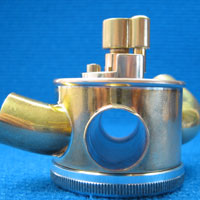
I'm surprised that I couldn't find any informations about Minick Valve.
This is the picture I saw at the musical shop in Japan.
I think this valve works effectively more than other valves.
This is the picture I saw at the musical shop in Japan.
I think this valve works effectively more than other valves.
- harrisonreed
- Posts: 6479
- Joined: Aug 17, 2018
Looks less efficient than the minnick design used in the brass ark horn.
- Elow
- Posts: 1924
- Joined: Mar 02, 2020
I’m a little confused, where is the straight pathway? All i see on the actual horn is bends
- BGuttman
- Posts: 7368
- Joined: Mar 22, 2018
[quote="Elow"]I’m a little confused, where is the straight pathway? All i see on the actual horn is bends[/quote]
The straight pathway is used when you press the valve. It goes straight through into the attachment and the tight bend is the return. With the valve out of operation the tight bend connects the receiver to the gooseneck.
The straight pathway is used when you press the valve. It goes straight through into the attachment and the tight bend is the return. With the valve out of operation the tight bend connects the receiver to the gooseneck.
- Jimprindle
- Posts: 103
- Joined: Apr 16, 2018
Getting back to the original topic, “What did Minick do”. He worked on my horns many times through the 1970s up to around 1980 I think. He originally made my Conn 72H a double trigger F/G/Eb open wrap instrument in 1971. Besides that, I went to him several times for various repairs—replacing the 72H yellow brass bell with a 71H red brass bell, and various other things.
Towards the end of his stay in LA and before his move to Cambria, I took my Elkhart 1960s Bach 50B to make a detachable double trigger (Bb/F/D) an open wrap. In his cantankerous way, he would only do it if I brought him parts from the same era that the 50 B was built. I was able to find those at the Brass Lab in New York and he did the work. But before he started, he asked in his grumpy way, “Do you want me to fix the #%*$& job that the guy did on fixing the bell brace?”.
A few months before, a bell brace had come loose and a guy reattached it and re-soldered it for me, I asked Larry what he was talking about. He pulled out the tuning pipe and said “Look down there, it’s not round it’s oval there’s too much tension between the bell brace and the bell, it’s canceling out the vibrations of the bell.” I had noticed since I had it fixed that the trombone sounded different from when I had bought it.
I asked Larry does that make a difference? He said of course, I have to do this all the time with horns that are brought to me, usually I don’t tell people about it I just do it it Has to be completely round and flexible otherwise the bell won’t vibrate as it should.
He did the work and I was amazed at how much better it sounded after he reattached the bell and made it more flexible to the bell brace. I asked him what other things he did that were kind of magical that he didn’t tell people. He said one of the big things is the neck pipe. A lot of times it is not smoothly opening up from the hand slide to the tuning slide. He said he would stretch a few things here and there to make it open up a little more smoothly.
Another thing he said when he was making mouthpieces was to make sure that the backbore was absolutely straight. He said he threw a lot of blanks away that he did not drill correctly and he thought that that was one of the big problems with manufactured mouthpieces. I bought several and sold several of the MinickV and MinickL mouthpieces and that was the one thing I did notice about them. They were totally straight. You can tell if one side of the mouthpiece backbore is a little thinner than another side. Later, when I got a Jeff Reynolds Ferguson mouthpiece, I thought it was really good until I noticed I had to clock it when I put it in because of the fact it was not drilled completely straight in the backbore. The Ferguson LS I got later was and it is a much better mouthpiece because of it.
And I had other colleagues of mine that frequently went to Minick and they told me that he had a little special touches beyond that. How he soldered some thing, how he cleaned up something, how he straightens something—little minor things that a craftsman would know how to do rather than just bang out a dent.
One of the things I remember is he told me he absolutely hated aligning trombone slides, drove him nuts. Usually told me to take it to somebody else. He said he would take out a dent but that’s it. Actually, he said that with a lot more four letter words than I’m going to put here
Towards the end of his stay in LA and before his move to Cambria, I took my Elkhart 1960s Bach 50B to make a detachable double trigger (Bb/F/D) an open wrap. In his cantankerous way, he would only do it if I brought him parts from the same era that the 50 B was built. I was able to find those at the Brass Lab in New York and he did the work. But before he started, he asked in his grumpy way, “Do you want me to fix the #%*$& job that the guy did on fixing the bell brace?”.
A few months before, a bell brace had come loose and a guy reattached it and re-soldered it for me, I asked Larry what he was talking about. He pulled out the tuning pipe and said “Look down there, it’s not round it’s oval there’s too much tension between the bell brace and the bell, it’s canceling out the vibrations of the bell.” I had noticed since I had it fixed that the trombone sounded different from when I had bought it.
I asked Larry does that make a difference? He said of course, I have to do this all the time with horns that are brought to me, usually I don’t tell people about it I just do it it Has to be completely round and flexible otherwise the bell won’t vibrate as it should.
He did the work and I was amazed at how much better it sounded after he reattached the bell and made it more flexible to the bell brace. I asked him what other things he did that were kind of magical that he didn’t tell people. He said one of the big things is the neck pipe. A lot of times it is not smoothly opening up from the hand slide to the tuning slide. He said he would stretch a few things here and there to make it open up a little more smoothly.
Another thing he said when he was making mouthpieces was to make sure that the backbore was absolutely straight. He said he threw a lot of blanks away that he did not drill correctly and he thought that that was one of the big problems with manufactured mouthpieces. I bought several and sold several of the MinickV and MinickL mouthpieces and that was the one thing I did notice about them. They were totally straight. You can tell if one side of the mouthpiece backbore is a little thinner than another side. Later, when I got a Jeff Reynolds Ferguson mouthpiece, I thought it was really good until I noticed I had to clock it when I put it in because of the fact it was not drilled completely straight in the backbore. The Ferguson LS I got later was and it is a much better mouthpiece because of it.
And I had other colleagues of mine that frequently went to Minick and they told me that he had a little special touches beyond that. How he soldered some thing, how he cleaned up something, how he straightens something—little minor things that a craftsman would know how to do rather than just bang out a dent.
One of the things I remember is he told me he absolutely hated aligning trombone slides, drove him nuts. Usually told me to take it to somebody else. He said he would take out a dent but that’s it. Actually, he said that with a lot more four letter words than I’m going to put here
- RJMason
- Posts: 390
- Joined: Jun 05, 2018
I just got a .500 Minick from Noah at the BrassArk and it is amazing. The tone is so pure and resonant, but the sound is so malleable. The horn is as light as a Martín Urbie Green, but feels solid like an old Conn. Definitely has some modified conn parts, but I’m not so sure about the bell. It looks like he made it himself, has a handmade quality to it. It doesn’t look like the factory made 6H I played for several years, maybe he respun a factory bell and messed with it. It’s an early horn with an Earl Williams handgrip instead of his own design and Herrick leadpipe. Partials feel closer together than my other horns so I’m adjusting but it’s really brass alchemy to me. I’ve been disappointed by a lot of other “legendary” vintage horns and custom shops in the past, but this horn lives up to the hype.
- yeodoug
- Posts: 56
- Joined: May 10, 2018
[quote="euphobone"]Just an observation, tangential, but related to the article. It says Minnick died on January 1999, but the article is dated January 1997. :shock:[/quote]
While looking for some information about Larry Minick, I found this thread. Just clear up this question, Larry Minick was born on August 13, 1945 and died on January 12, 1999.
[url]<LINK_TEXT text="https://www.findagrave.com/memorial/300 ... vid-minick">https://www.findagrave.com/memorial/30051926/larry-david-minick</LINK_TEXT>
-Douglas Yeo
While looking for some information about Larry Minick, I found this thread. Just clear up this question, Larry Minick was born on August 13, 1945 and died on January 12, 1999.
-Douglas Yeo
- Posaunus
- Posts: 5018
- Joined: Mar 23, 2018
[quote="yeodoug"]While looking for some information about Larry Minick, I found this thread. Just clear up this question, Larry Minick was born on August 13, 1945 and died on January 12, 1999.
[url]<LINK_TEXT text="https://www.findagrave.com/memorial/300 ... vid-minick">https://www.findagrave.com/memorial/30051926/larry-david-minick</LINK_TEXT>[/quote]
Actually born on August 13, <B>1943</B> and died on January 12, 1999 (age 55), per the article.
Still lots of folks around Southern California who knew (and had work done by) Larry Minick.
Actually born on August 13, <B>1943</B> and died on January 12, 1999 (age 55), per the article.
Still lots of folks around Southern California who knew (and had work done by) Larry Minick.
- SackbuttRobert
- Posts: 8
- Joined: Feb 20, 2021
I have a minick hackbut made by a staffer, Dick Hansen. It's a circumcised Beuscher with my name engraved on the bell. Dick's daughter played alto sackbut in my band.
- harrisonreed
- Posts: 6479
- Joined: Aug 17, 2018
[quote="SackbuttRobert"]I have a minick hackbut made by a staffer, Dick Hansen. It's a circumcised Beuscher with my name engraved on the bell. Dick's daughter played alto sackbut in my band.[/quote]
I never realized Dick had worked for Larry.
Being from MA, I had brought my 88H to Dick to have the F attachment brace resoldered and the slide aligned. He just took a torch to the the hand brace on a level stone, and the tubes magically aligned. He did a great job! And maybe it was just because I was young, but I couldn't believe the great price -- beyond affordable.
He had a tuba that someone had encased in concrete that he was excavating....
I never realized Dick had worked for Larry.
Being from MA, I had brought my 88H to Dick to have the F attachment brace resoldered and the slide aligned. He just took a torch to the the hand brace on a level stone, and the tubes magically aligned. He did a great job! And maybe it was just because I was young, but I couldn't believe the great price -- beyond affordable.
He had a tuba that someone had encased in concrete that he was excavating....
- Elow
- Posts: 1924
- Joined: Mar 02, 2020
Does anyone know what minick based his bass bells off of and how similar they are
- harrisonreed
- Posts: 6479
- Joined: Aug 17, 2018
I think he mostly bought unmarked bells straight from Elkhart
- harrisonreed
- Posts: 6479
- Joined: Aug 17, 2018
[quote="Elow"]I’m talking about his beryllium bells[/quote]
I believe that he had Conn mandrels that he used when he did make his own bells. That is the extent of what I know about that though.
I believe that he had Conn mandrels that he used when he did make his own bells. That is the extent of what I know about that though.
- SackbuttRobert
- Posts: 8
- Joined: Feb 20, 2021
[quote="harrisonreed"]<QUOTE author="SackbuttRobert" post_id="144789" time="1617144470" user_id="11468">
I have a minick hackbut made by a staffer, Dick Hansen. It's a circumcised Beuscher with my name engraved on the bell. Dick's daughter played alto sackbut in my band.[/quote]
I never realized Dick had worked for Larry.
Being from MA, I had brought my 88H to Dick to have the F attachment brace resoldered and the slide aligned. He just took a torch to the the hand brace on a level stone, and the tubes magically aligned. He did a great job! And maybe it was just because I was young, but I couldn't believe the great price -- beyond affordable.
He had a tuba that someone had encased in concrete that he was excavating....
</QUOTE>
Dick used to answer the phone at Minick's like this, "Minick's, Dick here." I don't know that he knew he was somewhat famous for that.
I have a minick hackbut made by a staffer, Dick Hansen. It's a circumcised Beuscher with my name engraved on the bell. Dick's daughter played alto sackbut in my band.[/quote]
I never realized Dick had worked for Larry.
Being from MA, I had brought my 88H to Dick to have the F attachment brace resoldered and the slide aligned. He just took a torch to the the hand brace on a level stone, and the tubes magically aligned. He did a great job! And maybe it was just because I was young, but I couldn't believe the great price -- beyond affordable.
He had a tuba that someone had encased in concrete that he was excavating....
</QUOTE>
Dick used to answer the phone at Minick's like this, "Minick's, Dick here." I don't know that he knew he was somewhat famous for that.
- Kbiggs
- Posts: 1768
- Joined: Mar 24, 2018
[quote="SackbuttRobert"]
Dick used to answer the phone at Minick's like this, "Minick's, Dick here." I don't know that he knew he was somewhat famous for that.[/quote]
It’s probably just the twelve-year-old boy in me, but that’s funny.
Dick used to answer the phone at Minick's like this, "Minick's, Dick here." I don't know that he knew he was somewhat famous for that.[/quote]
It’s probably just the twelve-year-old boy in me, but that’s funny.
- harrisonreed
- Posts: 6479
- Joined: Aug 17, 2018
He knew what he was saying. There is no way the guy I know didn't know what he was saying. That's pretty funny
- SackbuttRobert
- Posts: 8
- Joined: Feb 20, 2021
A buddy of mine told me about it and I had reason to call the store up (related to my sackbut conversion) and he definitely did it.
- timbone
- Posts: 240
- Joined: Apr 30, 2018
So I got to know Larry just by phone- and he worked on two Conn’s of mine- my 59 8h and my 21 70h. I got his voicemail when I wanted to send him the 70, and I described what I wanted done to it and sent it off (I was in san diego at the time) two days later he called me and sounded astonished- he had never seen a conn like that and thought it was a prototype. I wanted it playable, so I wanted a real trigger on it (it had the leather thumb cradle and clock spring rotor which I still have) and he would not mess with the leadpipe for fear of cracking it (it was a euro shank like a euphonium). So there it is- its a horn that really plays! So I would call Larry up and we would just talk about cars and also he was really interested in the conn engravers, so I sent him my copy of margaret downy bank’s book on conn stencils and he loved that. Once I asked him where I could find a 62H (which is another story) but right away he said call jeff reynolds, here’s his number......so I ended up spending a couple of hours at jeff’s place which was a lot of fun. Now jeff was a curmudgeon with me (not larry) until I went to see him. Larry told me how much he wanted for the horn, so I emptied my bank account (lol) and when it was time I offered him the money and I think he was Impressed that I didn't try to lowball him so he asked me if I needed a mouthpiece and preceded to open a cabinet and take a minnick L from about a dozen of his personal stock and put it in the case. Later, I tried to play that piece but I just couldn’t- I’m a tenor player and playing a middle c was a challenge. I ended up trading it for a bell section. Oh well- I know where it is I think lol. Meanwhile my heart was palpitating as I opened the 62 case; it was basically new because lint from the case was still stuck to the slide which hadn’t been broken in. I had great memories of that horn as my first teacher played one and I remember his sound and the beautiful red bell and there it was, right before me! Lastly, jeffery was playing an old bach 45 or 50, and had no interest in a conn. Later there is the la phil section all playing conns on the back page of the itf journal! Jeff did have a bell section that he and larry were working on, code named the sextapuss. It was one valve with six ports and if you moved it one way it was one key and the other way- another key. So a double bass on one valve- and the trigger was sort of like a whammy bar! Sorry for the long read here, next time I’d like to talk about my time with Art Pearlman.
- Peacemate
- Posts: 125
- Joined: Apr 07, 2020
[quote="timbone"]Jeff did have a bell section that he and larry were working on, code named the sextapuss. It was one valve with six ports and if you moved it one way it was one key and the other way- another key. So a double bass on one valve- and the trigger was sort of like a whammy bar![/quote]
I realized a while ago that there are some valve types that wouldn't require any modification to the internals to achieve this, only more external paths and more rotation. Might need to finish that valve-writeup I was working on for a while, complete with patent numbers for a multitude of valve types.
I realized a while ago that there are some valve types that wouldn't require any modification to the internals to achieve this, only more external paths and more rotation. Might need to finish that valve-writeup I was working on for a while, complete with patent numbers for a multitude of valve types.
- bellend
- Posts: 218
- Joined: Mar 23, 2018
<ATTACHMENT filename="medium.jpg" index="0">[attachment=0]medium.jpg</ATTACHMENT>
It seems that Mr Minick made more than one style of valve as this , not the other above is the one with the straight section.
BellEnd
It seems that Mr Minick made more than one style of valve as this , not the other above is the one with the straight section.
BellEnd
- Noshero
- Posts: 7
- Joined: Aug 13, 2021
Hi Forum,
Please allow me jumping in here. I’m a community musician in CA. I have a few pieces of memory with Larry Minick, and wanted to share (as a natural occurrence when getting old) with you on this forum. Hope this is an appropriate post.
I knew the legendary name from my youth. I learned from a music store in Santa Barbara that Minick lived in Cambria, so decided to pay him a visit. I guess I was young and rude not making an appointment with him but, he was a bit scaring looking at first, he welcomed me warmly. He showed me his workshop. This photo was taken on April 6, 1995 upon my first visit. I made my second visit on September 9, 1996.
<ATTACHMENT filename="Minick_April1995.jpg" index="0">[attachment=0]Minick_April1995.jpg</ATTACHMENT>
I told him I had been having hard time finding a mouthpiece for my 88H. I was a 5GS user and using an adaptor to make it (std shank) fit to the Conn shank. I was lucky; he offered me one that he made and I bought it immediately from him in this workshop. He had a dozen of it; they looked like just came back from plating. The mouthpiece feels like a small tuba mouthpiece, noticeably larger. The rim shape is somewhat similar to 5GS but a bit thinner.
<ATTACHMENT filename="mouthpiece.jpg" index="1">[attachment=1]mouthpiece.jpg</ATTACHMENT>
This alto trombone was at a music shop in Osaka, Japan when I accidentally stopped by during a trip. It was 1999. The shopkeeper told me that Minick had passed away, I didn’t know, and I convinced myself that I had to buy this horn. A lot later I asked the Santa Barbara shop to make a slight change in its slide brace, because I really want to play the horn rather than hanging it on a wall. It plays very nice, sounds like a trumpet. It was somewhere in Mendelssohn’s symphony that the alto plays a long major third chord in f with a trumpet; I can’t forget that thrilling sound. This alto really bridges between trombones and trumpets.
<ATTACHMENT filename="Alto.jpg" index="2">[attachment=2]Alto.jpg</ATTACHMENT>
Thank you for reading.
Please allow me jumping in here. I’m a community musician in CA. I have a few pieces of memory with Larry Minick, and wanted to share (as a natural occurrence when getting old) with you on this forum. Hope this is an appropriate post.
I knew the legendary name from my youth. I learned from a music store in Santa Barbara that Minick lived in Cambria, so decided to pay him a visit. I guess I was young and rude not making an appointment with him but, he was a bit scaring looking at first, he welcomed me warmly. He showed me his workshop. This photo was taken on April 6, 1995 upon my first visit. I made my second visit on September 9, 1996.
<ATTACHMENT filename="Minick_April1995.jpg" index="0">
I told him I had been having hard time finding a mouthpiece for my 88H. I was a 5GS user and using an adaptor to make it (std shank) fit to the Conn shank. I was lucky; he offered me one that he made and I bought it immediately from him in this workshop. He had a dozen of it; they looked like just came back from plating. The mouthpiece feels like a small tuba mouthpiece, noticeably larger. The rim shape is somewhat similar to 5GS but a bit thinner.
<ATTACHMENT filename="mouthpiece.jpg" index="1">
This alto trombone was at a music shop in Osaka, Japan when I accidentally stopped by during a trip. It was 1999. The shopkeeper told me that Minick had passed away, I didn’t know, and I convinced myself that I had to buy this horn. A lot later I asked the Santa Barbara shop to make a slight change in its slide brace, because I really want to play the horn rather than hanging it on a wall. It plays very nice, sounds like a trumpet. It was somewhere in Mendelssohn’s symphony that the alto plays a long major third chord in f with a trumpet; I can’t forget that thrilling sound. This alto really bridges between trombones and trumpets.
<ATTACHMENT filename="Alto.jpg" index="2">
Thank you for reading.
- SwissTbone
- Posts: 1138
- Joined: Mar 23, 2018
[quote="Noshero"]Hi Forum,
Please allow me jumping in here...[/quote]
Thanks for jumping in! Awesome hearing some first hand experiences!
Please allow me jumping in here...[/quote]
Thanks for jumping in! Awesome hearing some first hand experiences!
- tbonesullivan
- Posts: 1959
- Joined: Jul 02, 2019
[quote="Noshero"]I told him I had been having hard time finding a mouthpiece for my 88H. I was a 5GS user and using an adaptor to make it (std shank) fit to the Conn shank. I was lucky; he offered me one that he made and I bought it immediately from him in this workshop. He had a dozen of it; they looked like just came back from plating. The mouthpiece feels like a small tuba mouthpiece, noticeably larger. The rim shape is somewhat similar to 5GS but a bit thinner.[/quote]
Thank you so much for sharing that! Minick really did a lot, and it is such a shame that we lost him so soon. I'm actually quite in love with a lot of his MPC designs, and think it's great that Ferguson music has been making some very good replicas.
Thank you so much for sharing that! Minick really did a lot, and it is such a shame that we lost him so soon. I'm actually quite in love with a lot of his MPC designs, and think it's great that Ferguson music has been making some very good replicas.
- harrisonreed
- Posts: 6479
- Joined: Aug 17, 2018
[quote="Noshero"]Hi Forum,
Please allow me jumping in here.[/quote]
Wow! One of the best posts I've ever read. Thanks!
Please allow me jumping in here.[/quote]
Wow! One of the best posts I've ever read. Thanks!
- Kbiggs
- Posts: 1768
- Joined: Mar 24, 2018
Noshero,
Thanks for sharing that with the TF community. It brings a human element to someone who has become (almost) legendary.
A question out of curiosity: Is the mouthpiece you have similar to the one Minick made for Christian Lindberg when he had some work done on his Conn trombone(s)?
Thanks for sharing that with the TF community. It brings a human element to someone who has become (almost) legendary.
A question out of curiosity: Is the mouthpiece you have similar to the one Minick made for Christian Lindberg when he had some work done on his Conn trombone(s)?
- Noshero
- Posts: 7
- Joined: Aug 13, 2021
Hi Kbiggs, sorry, I’m not very sure if I can answer right. A Lindberg model that I know had a triangular outer shape that came with a black silicone molded case. Many years ago I had one. I don’t know if Minick designed that one, but is this the one you are talking about? My impression was the rim was a little too round so I didn’t like it much. And, if I remember correctly, it was much smaller than this Minick made that I have today. So I’d say the triangular Lindberg model and this Minick made are rather dissimilar.
- harrisonreed
- Posts: 6479
- Joined: Aug 17, 2018
I've asked in the past about the evolution of the Lindberg mouthpiece. The Minick Lindberg mouthpiece was larger than the current 5CL, and had a wider rim profile. It was a one off, made for him while he was studying in LA. He already had a Minick 88H and one off mouthpiece by the time his second album, the Virtuoso Trombone, came out and he used that setup on that album and a couple of his other very early albums.
When he started experimenting with new mouthpieces, he was doing hundreds of recitals and concerts per year, and he had a pretty weird mouthpiece called the 1CL which was basically built around an attempt to build as much playing endurance into the equipment as possible -- it had the shallowest cup and smallest throat of the large bore CL mouthpieces. The rim wasn't quite the weird Lindberg rim you get on the 5CL, but was in between that and a round Bach profile -- wider profile than the 5CL and smaller cup diameter. Probably as close to the Minick rim as we'll get. I actually had a 1CL I got from a music store that was liquidating, and Christian told me that there has only been a few prototypes made and sent out as promo/tester items to see if there was a market for CL mouthpieces. He was really surprised that they still existed. I sold it to someone on the old forum. Here's what it looked like:
<ATTACHMENT filename="20161120_162939.jpg" index="2">[attachment=2]20161120_162939.jpg</ATTACHMENT>
<ATTACHMENT filename="20161120_163040.jpg" index="1">[attachment=1]20161120_163040.jpg</ATTACHMENT>
<ATTACHMENT filename="20161120_163023.jpg" index="0">[attachment=0]20161120_163023.jpg</ATTACHMENT>
Then the series evolved from there. He got his endurance but not the volume of sound he needed for some of the new concertos that were being written. They kept the same blank, and by widening the cup slightly the rim profile got thinner. The 5CL is a slightly deeper cup. The 4CL is deeper still, with the huge throat. One of the loudest mouthpieces I've ever tried. It's all good stuff, but going all the way back to Minick it was designed for one particular person with one very particular set of goals, not the last of which was "how can I play for as long as possible without getting tired and missing any notes?" Especially at the start of his career, missed notes could have ended his career right then and there, and chopping out would have been the end.
When he started experimenting with new mouthpieces, he was doing hundreds of recitals and concerts per year, and he had a pretty weird mouthpiece called the 1CL which was basically built around an attempt to build as much playing endurance into the equipment as possible -- it had the shallowest cup and smallest throat of the large bore CL mouthpieces. The rim wasn't quite the weird Lindberg rim you get on the 5CL, but was in between that and a round Bach profile -- wider profile than the 5CL and smaller cup diameter. Probably as close to the Minick rim as we'll get. I actually had a 1CL I got from a music store that was liquidating, and Christian told me that there has only been a few prototypes made and sent out as promo/tester items to see if there was a market for CL mouthpieces. He was really surprised that they still existed. I sold it to someone on the old forum. Here's what it looked like:
<ATTACHMENT filename="20161120_162939.jpg" index="2">
<ATTACHMENT filename="20161120_163040.jpg" index="1">
<ATTACHMENT filename="20161120_163023.jpg" index="0">
Then the series evolved from there. He got his endurance but not the volume of sound he needed for some of the new concertos that were being written. They kept the same blank, and by widening the cup slightly the rim profile got thinner. The 5CL is a slightly deeper cup. The 4CL is deeper still, with the huge throat. One of the loudest mouthpieces I've ever tried. It's all good stuff, but going all the way back to Minick it was designed for one particular person with one very particular set of goals, not the last of which was "how can I play for as long as possible without getting tired and missing any notes?" Especially at the start of his career, missed notes could have ended his career right then and there, and chopping out would have been the end.
- Posaunus
- Posts: 5018
- Joined: Mar 23, 2018
Harrison,
Thanks for the Lindberg mouthpiece history. Makes sense.
As you once did, I have played (and enjoyed) the Lindberg 5CL mouthpiece. The 4CL, with its deeper cup and large (7.40mm) throat, does not work so well for me. I'm O.K. with the rims on these pieces – but I'm not a full-time pro. :idk:
Thanks for the Lindberg mouthpiece history. Makes sense.
As you once did, I have played (and enjoyed) the Lindberg 5CL mouthpiece. The 4CL, with its deeper cup and large (7.40mm) throat, does not work so well for me. I'm O.K. with the rims on these pieces – but I'm not a full-time pro. :idk:
- Noshero
- Posts: 7
- Joined: Aug 13, 2021
Thank you Harrison for the CL mouthpiece story. Very nice learning. I wonder which model the one I bought was.
I continued to dig out more Minick photos. It was a film camera; that was one reason why I had only a few photos taken. At that time I didn’t imagine the day like today ever come where the world shares pictures like this way. Still for years I hesitated to post these pictures for possible privacy concerns. But now, I guess it’s alright as these pictures can be pieces of historical evidence of the legend. Yeah, please don’t look at me, look at his workshop. Below are from April 1995.
I continued to dig out more Minick photos. It was a film camera; that was one reason why I had only a few photos taken. At that time I didn’t imagine the day like today ever come where the world shares pictures like this way. Still for years I hesitated to post these pictures for possible privacy concerns. But now, I guess it’s alright as these pictures can be pieces of historical evidence of the legend. Yeah, please don’t look at me, look at his workshop. Below are from April 1995.
- Noshero
- Posts: 7
- Joined: Aug 13, 2021
Below are from Sep 1996. He showed me the tiny trombones stored in a wooden box. You see a trayful of mouthpieces in the other photo. A little reflection on the window, the red-roof vintage pickup truck was what he drove, I think.
<ATTACHMENT filename="workshop1996.jpg" index="0">[attachment=0]workshop1996.jpg</ATTACHMENT><ATTACHMENT filename="minitrombones1996.jpg" index="1">[attachment=1]minitrombones1996.jpg</ATTACHMENT><ATTACHMENT filename="Minick1996.jpg" index="2">[attachment=2]Minick1996.jpg</ATTACHMENT>
A bit about myself. I’m with a community orchestra called the Nova Vista Symphony in the Bay Area. We performed nothing for the last year and half as everybody else. My bad news is I had to extract two front upper teeth during COVID and now got a bridge placed in. It’s been an interesting experience and journey to recover the place where I (my embouchure) was.
<ATTACHMENT filename="workshop1996.jpg" index="0">
A bit about myself. I’m with a community orchestra called the Nova Vista Symphony in the Bay Area. We performed nothing for the last year and half as everybody else. My bad news is I had to extract two front upper teeth during COVID and now got a bridge placed in. It’s been an interesting experience and journey to recover the place where I (my embouchure) was.
- HawaiiTromboneGuy
- Posts: 1025
- Joined: Sep 03, 2018
[quote="Noshero"]Thank you Harrison for the CL mouthpiece story. Very nice learning. I wonder which model the one I bought was.
I continued to dig out more Minick photos. It was a film camera; that was one reason why I had only a few photos taken. At that time I didn’t imagine the day like today ever come where the world shares pictures like this way. Still for years I hesitated to post these pictures for possible privacy concerns. But now, I guess it’s alright as these pictures can be pieces of historical evidence of the legend. Yeah, please don’t look at me, look at his workshop. Below are from April 1995.[/quote]
This photo you shared looks as though he had a Williams 10 valve section hanging on his wall :amazed: you can see that the spacing on the F tubing is further apart than the 9.
I continued to dig out more Minick photos. It was a film camera; that was one reason why I had only a few photos taken. At that time I didn’t imagine the day like today ever come where the world shares pictures like this way. Still for years I hesitated to post these pictures for possible privacy concerns. But now, I guess it’s alright as these pictures can be pieces of historical evidence of the legend. Yeah, please don’t look at me, look at his workshop. Below are from April 1995.[/quote]
This photo you shared looks as though he had a Williams 10 valve section hanging on his wall :amazed: you can see that the spacing on the F tubing is further apart than the 9.
- ddsbstrb
- Posts: 51
- Joined: Apr 29, 2019
It was very interesting reading all of this great information about Larry Minick. I really appreciate all of the great photos of the Minick shop. Spending all of my days living in NW and SW Ohio, I never got to actually meet him in person. He did work on two of my favorite bass trombones. My first bass trombone he modified was a Holton TR 180, which I selected on a trip to Elkhorn WI. This was an early TR-180, with the large ball and socket linkage. They had to make a D-slide for me, as at that time it was an option. It came supplied with an E slide on the second valve. That horn made a couple of trips back to Elkhorn, for work like conversion to that Teflon linkage and the Glantz trigger. I also had my hand slide modified to a George Roberts leadpipe, when George endorsed with Holton for a short time.
After many frustrating months of playing on the Glantz/Haney "Magicbar Trigger, this is when Larry Minick received my bell section for some work. I had Larry do a split-trigger conversion for me, along with an open wrap D-slide, to replace that Holton D-slide which was wrapped tighter than a pretzel! I talked with Larry several times, and he was always pleasant to me. Sadly, I made one of those huge mistakes many of us make, and I sold the horn! I never had Larry put an open F-attachment on this TR-180.
I had picked up a very nice Conn Elkhart 62H, used. I played it stock, for a couple of years; an, it must have been in the 1980's I called Larry and got some prices for work on that bass trombone, I sent it to Cambria, where Larry did an open wrap F-attachment, open wrap D-Slide, new Conn inner slide tubes (this has kept this slide in perfect condition for many years!) and pulled the Remington shank leadpipe and sent me removeable "C" and "L" pipes made with standard Bach shank tapers. I really never minded the string/roller side-by-side lever and never had Larry split the triggers.
I switched to a Greenhoe-Bach 50b in the early 2000's and really got used to the split triggers on the Greenhoe valve section. When the ITF was held at UNT, years ago, I took my 62H with me, met Eric Swanson, and he converted it to split triggers.
BTW, I remember from the old TTF some conversations with the late Mike Suter. I had not realized that his wife worked in Larry's shop, at one time. Anybody know her name or any information about how long she might have worked for Larry?
After many frustrating months of playing on the Glantz/Haney "Magicbar Trigger, this is when Larry Minick received my bell section for some work. I had Larry do a split-trigger conversion for me, along with an open wrap D-slide, to replace that Holton D-slide which was wrapped tighter than a pretzel! I talked with Larry several times, and he was always pleasant to me. Sadly, I made one of those huge mistakes many of us make, and I sold the horn! I never had Larry put an open F-attachment on this TR-180.
I had picked up a very nice Conn Elkhart 62H, used. I played it stock, for a couple of years; an, it must have been in the 1980's I called Larry and got some prices for work on that bass trombone, I sent it to Cambria, where Larry did an open wrap F-attachment, open wrap D-Slide, new Conn inner slide tubes (this has kept this slide in perfect condition for many years!) and pulled the Remington shank leadpipe and sent me removeable "C" and "L" pipes made with standard Bach shank tapers. I really never minded the string/roller side-by-side lever and never had Larry split the triggers.
I switched to a Greenhoe-Bach 50b in the early 2000's and really got used to the split triggers on the Greenhoe valve section. When the ITF was held at UNT, years ago, I took my 62H with me, met Eric Swanson, and he converted it to split triggers.
BTW, I remember from the old TTF some conversations with the late Mike Suter. I had not realized that his wife worked in Larry's shop, at one time. Anybody know her name or any information about how long she might have worked for Larry?
- Noshero
- Posts: 7
- Joined: Aug 13, 2021
Thank you for your comments. I feel glad to have shared these pictures. Nice to learn about the Williams trombones (I didn't know those). Also good to know more of Minick's work.
- Bonearzt
- Posts: 833
- Joined: Mar 22, 2018
[quote="Noshero"]Thank you Harrison for the CL mouthpiece story. Very nice learning. I wonder which model the one I bought was.
I continued to dig out more Minick photos. It was a film camera; that was one reason why I had only a few photos taken. At that time I didn’t imagine the day like today ever come where the world shares pictures like this way. Still for years I hesitated to post these pictures for possible privacy concerns. But now, I guess it’s alright as these pictures can be pieces of historical evidence of the legend. Yeah, please don’t look at me, look at his workshop. Below are from April 1995.[/quote]
Now THAT'S a shop!!!!! Crap all over the place, but I'll bet he knew exactly where everything and anything was!!
I wonder what that contraption with the car air filter was?
Thanks for the pics and discussion Noshero!!!
I continued to dig out more Minick photos. It was a film camera; that was one reason why I had only a few photos taken. At that time I didn’t imagine the day like today ever come where the world shares pictures like this way. Still for years I hesitated to post these pictures for possible privacy concerns. But now, I guess it’s alright as these pictures can be pieces of historical evidence of the legend. Yeah, please don’t look at me, look at his workshop. Below are from April 1995.[/quote]
Now THAT'S a shop!!!!! Crap all over the place, but I'll bet he knew exactly where everything and anything was!!
I wonder what that contraption with the car air filter was?
Thanks for the pics and discussion Noshero!!!
- Noshero
- Posts: 7
- Joined: Aug 13, 2021
Bonearzt, glad you liked it. I don't know exactly why an air filter had to be there, but I guess Minick worked on his car. He must liked American classics as his pickup was one of those, nice and shiny. I'm not into American classics so I can't tell which make and model this pickup was. The Civic on the right was mine.
- Bonearzt
- Posts: 833
- Joined: Mar 22, 2018
[quote="Noshero"]Bonearzt, glad you liked it. I don't know exactly why an air filter had to be there, but I guess Minick worked on his car. He must liked American classics as his pickup was one of those, nice and shiny. I'm not into American classics so I can't tell which make and model this pickup was. The Civic on the right was mine.[/quote]
I SOO wish I could have met him!! I'm DEFINITELY envious of your interaction!!
Hard to tell what model truck, but seeing that it's similar in height to your Honda, maybe an El Camino or Fairlane?
I SOO wish I could have met him!! I'm DEFINITELY envious of your interaction!!
Hard to tell what model truck, but seeing that it's similar in height to your Honda, maybe an El Camino or Fairlane?
- ddsbstrb
- Posts: 51
- Joined: Apr 29, 2019
Eric,
From 1957 to 1979, Ford manufactured a half Ford passenger car half pick-up and called it a Ford Ranchero. One of my high school buddy's dad used one in his business, as a building contractor. That would have been an early model probably made in the late 1950's when I was a high schooler. Kind of dates me, doesn't it, Eric? :redface:
From 1957 to 1979, Ford manufactured a half Ford passenger car half pick-up and called it a Ford Ranchero. One of my high school buddy's dad used one in his business, as a building contractor. That would have been an early model probably made in the late 1950's when I was a high schooler. Kind of dates me, doesn't it, Eric? :redface:
- Posaunus
- Posts: 5018
- Joined: Mar 23, 2018
As I recall, the Ford Ranchero was sort of a Ford Falcon (bench seat in front cab), with a cargo bed behind. 6-cylinder engine. Not a great vehicle, but a pretty popular inexpensive alternate to a pickup truck when there were no small pickups.
https://en.wikipedia.org/wiki/Ford_Ranchero
https://en.wikipedia.org/wiki/Ford_Ranchero
- JohnL
- Posts: 2529
- Joined: Mar 23, 2018
[quote="Posaunus"]As I recall, the Ford Ranchero was sort of a Ford Falcon (bench seat in front cab), with a cargo bed behind. 6-cylinder engine. Not a great vehicle, but a pretty popular inexpensive alternate to a pickup truck when there were no small pickups.[/quote]
Not just sixes; my wife had a classic '64 Ranchero with a 260 V8 and a four speed manual transmission. Pretty much the closest thing you'd ever find to a Mustang pickup. Sadly, it was stolen and stripped many years ago.
Not just sixes; my wife had a classic '64 Ranchero with a 260 V8 and a four speed manual transmission. Pretty much the closest thing you'd ever find to a Mustang pickup. Sadly, it was stolen and stripped many years ago.
- Vegastokc
- Posts: 211
- Joined: Jun 15, 2018
@Noshero thanks for posting your wonderful experiences.
I thought I would share the below.
I have had this mouthpiece for close to 30 years.
I have no idea how I originally acquired it only once I played it, it became my favorite
Back then I had it replated in Rhodium (which I had redone a few years ago and as may be seen in the picture, probably will need to be done again) and played it all through college.
It measures at about a 7C.
I do not play it much now since with age, things tend to spread out and I find bigger mouthpieces more comfortable now. :)

I thought I would share the below.
I have had this mouthpiece for close to 30 years.
I have no idea how I originally acquired it only once I played it, it became my favorite
Back then I had it replated in Rhodium (which I had redone a few years ago and as may be seen in the picture, probably will need to be done again) and played it all through college.
It measures at about a 7C.
I do not play it much now since with age, things tend to spread out and I find bigger mouthpieces more comfortable now. :)
- Noshero
- Posts: 7
- Joined: Aug 13, 2021
Hi Vegastokc,
Beautiful example. It looks the outline copies that of Bach’s. Glad you enjoyed my posts also. I didn’t realize until receiving all these comments that meeting Minick in person was such an honor. Innocence of youth pays off. Also, thank you for comments about the truck. I’m into old cars but not very familiar with American classics. Good to know Ranchero. Happy playing & driving!
Beautiful example. It looks the outline copies that of Bach’s. Glad you enjoyed my posts also. I didn’t realize until receiving all these comments that meeting Minick in person was such an honor. Innocence of youth pays off. Also, thank you for comments about the truck. I’m into old cars but not very familiar with American classics. Good to know Ranchero. Happy playing & driving!