Notation programs
- Bach5G
- Posts: 2874
- Joined: Apr 07, 2018
This comes up from time to time. I’m wondering if there’s anything new out there.
Musescore - free.
Finale/Sibelius- the standard, but expensive for a hobbyist.
Printmusic- Finale light, buggy and last updated in 2014.
Presonus Notion was well regarded and not too expensive.
I need enough staves for a big band arrangement.
Musescore - free.
Finale/Sibelius- the standard, but expensive for a hobbyist.
Printmusic- Finale light, buggy and last updated in 2014.
Presonus Notion was well regarded and not too expensive.
I need enough staves for a big band arrangement.
- Matt_K
- Posts: 4809
- Joined: Mar 21, 2018
Dorico also seems to be gaining ground. It is developed by the team who built Sibelius prior to their acquisition by Avid. It's also fairly pricey. There really isn't anything in between free and professional. Though I will say that MuseScore released v2 sometime last year I believe and it is leaps and bounds above v1. People seem to be able to come up with some really professional looking stuff in it; I don't know if you can be a 'pro' and use it (in the sense that publishing companies might not accept it) but for your purposes it would be quite fine. LilyPond is another free alternative that some people seem to like but it doesn't seem to be nearly as robust to me as MuseScore though I also haven't used it in awhile so I don't know if its likewise improved since I last did any serious testing between the applications.
I still use Sibelius because I have a perpetual license for 7.5 and it's what I'm familiar with. I purchased that license around the time the acquisition happened... so when 7 came out I believe. Feels like at least 5 years but I could be wrong about that. I qualify for an academic license so it was like $250 or something... or $50/yr. For me, that price is worth it although I've been switching over everything to Linux recently and I'm not a full-time musician (or even part time <span class="emoji" title=":wink:">😉</span> ) and so I have been tempted to export everything I have in XML format and just go for MuseScore. Sibelius has always given me license issues that are really annoying when I just want to sit down and write.
I still use Sibelius because I have a perpetual license for 7.5 and it's what I'm familiar with. I purchased that license around the time the acquisition happened... so when 7 came out I believe. Feels like at least 5 years but I could be wrong about that. I qualify for an academic license so it was like $250 or something... or $50/yr. For me, that price is worth it although I've been switching over everything to Linux recently and I'm not a full-time musician (or even part time <span class="emoji" title=":wink:">😉</span> ) and so I have been tempted to export everything I have in XML format and just go for MuseScore. Sibelius has always given me license issues that are really annoying when I just want to sit down and write.
- DutchGuy
- Posts: 38
- Joined: Jun 25, 2018
I use Sibelius, because I know how it works :)
I honestly haven't even tried the other ones available. Not for long anyways.
The main reason I chose Sibelius was that it had (and still has) the option to easily scan sheet music (or import PDFs) and import that into Sibelius to edit. It's a paid plug-in though (photoscore). This makes it expensive to use, but worth it for me. There are student licenses and 'light' plugins available as well.
There now is a free one with up to 4 instruments, a regular one at 5 dollars a month or 109 forever, and then there's the ultimate for 20 a month or 560 forever. The plugins I mentioned is Photoscore, available in 'lite' for about 70 or 'ultimate' for 229.
I use it mostly for arranging stuff. Scanning very old archived files, and make new and up-to data versions of that. Changing small parts in existing parts, moving stuff around in the scores. Sometimes even just fitting a part onto 1 page or making it landscape instead of portrait. That kind of stuff. It's REALLY useful if you don't have to rewrite the whole score or part first.
I honestly haven't even tried the other ones available. Not for long anyways.
The main reason I chose Sibelius was that it had (and still has) the option to easily scan sheet music (or import PDFs) and import that into Sibelius to edit. It's a paid plug-in though (photoscore). This makes it expensive to use, but worth it for me. There are student licenses and 'light' plugins available as well.
There now is a free one with up to 4 instruments, a regular one at 5 dollars a month or 109 forever, and then there's the ultimate for 20 a month or 560 forever. The plugins I mentioned is Photoscore, available in 'lite' for about 70 or 'ultimate' for 229.
I use it mostly for arranging stuff. Scanning very old archived files, and make new and up-to data versions of that. Changing small parts in existing parts, moving stuff around in the scores. Sometimes even just fitting a part onto 1 page or making it landscape instead of portrait. That kind of stuff. It's REALLY useful if you don't have to rewrite the whole score or part first.
- SimmonsTrombone
- Posts: 174
- Joined: Jul 24, 2018
I use Overture by sonic scores. It was called Encore 20+ years ago, became part of Cakewalk, and then reverted to the original coder, Don Williams. He just did a major upgrade a year or so ago so that it will do almost anything a full audio program will do. There are also less inclusive versions.
https://sonicscores.com/
https://sonicscores.com/
- SwissTbone
- Posts: 1138
- Joined: Mar 23, 2018
I use Sibelius First. A good compromise for me and "only" 100 usd if I remember right.
Here is a comparison chart with the full blown sibelius <LINK_TEXT text="http://www.sibelius.com/products/sibeli ... mpare.html">http://www.sibelius.com/products/sibelius_first/compare.html</LINK_TEXT>
The major disadvantage is you can have only 16 staves. But if you write 3 voices on one stave you can still write for full orchestra.
And if you really want to have one voice per staff you can find people on fiverr who can arrange that for you.
Here is a comparison chart with the full blown sibelius <LINK_TEXT text="http://www.sibelius.com/products/sibeli ... mpare.html">http://www.sibelius.com/products/sibelius_first/compare.html</LINK_TEXT>
The major disadvantage is you can have only 16 staves. But if you write 3 voices on one stave you can still write for full orchestra.
And if you really want to have one voice per staff you can find people on fiverr who can arrange that for you.
- Bassbonechandler
- Posts: 211
- Joined: Jul 07, 2018
I happen to be lucky because I'm a student and got finale for $90ish instead of $400. I know how to use finale so I don't really see any point in trying anything else.
- timothy42b
- Posts: 1812
- Joined: Mar 27, 2018
I still use Noteworthy Composer. I'm on 1.75, and they're now up to 2.75, I guess I should upgrade someday.
- AndrewMeronek
- Posts: 1487
- Joined: Mar 30, 2018
I'm a Sibelius user. I used Musescore for big band last year a couple of times, mainly to check it out. It's fine for generating parts from a score, but the version I had didn't really produce good looking scores; just pragmatic. The parts looked fine. I understand that there has been a major version upgrade since then, though.
Sibelius does produce great, professional looking manuscript in parts and scores, but other programs can do this too. From what I've seen, the big advantage of the expensive software, and what makes them expensive, is the fairly high quality audio mockups you can create from scores. If you know what you're doing, MIDI playback is fine, but for people who don't know how to properly orchestrate (or for non-musicians who need to get an idea of what a piece of music will be about) those audio mockups are invaluable.
Sibelius does produce great, professional looking manuscript in parts and scores, but other programs can do this too. From what I've seen, the big advantage of the expensive software, and what makes them expensive, is the fairly high quality audio mockups you can create from scores. If you know what you're doing, MIDI playback is fine, but for people who don't know how to properly orchestrate (or for non-musicians who need to get an idea of what a piece of music will be about) those audio mockups are invaluable.
- Mikebmiller
- Posts: 961
- Joined: Mar 27, 2018
There is a fairly new web site called Noteflight.com which has a free version or a paid version that is $8 a month or $50 a year. Jim Nova told us at STS that this company had been acquired by Hal Leonard and would hopefully be selling his Star Wars arrangements soon.
As far as how good it it, I have no idea.
As far as how good it it, I have no idea.
- ExZacLee
- Posts: 153
- Joined: May 09, 2018
I use Finale exclusively. It is not the easiest program, it is not quick if you're not fluent with it, and frankly the MIDI mockups suck (I'm not a fan of Garritan at all). As far as making professionally engraved parts, though, I don't think it has a competitor. It is the "industry standard" for a reason - you can do anything with it. You just need to get fluent. Given the plethora of online videos (free and paid) and third party manuals, it's soooooooo much easier to learn now than it was when I started with it (Finale 2000 was my first version.) You just need to invest time, which you're going to do with any notation program. I've seen on forums where people complain that they have to use MS paint or Adobe PDF or something to edit it after they're done - that's not necessary in 99% of cases, you just have to know how to do what it is you want to do.
Sibelius is probably closest as far as available competitors that produce professional results in a reasonable user interface, but it's part of AVID now and they got rid of the original programmers and it's by subscription so I can't recommend them anymore. The MIDI mockups in sib sound a little better and it's capable of sounding great if you want to get under the hood and tweak it. Many of my colleagues use Sibelius, and most professional engravers use Finale and Sibelius (or are at least skilled enough to work in both) as those two are the most commonly used by publishers, composers and arrangers. I don't use both, and while that's only cost me work on one project, it was a project I really wanted to be involved in.
Dorico (made by the old Sib guys) has promise, but I'd wait a few more versions to see if they get everything together before I plopped down the money on it. A lot of people in the engraving community are excited about that one. I think they're working out a bunch of the requirements that jazz/commercial/studio engravers need so maybe I'll try it out in a little while, but I honestly don't see a reason to switch instead it just blows me away.
Most other pro level programs seem to involve a lot of programming and/or busy work to get them the way you want, so I don't mess with those.
As far as free stuff, MuseScore is king of the free programs. Many of my students use it and have produced pretty good results, but not quite the level I expect for professionally engraved parts (although this admittedly could be due to user error and not limitations of the program.)
Sibelius is probably closest as far as available competitors that produce professional results in a reasonable user interface, but it's part of AVID now and they got rid of the original programmers and it's by subscription so I can't recommend them anymore. The MIDI mockups in sib sound a little better and it's capable of sounding great if you want to get under the hood and tweak it. Many of my colleagues use Sibelius, and most professional engravers use Finale and Sibelius (or are at least skilled enough to work in both) as those two are the most commonly used by publishers, composers and arrangers. I don't use both, and while that's only cost me work on one project, it was a project I really wanted to be involved in.
Dorico (made by the old Sib guys) has promise, but I'd wait a few more versions to see if they get everything together before I plopped down the money on it. A lot of people in the engraving community are excited about that one. I think they're working out a bunch of the requirements that jazz/commercial/studio engravers need so maybe I'll try it out in a little while, but I honestly don't see a reason to switch instead it just blows me away.
Most other pro level programs seem to involve a lot of programming and/or busy work to get them the way you want, so I don't mess with those.
As far as free stuff, MuseScore is king of the free programs. Many of my students use it and have produced pretty good results, but not quite the level I expect for professionally engraved parts (although this admittedly could be due to user error and not limitations of the program.)
- Bach5G
- Posts: 2874
- Joined: Apr 07, 2018
Noteflight looks interesting. Subscription means no huge initial investment. I think I’ll give it a try.
- imsevimse
- Posts: 1765
- Joined: Apr 29, 2018
I have had a look at Finale and tried to use it but I thought it was to difficult. It took a lot of time. Sibelius 6 was at the time a good and easy program to use. I choose Sibelius and learned it pretty well. Then Sibelius 7 came. The sounds were much better but unfortunately they changed a lot of other things too which I think was sad. It started to look much like Finale. Maybe they wanted to attract users from Finale. To me it lost the charm of being an easy tool. I still struggle with the most basic things in Sibelius 7 because most menues are changed. In the old version I knew how to solve things but in Sibelius 7 I felt like a newbe. It lead to I rarely do anything nowdays but I guess even Sibelius 7 is old by now.
/Tom
/Tom
- Matt_K
- Posts: 4809
- Joined: Mar 21, 2018
[quote="imsevimse"]I have had a look at Finale and tried to use it but I thought it was to difficult. It took a lot of time. Sibelius 6 was at the time a good and easy program to use. I choose Sibelius and learned it pretty well. Then Sibelius 7 came. The sounds were much better but unfortunately they changed a lot of other things too which I think was sad. It started to look much like Finale. Maybe they wanted to attract users from Finale. To me it lost the charm of being an easy tool. I still struggle with the most basic things in Sibelius 7 because most menues are changed to look like Finale. In the old version I knew how to do most things. It lead to I rarely do anything nowdays but I guess even Sibelius 7 is old by now.
/Tom[/quote]
At least you can search for stuff in the top right corner. (E.g. if you can't remember how to do slash cords, you can type chord and it'll give useful suggestions. At least.. I think they're useful :shuffle:
/Tom[/quote]
At least you can search for stuff in the top right corner. (E.g. if you can't remember how to do slash cords, you can type chord and it'll give useful suggestions. At least.. I think they're useful :shuffle:
- Cmillar
- Posts: 439
- Joined: Apr 24, 2018
Here's a great review of Sibelius and how it's evolved since version 7.5 on 'ScoringNotes.com':
<LINK_TEXT text="https://www.scoringnotes.com/tutorials/ ... -features/">https://www.scoringnotes.com/tutorials/eight-since-8-top-new-sibelius-features/</LINK_TEXT>
<LINK_TEXT text="https://www.scoringnotes.com/tutorials/ ... -features/">https://www.scoringnotes.com/tutorials/eight-since-8-top-new-sibelius-features/</LINK_TEXT>
- Finetales
- Posts: 1482
- Joined: Mar 23, 2018
I'm still using Sibelius 7.1.3, which was the last version before 7.5 and (if I remember right) the last version the old developers were responsible for. I started with Sibelius 5 and didn't have any trouble adjusting to 6 and then 7. I also use NotePerformer with Sibelius, which really elevates the MIDI playback to another level. It's several orders of magnitude better than the default sounds and anything else I've ever heard from a notation software.
I have Sibelius 8 at work and there are definitely some nice improvements, but not nearly enough for me to feel the need to fork over the cash. I just checked out the Sibelius website and now they're apparently calling the full version "Sibelius | Ultimate" for some reason. I'm most certainly not willing to pay $400 to upgrade to it - I wish they sold a cheaper upgrade to 8, but I guess that ship sailed.
I have Sibelius 8 at work and there are definitely some nice improvements, but not nearly enough for me to feel the need to fork over the cash. I just checked out the Sibelius website and now they're apparently calling the full version "Sibelius | Ultimate" for some reason. I'm most certainly not willing to pay $400 to upgrade to it - I wish they sold a cheaper upgrade to 8, but I guess that ship sailed.
- JasonDonnelly
- Posts: 129
- Joined: Apr 23, 2018
I am by no means a "real" composer or arranger, but MuseScore does everything I need it to do.
To be fair, 90% of the stuff I notate will only ever be read by me, so it doesn't matter too much what I use. But I have managed to make some sleek looking engravings that fooled professors into thinking I use Sibelius...
To be fair, 90% of the stuff I notate will only ever be read by me, so it doesn't matter too much what I use. But I have managed to make some sleek looking engravings that fooled professors into thinking I use Sibelius...
- mwpfoot
- Posts: 97
- Joined: Mar 23, 2018
I've used Finale forever and make well-formatted parts with it, and it has gotten progressively better and better, but man, I just had a show due and the MIDI went sideways ... the only way i could get playback going this time was export to MusicXML, import, and fix everything that got bashed in the translation to/from "generic". There's a gremlin loose in the v25 MIDI code, I swear.
Also in the midst of figuring that out I deleted the Piccolo staff, surprisingly easy to do without much feedback in the Score Manager, but thankfully that's maybe the 2nd easiest part to recreate on the fly (Glock being #1), still ... c'mon Finale.
Also every time I do marching percussion parts with playback I feel like I'm reinventing the wheel. The new "transpose percussion" feature is a huge help sound-wise, but the notation itself is still ultimately hand cobbled into the forms preferred by the bands I'm writing for. I should probably start fixing myself by creating new templates for my various groups in v25.
So yeah, it's great stuff that is occasionally awful and I continue to pay them for the pleasure because ultimately it's the real deal and it's probably my fault.
:evil:
Also in the midst of figuring that out I deleted the Piccolo staff, surprisingly easy to do without much feedback in the Score Manager, but thankfully that's maybe the 2nd easiest part to recreate on the fly (Glock being #1), still ... c'mon Finale.
Also every time I do marching percussion parts with playback I feel like I'm reinventing the wheel. The new "transpose percussion" feature is a huge help sound-wise, but the notation itself is still ultimately hand cobbled into the forms preferred by the bands I'm writing for. I should probably start fixing myself by creating new templates for my various groups in v25.
So yeah, it's great stuff that is occasionally awful and I continue to pay them for the pleasure because ultimately it's the real deal and it's probably my fault.
:evil:
- sungfw
- Posts: 257
- Joined: Jul 17, 2018
[quote="JasonDonnelly"]But I have managed to make some sleek looking engravings that fooled professors into thinking I use Sibelius...[/quote]
Not a very high bar, in my experience. :twisted:
Not a very high bar, in my experience. :twisted:
- Savio
- Posts: 688
- Joined: Apr 26, 2018
I use Sibelius, the reason is I get it free at work. This Musescore looks ok. Free, and feels a little like Sibelius.
Leif
Leif
- Lawrie
- Posts: 12
- Joined: Mar 23, 2018
[quote="timothy42b"]I still use Noteworthy Composer. I'm on 1.75, and they're now up to 2.75, I guess I should upgrade someday.[/quote]
Hey Tim,
I can thoroughly recommend the latest version of Noteworthy, even without the user created plugins and tools that are available the printed output is streets ahead of 1.75
Also, if you haven't already, join the forum and see just what useful additions are available.
[url]https://forum.noteworthycomposer.com/
Hey Tim,
I can thoroughly recommend the latest version of Noteworthy, even without the user created plugins and tools that are available the printed output is streets ahead of 1.75
Also, if you haven't already, join the forum and see just what useful additions are available.
- robcat2075
- Posts: 1867
- Joined: Sep 03, 2018
I use MuseScore. The list of things it doesn't do is pretty short.
One shortcoming I'm surprised they haven't addressed is the absence of a hipster "manuscript" notation font for jazz purposes.
Other than that...?
One shortcoming I'm surprised they haven't addressed is the absence of a hipster "manuscript" notation font for jazz purposes.
Other than that...?
- harrisonreed
- Posts: 6479
- Joined: Aug 17, 2018
Sibelius 6 is all you need. I guarantee music will change enough in your lifetime to need a different program, especially the newer versions of Sibelius which are not only not any better than 6, but on some weird pay as you go plan.
- Matt_K
- Posts: 4809
- Joined: Mar 21, 2018
[quote="harrisonreed"]Sibelius 6 is all you need. I guarantee music will change enough in your lifetime to need a different program, especially the newer versions of Sibelius which are not only not any better than 6, but on some weird pay as you go plan.[/quote]
7.5 isn't pay as you go either. 8 is whn that starts. My big worry with that plan would be that they'd silently remove the licensing server at some point and you'd be up a creek without a paddle so to speak. Also thy won't potentially be compatible with your OS at some point. I think 6 runs on 10 but who knows if... whatever Windows comes up with next... will continue to be supported. Or if Windows itself will not be a pay-as-you-go model!
7.5 isn't pay as you go either. 8 is whn that starts. My big worry with that plan would be that they'd silently remove the licensing server at some point and you'd be up a creek without a paddle so to speak. Also thy won't potentially be compatible with your OS at some point. I think 6 runs on 10 but who knows if... whatever Windows comes up with next... will continue to be supported. Or if Windows itself will not be a pay-as-you-go model!
- harrisonreed
- Posts: 6479
- Joined: Aug 17, 2018
Licensing shouldn't be an issue though. Sibelius 6 spits out PDFs or printed materials which are not "sibelius branded" and you can deny it access to the internet. I guess I'd have to read the license -- I'm assuming that it's one where it says "you bought this program, but you actually don't own it or anything that it engraves. Your life is an illusion."
Bummer...
Bummer...
- harrisonreed
- Posts: 6479
- Joined: Aug 17, 2018
Nevermind. That breaks the program.
- Leisesturm
- Posts: 49
- Joined: Sep 14, 2018
Kind of a hijack ... kind of ... but I've been using MuseScore for a few days. Mainly I have .pdf's to start with, and need to transpose parts or the entire score. MuseScore offers a conversion service to its native format from .pdf but I have found it to be awful. I have yet to find the pdf that it does a decent job on. Of 5 files submitted, two were not converted at all, and the other three had such extensive variations from the original that they were also unusable. So now I am entering the entire scores by hand (mouse) and finding that the program is not terribly intuitive. I have looked at the basic video tutorial so can at least enter notes but cannot copy or edit elements which are the main keys to speed and facility. It would actually be worth paying for a commercial program that had a robust .pdf importation feature. Do any of the well known programs have this feature? Does it work well?
- Matt_K
- Posts: 4809
- Joined: Mar 21, 2018
[quote="harrisonreed"]Nevermind. That breaks the program.[/quote]
Yeah, unfortunately. It'll work as long as its registered (up through 7.5) but if you need to do it again, it'll need to "phone" home. There are keygens out there for some of the versions but they're all also malware at the same time (also unethical from a certain viewpoint, though I think you could make a compelling argument in the case of software you've already purchased). Who knows how long they'll offer the "you can register this software over the phone too" option as well.
[quote="Leisesturm"]Kind of a hijack ... kind of ... but I've been using MuseScore for a few days. Mainly I have .pdf's to start with, and need to transpose parts or the entire score. MuseScore offers a conversion service to its native format from .pdf but I have found it to be awful. I have yet to find the pdf that it does a decent job on. Of 5 files submitted, two were not converted at all, and the other three had such extensive variations from the original that they were also unusable. So now I am entering the entire scores by hand (mouse) and finding that the program is not terribly intuitive. I have looked at the basic video tutorial so can at least enter notes but cannot copy or edit elements which are the main keys to speed and facility. It would actually be worth paying for a commercial program that had a robust .pdf importation feature. Do any of the well known programs have this feature? Does it work well?[/quote]
Unfortunately, it's almost all universally not good. The best one taht I'm aware of escape me at the moment but its offered with Sibelius. It will only work for PDFs that were engraved with mostly stock fonts and that sort of thing by Finale/Sibelius and its wrong enough of the time that in my experience, you're better off doing it by hand anyway. (PhotoScore maybe?)
Mostly speed comes with experience. I get enter stuff in pretty quick with Sibelius but it took awhile to get to that point.
Yeah, unfortunately. It'll work as long as its registered (up through 7.5) but if you need to do it again, it'll need to "phone" home. There are keygens out there for some of the versions but they're all also malware at the same time (also unethical from a certain viewpoint, though I think you could make a compelling argument in the case of software you've already purchased). Who knows how long they'll offer the "you can register this software over the phone too" option as well.
[quote="Leisesturm"]Kind of a hijack ... kind of ... but I've been using MuseScore for a few days. Mainly I have .pdf's to start with, and need to transpose parts or the entire score. MuseScore offers a conversion service to its native format from .pdf but I have found it to be awful. I have yet to find the pdf that it does a decent job on. Of 5 files submitted, two were not converted at all, and the other three had such extensive variations from the original that they were also unusable. So now I am entering the entire scores by hand (mouse) and finding that the program is not terribly intuitive. I have looked at the basic video tutorial so can at least enter notes but cannot copy or edit elements which are the main keys to speed and facility. It would actually be worth paying for a commercial program that had a robust .pdf importation feature. Do any of the well known programs have this feature? Does it work well?[/quote]
Unfortunately, it's almost all universally not good. The best one taht I'm aware of escape me at the moment but its offered with Sibelius. It will only work for PDFs that were engraved with mostly stock fonts and that sort of thing by Finale/Sibelius and its wrong enough of the time that in my experience, you're better off doing it by hand anyway. (PhotoScore maybe?)
Mostly speed comes with experience. I get enter stuff in pretty quick with Sibelius but it took awhile to get to that point.
- harrisonreed
- Posts: 6479
- Joined: Aug 17, 2018
Photoscore (Sibelius) works pretty well.
- robcat2075
- Posts: 1867
- Joined: Sep 03, 2018
Several years ago I tried trial versions of pdf reading software. They do well on music that was computer-generated and absolutely square and clean. Not so well on the sort of pdfs you get off IMSLP.
Maybe they have gotten better since then
[quote="Leisesturm"]Kind of a hijack ... kind of ... but I've been using MuseScore for a few days ...
So now I am entering the entire scores by hand (mouse) and finding that the program is not terribly intuitive..[/quote]
I recall back on the old TTF someone said it was too slow and difficult to do X Y and Z in MuseScore.
So I made a video that showed it was really pretty fast and easy to do X Y and Z, and his response was, "Well, that's just because you know how to use the program!" :D
I'll just briefly note that knowing the keyboard shortcuts will save you a lot of mouse travel time.
Maybe they have gotten better since then
[quote="Leisesturm"]Kind of a hijack ... kind of ... but I've been using MuseScore for a few days ...
So now I am entering the entire scores by hand (mouse) and finding that the program is not terribly intuitive..[/quote]
I recall back on the old TTF someone said it was too slow and difficult to do X Y and Z in MuseScore.
So I made a video that showed it was really pretty fast and easy to do X Y and Z, and his response was, "Well, that's just because you know how to use the program!" :D
I'll just briefly note that knowing the keyboard shortcuts will save you a lot of mouse travel time.
- Matt_K
- Posts: 4809
- Joined: Mar 21, 2018
That's exactly right. If you're using the mouse, you're going to be slow on any of the notation programs. Sibelius and MuseScore are actually fairly similar now - though different enough that I have issues with MuseScore because enough of the shortcuts are mapped differently that I get confused! Purely a habit type of thing though.
Another trick that some people use is to get some kind of gaming mouse or game controller like a Logitec G13. I don't personally use it but if you're good with macros you can program them to do shortcuts. The mouse that I have (G600) has 18 buttons, each which have three modes. You can map one of the buttons to swap modes or you can use one of the three "clicks" to switch between them. So button 1 might do CTRL + 1 but then if you hold down the third clicky button, it'll do ALT + 1. Or you can press button 2 and it'll change all 16 keys to their third functionality. Same thing goes with the G13. It can all get very confusing an proprietary though. They standard keyboard offers so many options that I usually find it to be pretty quick and its standard so I don't have to have any special equipment with me to do work.
Another trick that some people use is to get some kind of gaming mouse or game controller like a Logitec G13. I don't personally use it but if you're good with macros you can program them to do shortcuts. The mouse that I have (G600) has 18 buttons, each which have three modes. You can map one of the buttons to swap modes or you can use one of the three "clicks" to switch between them. So button 1 might do CTRL + 1 but then if you hold down the third clicky button, it'll do ALT + 1. Or you can press button 2 and it'll change all 16 keys to their third functionality. Same thing goes with the G13. It can all get very confusing an proprietary though. They standard keyboard offers so many options that I usually find it to be pretty quick and its standard so I don't have to have any special equipment with me to do work.
- robcat2075
- Posts: 1867
- Joined: Sep 03, 2018
[quote="Matt K"]... Sibelius and MuseScore are actually fairly similar now - though different enough that I have issues with MuseScore because enough of the shortcuts are mapped differently that I get confused! Purely a habit type of thing though.[/quote]
I haven't tried it but you can redefine keyboard shortcuts in MuseScore.
I would not be surprised if someone has already made a file of some sort that converts them all to mimic another program.
I haven't tried it but you can redefine keyboard shortcuts in MuseScore.
I would not be surprised if someone has already made a file of some sort that converts them all to mimic another program.
- Matt_K
- Posts: 4809
- Joined: Mar 21, 2018
I don't know if you could totally replicate it because it isn't merely a matter of the shortcuts. In Sibelius, you have a small window that defines what current "mode" you are in and you cycle through that with the "+" key. So there are like 6 sheets of mappings. The first one is basic articulations and note lengths, then others are for things like slurs. To be honest, MuseScore's is probably more intuitive. It would be hard NOT to be the case, after all :biggrin:
Just a matter of learning. I haven't done any writing in quite some time but if I got back into it, I'd probably just try to learn MuseScore as I've switched off all my machines to Linux anyway.
Just a matter of learning. I haven't done any writing in quite some time but if I got back into it, I'd probably just try to learn MuseScore as I've switched off all my machines to Linux anyway.
- Mikebmiller
- Posts: 961
- Joined: Mar 27, 2018
How long would it take a complete idiot (me) who has never used any notation software to become reasonably proficient in Musescore?
- robcat2075
- Posts: 1867
- Joined: Sep 03, 2018
[quote="Mikebmiller"]How long would it take a complete idiot (me) who has never used any notation software to become reasonably proficient in Musescore?[/quote]
Get MuseScore.
Watch their quick start video(s)
Pick some modest project, like copying a four-part SATB Bach choral as written.
Don't use their template. Start it from scratch.
Grind through it as best you can. Look up answers in the manual as your first resort for help.
When you are truly stuck, ask questions.
When you are done you will know quite a bit.
Get MuseScore.
Watch their quick start video(s)
Pick some modest project, like copying a four-part SATB Bach choral as written.
Don't use their template. Start it from scratch.
Grind through it as best you can. Look up answers in the manual as your first resort for help.
When you are truly stuck, ask questions.
When you are done you will know quite a bit.
- Tetraphosphate
- Posts: 51
- Joined: Aug 22, 2018
Musescore is great, but sibelius is greater (and also expensiver tho)
- robcat2075
- Posts: 1867
- Joined: Sep 03, 2018
[quote="Tetraphosphate"]Musescore is great, but sibelius is greater (and also expensiver tho)[/quote]
I hear that often but... what is it?
Educate me. What is it that you only get with Sibelius?
I hear that often but... what is it?
Educate me. What is it that you only get with Sibelius?
- harrisonreed
- Posts: 6479
- Joined: Aug 17, 2018
[quote="robcat2075"]<QUOTE author="Tetraphosphate" post_id="68196" time="1537839859" user_id="3663">
Musescore is great, but sibelius is greater (and also expensiver tho)[/quote]
I hear that often but... what is it?
Educate me. What is it that you only get with Sibelius?
</QUOTE>
Polish, ease of use. I dunno, you can tell when something came from Sibelius. It also integrates well with Kontakt, so your band sounds real, and not fake.
Musescore is great, but sibelius is greater (and also expensiver tho)[/quote]
I hear that often but... what is it?
Educate me. What is it that you only get with Sibelius?
</QUOTE>
Polish, ease of use. I dunno, you can tell when something came from Sibelius. It also integrates well with Kontakt, so your band sounds real, and not fake.
- robcat2075
- Posts: 1867
- Joined: Sep 03, 2018
[quote="harrisonreed"]Polish, ease of use. I dunno, you can tell when something came from Sibelius.[/quote]
Example?
Example?
- Gatt
- Posts: 36
- Joined: Mar 23, 2018
[quote="harrisonreed"]<QUOTE author="robcat2075" post_id="68198" time="1537841101" user_id="3697">
I hear that often but... what is it?
Educate me. What is it that you only get with Sibelius?[/quote]
Polish, ease of use. I dunno, you can tell when something came from Sibelius. It also integrates well with Kontakt, so your band sounds real, and not fake.
</QUOTE>
It's no good to those of us that don't speak Polish!
I hear that often but... what is it?
Educate me. What is it that you only get with Sibelius?[/quote]
Polish, ease of use. I dunno, you can tell when something came from Sibelius. It also integrates well with Kontakt, so your band sounds real, and not fake.
</QUOTE>
It's no good to those of us that don't speak Polish!
- harrisonreed
- Posts: 6479
- Joined: Aug 17, 2018
[quote="robcat2075"]<QUOTE author="harrisonreed" post_id="68199" time="1537841483" user_id="3642">
Polish, ease of use. I dunno, you can tell when something came from Sibelius.[/quote]
Example?
</QUOTE>
Is there an example of a Shires horn having more polish than a Jupiter horn? Not sure what you want here.
The Sibelius end user interface, especially in v. 6, is just a lot easier to use, and the key shortcuts all make sense. It isn't like this is rocket science though. By all means, use a pen and paper and you can still get the same result, and do things that are impossible in Sibelius.
Polish, ease of use. I dunno, you can tell when something came from Sibelius.[/quote]
Example?
</QUOTE>
Is there an example of a Shires horn having more polish than a Jupiter horn? Not sure what you want here.
The Sibelius end user interface, especially in v. 6, is just a lot easier to use, and the key shortcuts all make sense. It isn't like this is rocket science though. By all means, use a pen and paper and you can still get the same result, and do things that are impossible in Sibelius.
- robcat2075
- Posts: 1867
- Joined: Sep 03, 2018
I was seriously expecting someone to show me a whole note made in Sibelius and it was going to be so obviously more whole and more note than a whole note made in Musescore that it would all be game over for MuseScore.
:idk:
:idk:
- harrisonreed
- Posts: 6479
- Joined: Aug 17, 2018
- tjonz
- Posts: 54
- Joined: Apr 01, 2018
My needs are modest and infrequent, but FWIW I've found a workflow that works quite well for me. Perhaps others will find it useful, too.
For data entry I draw notes on a staff on my iPad using an Apple Pencil and Neuratron's NotateMe app for iOS. My early experiences using my finger to draw in NotateMe were disappointing, but since the addition of Apple Pencil support I've found its handwriting recognition highly reliable. Once all the data has been entered I export it as MusicXML and import it into MuseScore for final touch-up and engraving.
For data entry I draw notes on a staff on my iPad using an Apple Pencil and Neuratron's NotateMe app for iOS. My early experiences using my finger to draw in NotateMe were disappointing, but since the addition of Apple Pencil support I've found its handwriting recognition highly reliable. Once all the data has been entered I export it as MusicXML and import it into MuseScore for final touch-up and engraving.
- Leisesturm
- Posts: 49
- Joined: Sep 14, 2018
[quote="robcat2075"]I was seriously expecting someone to show me a whole note made in Sibelius and it was going to be so obviously more whole and more note than a whole note made in Musescore that it would all be game over for MuseScore.
:idk:[/quote]
I know, right. But I suppose I would be defensive too if I paid hundreds of dollars to have Microsoft Windowsᵀᴹ operating system on my laptop or desktop when someone using Linux asks me point blank, why?
:idk:[/quote]
I know, right. But I suppose I would be defensive too if I paid hundreds of dollars to have Microsoft Windowsᵀᴹ operating system on my laptop or desktop when someone using Linux asks me point blank, why?
- robcat2075
- Posts: 1867
- Joined: Sep 03, 2018
[quote="Leisesturm"]I know, right. But I suppose I would be defensive too if I paid hundreds of dollars to have Microsoft Windowsᵀᴹ operating system on my laptop or desktop when someone using Linux asks me point blank, why?[/quote]
Who is paying <I>hundreds of dollars</I> for Windows? I got my genuine Windows 7 for $99 from NewEgg.
I see similar prices for Windows 10 ... $99 -$199 depending on the version.
For me, that's worth it to know that my software and devices will work, something that hasn't been true when I tried linux.
The computer cost way more than $99. $99 more to use it is not a deal breaker. The fee to use the internet is about half that every month.
You may call that defensive. I call it reasons.
Who is paying <I>hundreds of dollars</I> for Windows? I got my genuine Windows 7 for $99 from NewEgg.
I see similar prices for Windows 10 ... $99 -$199 depending on the version.
For me, that's worth it to know that my software and devices will work, something that hasn't been true when I tried linux.
The computer cost way more than $99. $99 more to use it is not a deal breaker. The fee to use the internet is about half that every month.
You may call that defensive. I call it reasons.
- Leisesturm
- Posts: 49
- Joined: Sep 14, 2018
[quote="robcat2075"]<QUOTE author="Leisesturm" post_id="68225" time="1537893283" user_id="3737">
I know, right. But I suppose I would be defensive too if I paid hundreds of dollars to have Microsoft Windowsᵀᴹ operating system on my laptop or desktop when someone using Linux asks me point blank, why?[/quote]
You may call that defensive. I call it reasons.
</QUOTE>
I meant the other guy ...
I know, right. But I suppose I would be defensive too if I paid hundreds of dollars to have Microsoft Windowsᵀᴹ operating system on my laptop or desktop when someone using Linux asks me point blank, why?[/quote]
You may call that defensive. I call it reasons.
</QUOTE>
I meant the other guy ...
- Bach5G
- Posts: 2874
- Joined: Apr 07, 2018
I gave NoteFlight a quick try, but I could see it had a bit more of a learning curve than I wanted to deal with.
So I had a look at Musescore. I had a go at this a few years ago and I can see it working well enough for my purposes.
So I had a look at Musescore. I had a go at this a few years ago and I can see it working well enough for my purposes.
- timothy42b
- Posts: 1812
- Joined: Mar 27, 2018
[quote="Lawrie"]<QUOTE author="timothy42b" post_id="64150" time="1532695196" user_id="211">
I still use Noteworthy Composer. I'm on 1.75, and they're now up to 2.75, I guess I should upgrade someday.[/quote]
Hey Tim,
I can thoroughly recommend the latest version of Noteworthy, even without the user created plugins and tools that are available the printed output is streets ahead of 1.75
</QUOTE>
Thanks. I tried but couldn't find my proof I'd paid for 1.75, but this weekend I was cleaning out some bookshelves and found the original disc. I'm going to upgrade (especially since apparently NWC does okay with WINE.)
I still use Noteworthy Composer. I'm on 1.75, and they're now up to 2.75, I guess I should upgrade someday.[/quote]
Hey Tim,
I can thoroughly recommend the latest version of Noteworthy, even without the user created plugins and tools that are available the printed output is streets ahead of 1.75
</QUOTE>
Thanks. I tried but couldn't find my proof I'd paid for 1.75, but this weekend I was cleaning out some bookshelves and found the original disc. I'm going to upgrade (especially since apparently NWC does okay with WINE.)
- timothy42b
- Posts: 1812
- Joined: Mar 27, 2018
[quote="Mikebmiller"]How long would it take a complete idiot (me) who has never used any notation software to become reasonably proficient in Musescore?[/quote]
Less time than you think. IMO a complete newbie will do better at this, because Musescore has some nonstandard approaches to doing the same things other programs do. I found myself handicapped at Musescore by trying to do edits the way I do in NWC or Finale.
That was probably me, and I probably phrased it awkwardly. There are ways to do what I need to do in Musescore, as your video showed, but they are quite far from the way I'm used to doing it.
Less time than you think. IMO a complete newbie will do better at this, because Musescore has some nonstandard approaches to doing the same things other programs do. I found myself handicapped at Musescore by trying to do edits the way I do in NWC or Finale.
I recall back on the old TTF someone said it was too slow and difficult to do X Y and Z in MuseScore.
So I made a video that showed it was really pretty fast and easy to do X Y and Z, and his response was, "Well, that's just because you know how to use the program!" :D
That was probably me, and I probably phrased it awkwardly. There are ways to do what I need to do in Musescore, as your video showed, but they are quite far from the way I'm used to doing it.
- robcat2075
- Posts: 1867
- Joined: Sep 03, 2018
[quote="timothy42b"]
That was probably me,[/quote]
Indeed it was you. i looked at the video again. The question was how to put a measure of 5/4 in the midst of several 4/4 measures.
The Musescore solution is to drag a "5/4" from a palette of time signatures onto the desired measure. Done.
If that is non-standard, what is the standard? :idk:
That was probably me,[/quote]
Indeed it was you. i looked at the video again. The question was how to put a measure of 5/4 in the midst of several 4/4 measures.
The Musescore solution is to drag a "5/4" from a palette of time signatures onto the desired measure. Done.
If that is non-standard, what is the standard? :idk:
- timothy42b
- Posts: 1812
- Joined: Mar 27, 2018
[quote="robcat2075"]<QUOTE author="timothy42b" post_id="68730" time="1538667975" user_id="211">
That was probably me,[/quote]
Indeed it was you. i looked at the video again. The question was how to put a measure of 5/4 in the midst of several 4/4 measures.
The Musescore solution is to drag a "5/4" from a palette of time signatures onto the desired measure. Done.
If that is non-standard, what is the standard? :idk:
</QUOTE>
It's been so long I have trouble remembering exactly what I had trouble with. I think my response was something like I would drag and drop a 5/4 measure where I wanted it, and everything would seamlessly flow to the right. Oh wait, Musescore doesn't do that - doesn't insert and flow.
Adding or editing something in the middle was very different from how NWC or Finale did it. If I made no input errors Musescore would be fine.
That was probably me,[/quote]
Indeed it was you. i looked at the video again. The question was how to put a measure of 5/4 in the midst of several 4/4 measures.
The Musescore solution is to drag a "5/4" from a palette of time signatures onto the desired measure. Done.
If that is non-standard, what is the standard? :idk:
</QUOTE>
It's been so long I have trouble remembering exactly what I had trouble with. I think my response was something like I would drag and drop a 5/4 measure where I wanted it, and everything would seamlessly flow to the right. Oh wait, Musescore doesn't do that - doesn't insert and flow.
Adding or editing something in the middle was very different from how NWC or Finale did it. If I made no input errors Musescore would be fine.
- robcat2075
- Posts: 1867
- Joined: Sep 03, 2018
So just changing the meter of a measure adds a new blank measure?
I would call that... non-standard. :clever:
It's easy enough to insert a measure if you want one in MuseScore.
You select a measure, press Insert, and a new blank measure appears before the selected measure .
I would call that... non-standard. :clever:
It's easy enough to insert a measure if you want one in MuseScore.
You select a measure, press Insert, and a new blank measure appears before the selected measure .
- Savio
- Posts: 688
- Joined: Apr 26, 2018
I think for most of us, the free musescore is good enough. And it has the community where people share music. Lot of strange things there, but sometimes also ok arrangements and compositions. For people who use notation everyday, finale or sibelius is the solution. Professional arrangers and componists use it, must be a reason? I use sibelius because I trust it and do my things fast on that one.
Leif
Leif
- robcat2075
- Posts: 1867
- Joined: Sep 03, 2018
[quote="Savio"]Professional arrangers and componists use it, must be a reason?[/quote]
And what is that?
And what is that?
- afugate
- Posts: 671
- Joined: Mar 23, 2018
[quote="robcat2075"]<QUOTE author="Savio" post_id="68770" time="1538722877" user_id="3155">
Professional arrangers and componists use it, must be a reason?[/quote]
And what is that?
</QUOTE>
Exaclee summed it up on the old forums - It's because those who use his services expect to have notation created in Finale. In his case and from his perspective, it was simply market demand.
--Andy in OKC
Professional arrangers and componists use it, must be a reason?[/quote]
And what is that?
</QUOTE>
Exaclee summed it up on the old forums - It's because those who use his services expect to have notation created in Finale. In his case and from his perspective, it was simply market demand.
--Andy in OKC
- Matt_K
- Posts: 4809
- Joined: Mar 21, 2018
At the time, it was also less feature rich. Version 2 of MuseScore really brought a lot more to the table. I haven't used it enough to determine if you can get that last 5% of aesthetics out of the score than you can in Sibelius or Finale (the type of stuff that you have to work at no matter what anyway; spacing the beams precisely, crisp text with a certain dpi, etc.) But I'd be much more confident about it being possible now than I would have a few years ago having used it very briefly when that topic came up. (I haven't written anything in quite some time).
Sibelius and Finale do both have tremendous network effects and people are used to the way they do things in them so I think for the next probably 10 years at least that's still going to be industry standard just because its the industry standard BUT as you get new musicians coming out of college who don't have $150 for a license to do their homework in but can swing something with no cost, that is going to rapidly change. Hopefully with most support for the open XML format. Being able to store everything in non-proprietary binary documents would really open the floodgates. I'm wondering if there isn't some kind of licensing in being able to even open finale or sibelius files. If MuseScore or some other app could covert without having the license for the product... and without great degradation to the quality of the score (in the past, conversion usually resulted in losing a lot of finer details in my experience that had to be redone). That would really be quite a game changer. And Dorico, Sibelius, and Finale would all gain by being able to open their competitors software too so the fact it hasn't been done implies to me that it isn't as simple as I'm thinking it is.
Sibelius and Finale do both have tremendous network effects and people are used to the way they do things in them so I think for the next probably 10 years at least that's still going to be industry standard just because its the industry standard BUT as you get new musicians coming out of college who don't have $150 for a license to do their homework in but can swing something with no cost, that is going to rapidly change. Hopefully with most support for the open XML format. Being able to store everything in non-proprietary binary documents would really open the floodgates. I'm wondering if there isn't some kind of licensing in being able to even open finale or sibelius files. If MuseScore or some other app could covert without having the license for the product... and without great degradation to the quality of the score (in the past, conversion usually resulted in losing a lot of finer details in my experience that had to be redone). That would really be quite a game changer. And Dorico, Sibelius, and Finale would all gain by being able to open their competitors software too so the fact it hasn't been done implies to me that it isn't as simple as I'm thinking it is.
- timothy42b
- Posts: 1812
- Joined: Mar 27, 2018
[quote="robcat2075"]So just changing the meter of a measure adds a new blank measure?
I would call that... non-standard. :clever:
[/quote]
Now you're just being contrary. :weep: :idk: Of course not. Cut and paste adds a new measure. In some programs! not in others.
Look, I love your passion for Musescore, and I accept that you can make it do anything you need. I was somewhat experienced with Finale (full version that my brother uses, also Notepad and Songwriter that I have) and heavily experienced with Noteworthy Composer, having done a huge amount of notation for our vocal and handbell choirs, before I tried Musescore. I was not a novice to notation.
I found Musescore very frustrating, as some of the things that were simple and intuitive in the other programs were not obvious at all. Had I tried Musescore first perhaps I would have had the same experience going the other direction, I dunno.
The reason I went that direction was that I was toying with the idea of going the Linux direction, and Musescore was supposed to be compatible. I'm now running Linux Mint on my laptop, and going to try setting up NWC in WINE.
My brother has been using Lilypond and he gets fantastic output. But it's all text based, and I'm too used to graphics.
I should add that NWC gives me readable scores and an easy way to do playback and recordings. It meets my very amateur needs.
Neither the print nor the sound is at a professional level I would feel comfortable sharing with professionals, or attempting to sell
I would call that... non-standard. :clever:
[/quote]
Now you're just being contrary. :weep: :idk: Of course not. Cut and paste adds a new measure. In some programs! not in others.
Look, I love your passion for Musescore, and I accept that you can make it do anything you need. I was somewhat experienced with Finale (full version that my brother uses, also Notepad and Songwriter that I have) and heavily experienced with Noteworthy Composer, having done a huge amount of notation for our vocal and handbell choirs, before I tried Musescore. I was not a novice to notation.
I found Musescore very frustrating, as some of the things that were simple and intuitive in the other programs were not obvious at all. Had I tried Musescore first perhaps I would have had the same experience going the other direction, I dunno.
The reason I went that direction was that I was toying with the idea of going the Linux direction, and Musescore was supposed to be compatible. I'm now running Linux Mint on my laptop, and going to try setting up NWC in WINE.
My brother has been using Lilypond and he gets fantastic output. But it's all text based, and I'm too used to graphics.
I should add that NWC gives me readable scores and an easy way to do playback and recordings. It meets my very amateur needs.
Neither the print nor the sound is at a professional level I would feel comfortable sharing with professionals, or attempting to sell
- robcat2075
- Posts: 1867
- Joined: Sep 03, 2018
[quote="timothy42b"]Look, I love your passion for Musescore...[/quote]
It's not passion. It's... I've-heard-it-all-before.
I can't tell you how many times, in my day-career of graphics and animation, that I have heard someone insist
And I have fallen for that multiple times.
I have gotten their program, learned it, and found out that it had no magic.
Found out that the thing they were sure only their program could do was just a feature under a different name. It's all they knew.
Or found out that it actually took more steps to get X done in their program than what I was using. They just accepted that as the normal.
Or found out that whatever extra their program had might just be 5% extra functionality around the edges. None of it a deal-killer for getting something done.
Or found out that the only explanation they had for their program being the only choice was because someone had told them that.
Or found out that if they didn't know I used the program i used, they didn't see any difference in the result.
So here I am again today hearing people say this program that appears to work doesn't really work... I AM going to be skeptical. I AM going to ask follow up questions. I AM going to expect that the problem they say is a problem actually exists and that they can show it.
When someone says, "it's what the astronauts use," I will be skeptical.
Because... I've heard it all before.
It's not passion. It's... I've-heard-it-all-before.
I can't tell you how many times, in my day-career of graphics and animation, that I have heard someone insist
- You can only get professional results with _______!
- Program X can't do _________!
- All the Pros use _______!
And I have fallen for that multiple times.
I have gotten their program, learned it, and found out that it had no magic.
Found out that the thing they were sure only their program could do was just a feature under a different name. It's all they knew.
Or found out that it actually took more steps to get X done in their program than what I was using. They just accepted that as the normal.
Or found out that whatever extra their program had might just be 5% extra functionality around the edges. None of it a deal-killer for getting something done.
Or found out that the only explanation they had for their program being the only choice was because someone had told them that.
Or found out that if they didn't know I used the program i used, they didn't see any difference in the result.
So here I am again today hearing people say this program that appears to work doesn't really work... I AM going to be skeptical. I AM going to ask follow up questions. I AM going to expect that the problem they say is a problem actually exists and that they can show it.
When someone says, "it's what the astronauts use," I will be skeptical.
Because... I've heard it all before.
- robcat2075
- Posts: 1867
- Joined: Sep 03, 2018
Here is one MuseScore user's comparison of MuseScore with Sibelius and, to a lesser extent, Finale.
[url=https://musescore.org/en/node/138301]A Comparison of MuseScore 2, Notion 6 , Finale v25 and Sibelius 8
He identifies at least two thing that MuseScore is poor at...
-Collision detection. The default drawing of slurs, for example often has to be edited manually to keep them from overlapping other elements.
-Editing speed. With a large score of 27 staves and 500 measures he cited several seconds per edit
That post is two years old, MuseScore 3.0 will ostensibly address both of those but 3.0 is still in alpha now.
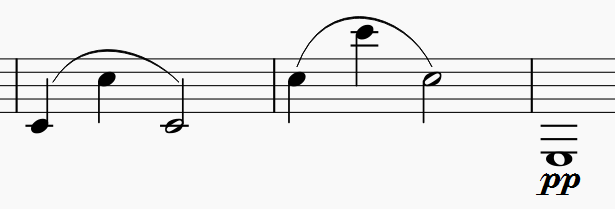
He identifies at least two thing that MuseScore is poor at...
-Collision detection. The default drawing of slurs, for example often has to be edited manually to keep them from overlapping other elements.
-Editing speed. With a large score of 27 staves and 500 measures he cited several seconds per edit
That post is two years old, MuseScore 3.0 will ostensibly address both of those but 3.0 is still in alpha now.
- robcat2075
- Posts: 1867
- Joined: Sep 03, 2018
One sample file, as displayed in v2 and v3
Better, but still not ideal.
<ATTACHMENT filename="slurtest.PNG" index="0">[attachment=0]slurtest.PNG</ATTACHMENT>
Better, but still not ideal.
<ATTACHMENT filename="slurtest.PNG" index="0">
- robcat2075
- Posts: 1867
- Joined: Sep 03, 2018
[quote="Bach5G"]Is that the V3 alpha?[/quote]
Yes. You can get it here to try it but it's really for testing only. It will crash or do odd things.
[url]https://ftp.osuosl.org/pub/musescore-nightlies/windows/
Yes. You can get it here to try it but it's really for testing only. It will crash or do odd things.
- ExZacLee
- Posts: 153
- Joined: May 09, 2018
That looks poor - i'm sure someone versed in musescore could make it look better, but those results are not really what would be considered "acceptable". I wouldn't submit them as an example of good for any program.
I haven't messed with musescore in a while so I can't tell you exactly what's different. I can tell you that none of the producers or publishers i work for uses musescore.
I can tell you, that in my personal experience as a professional composer, arranger and teacher of both of those things (and a music technology class that teaches finale and protools) I found results produced by my students in musescore to be "pretty good" - but often lacking in certain details. When speed was an issue, even the best musescore users in my class could not produce the results required as quickly as other students who had learned how to use finale.
Some of the issues I found when comparing scores done on musescore to those done on finale:
Formatting - in finale there is a feature called "fit measures" (in the utilities menu) that allows me to format measures to more accurately represent the overall phrase structure and improve sight reading. I assume this feature is found in musescore now? It wasn't readily apparent to my students who used the program a few years ago, and their parts looked all the worse for it.
Note-spacing - the biggest problem with early iterations of musescore seemed to be their spacing algorithms - this is the "it doesn't look right" problem you hear from many people.
Working with other fonts - this can be an issue. I've had students complain of crashing and other issues associated with trying to use other font packages. This is a pretty big deal. Maybe those issues have been worked out?
Using different page sizes - this has caused crashing issues with versions of musescore. I assume this has been fixed.
If one isn't too picky about layout, spacing, and all of the other typesetting concerns that come with arranging and publishing music, any program will work fine. If one doesn't have deadlines to deal with, same.
I do have deadlines. I do make bread using finale. Sorry Rob, I agree with another poster's suggestion that you're just being contrary. You dig musescore, that's cool. Like I said, many of my students dig it. I tell them to get it if they don't want to drop the bread on Finale (most did this year, it was $100 with the student deal.) They aren't required to do assignments in some classes on finale, but they must be done on a notation program because most of them have horribly unacceptable manuscript.
You say "why" -
Inserting a bar of 5/4 into a chart is "standard" - there's really no other way around that.
If all I ever had to do were lead sheets for my quintet, i'd probably use musescore - actually, i'd use finale but i'd still be using finale 2000, probably on an old pc. because I already had it and know how to use it, but if i was new and that's all i needed to do, musescore would probably be fine. And I'd probably still handwrite at least 50% of my work, because I enjoy it.
But that's not all I use it for.
For starters, the people I work for often have certain requirements that entail I use finale. If someone requires stuff in sib, dorico, noteworthy, etc.; they call someone else.
Why do "they" use it? I reckon many of those concerns have to do with typesetting and engraving concerns: working with different page sizes, spacing, font sizes, how well note font sizes scale up or down and maintain their relative placement on the line or space, how easily parts can be edited from their original format, how well the program works with different font packages and the number of third party plugins available that greatly speed up certain editing functions are reasons I can think of off the top of my head.
Editing a large number of parts? No contest - it is quicker and easier in finale - again, this may be something musescore is addressing.
Editing a score - the main drawback is finale's lack of a "magnetic layout" similar to sib.
Edit speed is a huge deal. HUGE - particularly when working with large scores. A few extra seconds per edit adds up to hours on a large project - hours I could be spending with my family, or practicing, or on a nice single malt scotch. If you're a hobbyist that's not a big deal, I suppose.
There is not a form of music notation finale can't do - medieval, shape notes, alphanote (used in education), nashville number, roman numeral, twentieth century, Schenkerian - you name it, it can be done in finale (although some of these admittedly take a bit of tweaking and practice to get fluent in.) Some things take a bit of practice to get good at, but it's all there.
If you don't need it, don't get it. No reason to I guess... but that does not make musescore equal to it. There will be a day in the future when musescore is every bit as capable, I don't doubt that. I just don't think it's quite there yet. When that happens I reckon I'll get it, but I won't be ditching finale until it stops paying my bills.
I haven't messed with musescore in a while so I can't tell you exactly what's different. I can tell you that none of the producers or publishers i work for uses musescore.
I can tell you, that in my personal experience as a professional composer, arranger and teacher of both of those things (and a music technology class that teaches finale and protools) I found results produced by my students in musescore to be "pretty good" - but often lacking in certain details. When speed was an issue, even the best musescore users in my class could not produce the results required as quickly as other students who had learned how to use finale.
Some of the issues I found when comparing scores done on musescore to those done on finale:
Formatting - in finale there is a feature called "fit measures" (in the utilities menu) that allows me to format measures to more accurately represent the overall phrase structure and improve sight reading. I assume this feature is found in musescore now? It wasn't readily apparent to my students who used the program a few years ago, and their parts looked all the worse for it.
Note-spacing - the biggest problem with early iterations of musescore seemed to be their spacing algorithms - this is the "it doesn't look right" problem you hear from many people.
Working with other fonts - this can be an issue. I've had students complain of crashing and other issues associated with trying to use other font packages. This is a pretty big deal. Maybe those issues have been worked out?
Using different page sizes - this has caused crashing issues with versions of musescore. I assume this has been fixed.
If one isn't too picky about layout, spacing, and all of the other typesetting concerns that come with arranging and publishing music, any program will work fine. If one doesn't have deadlines to deal with, same.
I do have deadlines. I do make bread using finale. Sorry Rob, I agree with another poster's suggestion that you're just being contrary. You dig musescore, that's cool. Like I said, many of my students dig it. I tell them to get it if they don't want to drop the bread on Finale (most did this year, it was $100 with the student deal.) They aren't required to do assignments in some classes on finale, but they must be done on a notation program because most of them have horribly unacceptable manuscript.
You say "why" -
Inserting a bar of 5/4 into a chart is "standard" - there's really no other way around that.
If all I ever had to do were lead sheets for my quintet, i'd probably use musescore - actually, i'd use finale but i'd still be using finale 2000, probably on an old pc. because I already had it and know how to use it, but if i was new and that's all i needed to do, musescore would probably be fine. And I'd probably still handwrite at least 50% of my work, because I enjoy it.
But that's not all I use it for.
For starters, the people I work for often have certain requirements that entail I use finale. If someone requires stuff in sib, dorico, noteworthy, etc.; they call someone else.
Why do "they" use it? I reckon many of those concerns have to do with typesetting and engraving concerns: working with different page sizes, spacing, font sizes, how well note font sizes scale up or down and maintain their relative placement on the line or space, how easily parts can be edited from their original format, how well the program works with different font packages and the number of third party plugins available that greatly speed up certain editing functions are reasons I can think of off the top of my head.
Editing a large number of parts? No contest - it is quicker and easier in finale - again, this may be something musescore is addressing.
Editing a score - the main drawback is finale's lack of a "magnetic layout" similar to sib.
Edit speed is a huge deal. HUGE - particularly when working with large scores. A few extra seconds per edit adds up to hours on a large project - hours I could be spending with my family, or practicing, or on a nice single malt scotch. If you're a hobbyist that's not a big deal, I suppose.
There is not a form of music notation finale can't do - medieval, shape notes, alphanote (used in education), nashville number, roman numeral, twentieth century, Schenkerian - you name it, it can be done in finale (although some of these admittedly take a bit of tweaking and practice to get fluent in.) Some things take a bit of practice to get good at, but it's all there.
If you don't need it, don't get it. No reason to I guess... but that does not make musescore equal to it. There will be a day in the future when musescore is every bit as capable, I don't doubt that. I just don't think it's quite there yet. When that happens I reckon I'll get it, but I won't be ditching finale until it stops paying my bills.
- ExZacLee
- Posts: 153
- Joined: May 09, 2018
The funny thing about all of this is that from the very beginning, musescore looked just like it had been ripped off from the code finale 2000...
and much of it's functionality (like measure insert for example) works just like finale, just with different key commands...
and much of it's functionality (like measure insert for example) works just like finale, just with different key commands...
- robcat2075
- Posts: 1867
- Joined: Sep 03, 2018
[quote="ExZacLee"]That looks poor - i'm sure someone versed in musescore could make it look better, but those results are not really what would be considered "acceptable".[/quote]
Can you show that same passage entered into Finale? The default result with no manually adjusting the slur placement?
Can you show that same passage entered into Finale? The default result with no manually adjusting the slur placement?
- robcat2075
- Posts: 1867
- Joined: Sep 03, 2018
Inserting a bar of 5/4 into a chart is "standard" - there's really no other way around that.
I don't understand the problem here. Musescore does that. I even made him a video that showed how easy it was.
- robcat2075
- Posts: 1867
- Joined: Sep 03, 2018
It wasn't readily apparent to my students who used the program a few years ago, and their parts looked all the worse for it.
This is a revealing comment.
I've never taken a class that used notation software, but I have taken classes where complicated software is used.
My observation is that 19 out of 20 college students are pretty helpless with software unless the teacher will hold their hand in class and show them exactly how to do something, button by button.
They don't read manuals, they can't do tutorials on their own, they can't look up answers.
If your appraisal of a program is based on what someone who doesn't know how to use it proficiently says about it... Is there any other field of musical endeavor in which we would say that's adequate?
- robcat2075
- Posts: 1867
- Joined: Sep 03, 2018
Here's the video i made two years ago for Timothy
Tell me how I didn't answer the question.
Tell me how this is this an unprofessional solution to the problem.
Tell me why this is a deal-breaker for making a 5/4 measure, as he asked to do.
And most of all, tell me how I'm being "contrary" for being the only person in all of these discussions over the years to ever post a visible example of anything.
I've gone the extra mile in these discussions to show what I'm talking about, no one else ever does, but I'm the bad person here.
I think I'm being exceedingly patient here...
<YOUTUBE id="zPEDR0bApqg">https://youtu.be/zPEDR0bApqg</YOUTUBE>
Tell me how I didn't answer the question.
Tell me how this is this an unprofessional solution to the problem.
Tell me why this is a deal-breaker for making a 5/4 measure, as he asked to do.
And most of all, tell me how I'm being "contrary" for being the only person in all of these discussions over the years to ever post a visible example of anything.
I've gone the extra mile in these discussions to show what I'm talking about, no one else ever does, but I'm the bad person here.
I think I'm being exceedingly patient here...
<YOUTUBE id="zPEDR0bApqg">https://youtu.be/zPEDR0bApqg</YOUTUBE>
- BGuttman
- Posts: 7368
- Joined: Mar 22, 2018
If you are a professional arranger like Zach, your customers will require output in Finale or Sibelius output. It just fits into their operation better.
For the rest of us, programs like MuseScore will produce adequate output but may require some tweaks to do certain operations.
If you plan to do it professionally, learn Finale or Sibelius. If not, use whatever you want. I find MuseScore has a lot of capability for a great price (free!).
For the rest of us, programs like MuseScore will produce adequate output but may require some tweaks to do certain operations.
If you plan to do it professionally, learn Finale or Sibelius. If not, use whatever you want. I find MuseScore has a lot of capability for a great price (free!).
- Bach5G
- Posts: 2874
- Joined: Apr 07, 2018
A couple of years ago, a notation program came out that allowed you to enter data into your tablet using an electronic pen. Just like using pen and paper.
Except it wasn’t I guess, because it didn’t take off AFAIK. It seems that things got really complicated really quickly and and suddenly it was just as fussy and non-intuitive as any other notation program. I don’t think one can make a notation program without it being complicated. There are too many details.
I’ve worked a bit in Printmusic. The problem was more it crashing than anything else.
I’ve made a bit of an investment in Musescore - some space on my hard drive and $50 for a manual. I don’t expect it to be easy and I’m going to take my time. I agree with Bruce that if you’re working professionally, you need to accept certain conventions, such as Finale and Sibelius. But otherwise, save the $500.
Except it wasn’t I guess, because it didn’t take off AFAIK. It seems that things got really complicated really quickly and and suddenly it was just as fussy and non-intuitive as any other notation program. I don’t think one can make a notation program without it being complicated. There are too many details.
I’ve worked a bit in Printmusic. The problem was more it crashing than anything else.
I’ve made a bit of an investment in Musescore - some space on my hard drive and $50 for a manual. I don’t expect it to be easy and I’m going to take my time. I agree with Bruce that if you’re working professionally, you need to accept certain conventions, such as Finale and Sibelius. But otherwise, save the $500.
- ExZacLee
- Posts: 153
- Joined: May 09, 2018
Bach 5G: "A couple of years ago, a notation program came out that allowed you to enter data into your tablet using an electronic pen. Just like using pen and paper. "
I tried one that did this, I forget the name, a student brought it with him. Oh we wanted it to work soooo badly. The main issue was getting it to learn our gestures - we had to change too much about the way we wrote to get it to recognize what we did that it didn't really end up being faster - I do hope they continue with that, because something like that that actually works well would be a true game changer.
Printmusic is a piece of crap. Musescore is about a bajillion times better. The only Finale program worth getting is the full finale program. The rest are crap - and for what most people do, musescore works just fine.
[quote="robcat2075"]<QUOTE author="ExZacLee" post_id="69307" time="1539453283" user_id="3248">
That looks poor - i'm sure someone versed in musescore could make it look better, but those results are not really what would be considered "acceptable".[/quote]
Can you show that same passage entered into Finale? The default result with no manually adjusting the slur placement?
</QUOTE>
Here it is with no adjustments: let me know if you can't open that, i can send it to you via email if you like.
I've had issues with dropbox lately so...
<LINK_TEXT text="https://www.dropbox.com/s/mfh8pso8n59cz ... M.png?dl=0">https://www.dropbox.com/s/mfh8pso8n59czha/Screen%20Shot%202018-10-14%20at%202.41.06%20PM.png?dl=0</LINK_TEXT>
Most engravers will tell you that assuming no adjustments whatsoever is a fools' errand, but don't take my word for it. Contact literally anyone working in the industry. With finale there are far fewer adjustments (for most things.) For those things that require adjustment, it isn't too difficult to create your own document style and drop it into the document styles folder. With a document style you can set up just about any default you want governing how a particular tool or function behaves... so if I don't like, say, how my chord symbols appear, I can create a new document style and set everything the way I want it - fonts (the handwritten fonts really are atrocious), default spacing above the staff (finale's is too high by default - Gould calls for two staff spaces above and I concur) and even the symbols themselves (some moron thought geometric symbols are a bad idea - they're not.) That's another of the many reasons why we use it. Again, I'm not telling you to not use musescore - if you like it, use it. Telling us we don't have a good reason to do so, however, is simply ill informed.
[quote="robcat2075"]<QUOTE>Inserting a bar of 5/4 into a chart is "standard" - there's really no other way around that.[/quote]
I don't understand the problem here. Musescore does that. I even made him a video that showed how easy it was.
</QUOTE>
I know this. I was replying to the suggestion that that was a "non standard" concern - and that was aimed pretty much at anyone who thinks that somehow odd time signatures are a non standard engraving concern. Perhaps I misunderstood what you were saying.
[quote="robcat2075"]<QUOTE> It wasn't readily apparent to my students who used the program a few years ago, and their parts looked all the worse for it.[/quote]
This is a revealing comment.
I've never taken a class that used notation software, but I have taken classes where complicated software is used.
My observation is that 19 out of 20 college students are pretty helpless with software unless the teacher will hold their hand in class and show them exactly how to do something, button by button.
They don't read manuals, they can't do tutorials on their own, they can't look up answers.
If your appraisal of a program is based on what someone who doesn't know how to use it proficiently says about it... Is there any other field of musical endeavor in which we would say that's adequate?
</QUOTE>
You're right - it is revealing. If the whole reason one uses musescore is because it is more "user friendly" or "intuitive", my experience seeing it in use with my students is that it is not. It is free though - and like I stated before, patiently, more than once, I do suggest it for the cost factor. This is really the only reason why i do suggest it though, because in most other ways it is simply not the superior program yet.
"I've never taken a class that used notation software" - that is also a revealing statement. You are really committed to lambasting Finale (and sibelius it seems) based on your assumption that Musescore is superior - yet you demonstrate no actual experience in those situations where finale or sibelius is commonly used (education, professional engraving and everything in between.)
"My observation is that 19 out of 20 college students are pretty helpless with software unless the teacher will hold their hand in class and show them exactly how to do something, button by button. "
My observation, as a teacher of three classes that use this software, is that half of them need pretty intense involvement from me, while the other half tend to pick it up pretty quickly (it's retaining it after the class that is the real bugger.) I base this on 9 semesters of teaching entry level Finale and Pro Tools, and 9 semesters of teaching more advanced arranging classes that focus on (amongst many things) preparing music for studio work and publication. Of course, I actually know how to use the software and more importantly I know how to teach it - something I can't say of more than a few people I've taken or observed in classes with heavy software involvement. While I do assign tutorials, I don't rely on them to teach anything - I have to do that myself. If you'd ever like to have the veil lifted on finale come take my class - I'm sure you'd dig it.
"They don't read manuals, they can't do tutorials on their own, they can't look up answers."
Again, I gotta call BS - heck, one of my students is my go-to for any questions involving protools, the workings of any of our Midas consoles, and the best uses for any of a number of mics we have in our main studio. Another student is my "figure it out" guy - if we can't figure out how to do something, he goes down the rabbit hole and comes back with an answer. Are some students just not interested enough to get it? Yes, there's more than a few, but they aren't in the majority.
"If your appraisal of a program is based on what someone who doesn't know how to use it proficiently says about it... Is there any other field of musical endeavor in which we would say that's adequate?"
I wanted to come back to this - your appraisal of Finale (and Sibelius) seems to be based on your lack of proficiency on it... need I say more?
You think we're calling you "contrary" because you posted some videos. That's exceedingly intellectually dishonest. You were being called contrary because, despite previous attempts to answer your question (can it be fairly summed up as "why would anyone use finale?") you, like the proverbial 6 year old with an axe to grind, replied "why" over and over again. You don't need to justify your preference for musescore to us - if you like it, fine. Hundreds of professional engravers and thousands of students, composers, arrangers and teachers do not have to justify their use of finale or sibelius to you. But since you asked, you got some answers, and yet they still didn't satisfy you. Why?
Why?
Those questions have been asked, and answered. Patiently.
I'm not trying to convince you to ditch musescore. Again, for the umpteenth time, use what you want. I, and many others in my field, use finale and we have our reasons, some of which have been stated very clearly in plain english for you here.
And now for this:
"You can only get professional results with _______!
Program X can't do _________!
All the Pros use _______!
And I have fallen for that multiple times.
I have gotten their program, learned it, and found out that it had no magic. "
No, no one ever claimed there was any magic.
"Found out that the thing they were sure only their program could do was just a feature under a different name. It's all they knew."
Can you give me an example?
"Or found out that it actually took more steps to get X done in their program than what I was using. They just accepted that as the normal."
This is normal of many complex programs. Something easy in one is difficult in another.
"Or found out that whatever extra their program had might just be 5% extra functionality around the edges. None of it a deal-killer for getting something done."
When that 5% worth of extra functionality saves you 20-75% of the time, or simple means no crashing, or offers another huge advantage that the pro community finds valuable, it is worth the extra money. Surely you understand this.
"Or found out that the only explanation they had for their program being the only choice was because someone had told them that."
Really? Do you really think this is the deal with Finale? Software doesn't become popular because someone told you to buy it. It becomes popular because it is useful. It's a pain in the ass to learn and it's expensive - do you really think we'd all be using it if there were an easier, cheaper alternative that did everything we need? Believe me, when musescore gets up to snuff I'll be the first one to get it.
"Or found out that if they didn't know I used the program i used, they didn't see any difference in the result."
That's not really the issue here. The issue is more along the lines of "how long did it take you to get the result" or "are the results satisfactory?"
"So here I am again today hearing people say this program that appears to work doesn't really work... I AM going to be skeptical. I AM going to ask follow up questions. I AM going to expect that the problem they say is a problem actually exists and that they can show it."
No one said the program doesn't work. They just said it's not better than Finale or Sibelius - and you've done nothing to prove otherwise.
"When someone says, "it's what the astronauts use," I will be skeptical."
Really? You want to go into space wearing an Apollo A7L, or "nah, this scuba suit and a roll of duct tape should be just fine!"
I tried one that did this, I forget the name, a student brought it with him. Oh we wanted it to work soooo badly. The main issue was getting it to learn our gestures - we had to change too much about the way we wrote to get it to recognize what we did that it didn't really end up being faster - I do hope they continue with that, because something like that that actually works well would be a true game changer.
Printmusic is a piece of crap. Musescore is about a bajillion times better. The only Finale program worth getting is the full finale program. The rest are crap - and for what most people do, musescore works just fine.
[quote="robcat2075"]<QUOTE author="ExZacLee" post_id="69307" time="1539453283" user_id="3248">
That looks poor - i'm sure someone versed in musescore could make it look better, but those results are not really what would be considered "acceptable".[/quote]
Can you show that same passage entered into Finale? The default result with no manually adjusting the slur placement?
</QUOTE>
Here it is with no adjustments: let me know if you can't open that, i can send it to you via email if you like.
I've had issues with dropbox lately so...
<LINK_TEXT text="https://www.dropbox.com/s/mfh8pso8n59cz ... M.png?dl=0">https://www.dropbox.com/s/mfh8pso8n59czha/Screen%20Shot%202018-10-14%20at%202.41.06%20PM.png?dl=0</LINK_TEXT>

Most engravers will tell you that assuming no adjustments whatsoever is a fools' errand, but don't take my word for it. Contact literally anyone working in the industry. With finale there are far fewer adjustments (for most things.) For those things that require adjustment, it isn't too difficult to create your own document style and drop it into the document styles folder. With a document style you can set up just about any default you want governing how a particular tool or function behaves... so if I don't like, say, how my chord symbols appear, I can create a new document style and set everything the way I want it - fonts (the handwritten fonts really are atrocious), default spacing above the staff (finale's is too high by default - Gould calls for two staff spaces above and I concur) and even the symbols themselves (some moron thought geometric symbols are a bad idea - they're not.) That's another of the many reasons why we use it. Again, I'm not telling you to not use musescore - if you like it, use it. Telling us we don't have a good reason to do so, however, is simply ill informed.
[quote="robcat2075"]<QUOTE>Inserting a bar of 5/4 into a chart is "standard" - there's really no other way around that.[/quote]
I don't understand the problem here. Musescore does that. I even made him a video that showed how easy it was.
</QUOTE>
I know this. I was replying to the suggestion that that was a "non standard" concern - and that was aimed pretty much at anyone who thinks that somehow odd time signatures are a non standard engraving concern. Perhaps I misunderstood what you were saying.
[quote="robcat2075"]<QUOTE> It wasn't readily apparent to my students who used the program a few years ago, and their parts looked all the worse for it.[/quote]
This is a revealing comment.
I've never taken a class that used notation software, but I have taken classes where complicated software is used.
My observation is that 19 out of 20 college students are pretty helpless with software unless the teacher will hold their hand in class and show them exactly how to do something, button by button.
They don't read manuals, they can't do tutorials on their own, they can't look up answers.
If your appraisal of a program is based on what someone who doesn't know how to use it proficiently says about it... Is there any other field of musical endeavor in which we would say that's adequate?
</QUOTE>
You're right - it is revealing. If the whole reason one uses musescore is because it is more "user friendly" or "intuitive", my experience seeing it in use with my students is that it is not. It is free though - and like I stated before, patiently, more than once, I do suggest it for the cost factor. This is really the only reason why i do suggest it though, because in most other ways it is simply not the superior program yet.
"I've never taken a class that used notation software" - that is also a revealing statement. You are really committed to lambasting Finale (and sibelius it seems) based on your assumption that Musescore is superior - yet you demonstrate no actual experience in those situations where finale or sibelius is commonly used (education, professional engraving and everything in between.)
"My observation is that 19 out of 20 college students are pretty helpless with software unless the teacher will hold their hand in class and show them exactly how to do something, button by button. "
My observation, as a teacher of three classes that use this software, is that half of them need pretty intense involvement from me, while the other half tend to pick it up pretty quickly (it's retaining it after the class that is the real bugger.) I base this on 9 semesters of teaching entry level Finale and Pro Tools, and 9 semesters of teaching more advanced arranging classes that focus on (amongst many things) preparing music for studio work and publication. Of course, I actually know how to use the software and more importantly I know how to teach it - something I can't say of more than a few people I've taken or observed in classes with heavy software involvement. While I do assign tutorials, I don't rely on them to teach anything - I have to do that myself. If you'd ever like to have the veil lifted on finale come take my class - I'm sure you'd dig it.
"They don't read manuals, they can't do tutorials on their own, they can't look up answers."
Again, I gotta call BS - heck, one of my students is my go-to for any questions involving protools, the workings of any of our Midas consoles, and the best uses for any of a number of mics we have in our main studio. Another student is my "figure it out" guy - if we can't figure out how to do something, he goes down the rabbit hole and comes back with an answer. Are some students just not interested enough to get it? Yes, there's more than a few, but they aren't in the majority.
"If your appraisal of a program is based on what someone who doesn't know how to use it proficiently says about it... Is there any other field of musical endeavor in which we would say that's adequate?"
I wanted to come back to this - your appraisal of Finale (and Sibelius) seems to be based on your lack of proficiency on it... need I say more?
You think we're calling you "contrary" because you posted some videos. That's exceedingly intellectually dishonest. You were being called contrary because, despite previous attempts to answer your question (can it be fairly summed up as "why would anyone use finale?") you, like the proverbial 6 year old with an axe to grind, replied "why" over and over again. You don't need to justify your preference for musescore to us - if you like it, fine. Hundreds of professional engravers and thousands of students, composers, arrangers and teachers do not have to justify their use of finale or sibelius to you. But since you asked, you got some answers, and yet they still didn't satisfy you. Why?
Why?
Those questions have been asked, and answered. Patiently.
I'm not trying to convince you to ditch musescore. Again, for the umpteenth time, use what you want. I, and many others in my field, use finale and we have our reasons, some of which have been stated very clearly in plain english for you here.
And now for this:
"You can only get professional results with _______!
Program X can't do _________!
All the Pros use _______!
And I have fallen for that multiple times.
I have gotten their program, learned it, and found out that it had no magic. "
No, no one ever claimed there was any magic.
"Found out that the thing they were sure only their program could do was just a feature under a different name. It's all they knew."
Can you give me an example?
"Or found out that it actually took more steps to get X done in their program than what I was using. They just accepted that as the normal."
This is normal of many complex programs. Something easy in one is difficult in another.
"Or found out that whatever extra their program had might just be 5% extra functionality around the edges. None of it a deal-killer for getting something done."
When that 5% worth of extra functionality saves you 20-75% of the time, or simple means no crashing, or offers another huge advantage that the pro community finds valuable, it is worth the extra money. Surely you understand this.
"Or found out that the only explanation they had for their program being the only choice was because someone had told them that."
Really? Do you really think this is the deal with Finale? Software doesn't become popular because someone told you to buy it. It becomes popular because it is useful. It's a pain in the ass to learn and it's expensive - do you really think we'd all be using it if there were an easier, cheaper alternative that did everything we need? Believe me, when musescore gets up to snuff I'll be the first one to get it.
"Or found out that if they didn't know I used the program i used, they didn't see any difference in the result."
That's not really the issue here. The issue is more along the lines of "how long did it take you to get the result" or "are the results satisfactory?"
"So here I am again today hearing people say this program that appears to work doesn't really work... I AM going to be skeptical. I AM going to ask follow up questions. I AM going to expect that the problem they say is a problem actually exists and that they can show it."
No one said the program doesn't work. They just said it's not better than Finale or Sibelius - and you've done nothing to prove otherwise.
"When someone says, "it's what the astronauts use," I will be skeptical."
Really? You want to go into space wearing an Apollo A7L, or "nah, this scuba suit and a roll of duct tape should be just fine!"
- Bach5G
- Posts: 2874
- Joined: Apr 07, 2018
I had a few days off over the holidays and sat down in front of my laptop to arrange a bit of music using Musescore. I downloaded the program a month or two ago. First impressions were, I admit, not overwhelmingly positive. But, I bought a hard copy manual and I kept that handy.
My goal was to combine Miles’ Milestones with a Holton arrangement of Avalon. I borrowed some material from a John Clayton arr’t of the former and added a guitar part. I used a written out bass solo to segue from one tune to the other. There’s a bit more work to be done, but I could print the parts and take them to rehearsal now.
A few observations:
1. It hasn’t crashed.
2. “Not intuitive” probably means it does things differently than you’re used to. Things got easier and quicker as I got used to the program. Adding bars and an additional line (the guitar part - chord names and notation) was surprisingly easy.
3. The playback was adequate. I could hear the wrong notes. Did it sound like the Basie band? No.
4. I can’t comment on the appearance of the printed parts (I haven’t printed anything yet). I expect they will be satisfactory ie. ok but don’t expect anybody to pay for this. If you’re expecting Finale/Sibelius quality for free, well, there’s no free lunch. You might have to buck up.
So, to summarize, well worth the investment (free download plus $50 for the manual from Amazon). It certainly should be adequate for most applications up to uni or high-level amateur use.
My goal was to combine Miles’ Milestones with a Holton arrangement of Avalon. I borrowed some material from a John Clayton arr’t of the former and added a guitar part. I used a written out bass solo to segue from one tune to the other. There’s a bit more work to be done, but I could print the parts and take them to rehearsal now.
A few observations:
1. It hasn’t crashed.
2. “Not intuitive” probably means it does things differently than you’re used to. Things got easier and quicker as I got used to the program. Adding bars and an additional line (the guitar part - chord names and notation) was surprisingly easy.
3. The playback was adequate. I could hear the wrong notes. Did it sound like the Basie band? No.
4. I can’t comment on the appearance of the printed parts (I haven’t printed anything yet). I expect they will be satisfactory ie. ok but don’t expect anybody to pay for this. If you’re expecting Finale/Sibelius quality for free, well, there’s no free lunch. You might have to buck up.
So, to summarize, well worth the investment (free download plus $50 for the manual from Amazon). It certainly should be adequate for most applications up to uni or high-level amateur use.
- AndrewMeronek
- Posts: 1487
- Joined: Mar 30, 2018
I've been playing with Dorico 2 to create microtonal notation systems, and it has been pretty good so far. I have some results posted here:
<LINK_TEXT text="https://andrewmeronek.com/music-tools/s ... ord-lists/">https://andrewmeronek.com/music-tools/sagittal-chord-lists/</LINK_TEXT>
The top pair of documents on that page I made with Sibelius several years ago; the bottom two (under the '2018 update') I made this past couple of months with Dorico 2. It's definitely a lot more convenient for this kind of stuff, and the playback automatically follows the notation as long as it's set up correctly. Much less work to get to a decent audio mockup than having to edit hundreds of invisible pitch bend MIDI scripts like is required in Sibelius.
<LINK_TEXT text="https://andrewmeronek.com/music-tools/s ... ord-lists/">https://andrewmeronek.com/music-tools/sagittal-chord-lists/</LINK_TEXT>
The top pair of documents on that page I made with Sibelius several years ago; the bottom two (under the '2018 update') I made this past couple of months with Dorico 2. It's definitely a lot more convenient for this kind of stuff, and the playback automatically follows the notation as long as it's set up correctly. Much less work to get to a decent audio mockup than having to edit hundreds of invisible pitch bend MIDI scripts like is required in Sibelius.
- Zandit75
- Posts: 82
- Joined: Apr 30, 2018
I've been playing around with Musecore 2 for the last couple of weeks, but I'm still trying to find my feet with it.
I'm hoping some of you can assist with some noob questions.
Please keep in mind, I'm transposing a solo part from a score onto it's own single page.
Instead of having several bars rest written out individually, how can I merge them into one bars rest with a numeral over the top showing how many bars rest there are?
I have a couple of bars in the piece that have three crotchets written in the space of 2 beats, so they have the box over the top of the note with numeral 3 denote they are to be played as thirds of the 2 beats. I can't get the crotchets to work on the program except for writing the bar as 5/4. Am I missing something?
Thanks in advance.
I'm hoping some of you can assist with some noob questions.
Please keep in mind, I'm transposing a solo part from a score onto it's own single page.
Instead of having several bars rest written out individually, how can I merge them into one bars rest with a numeral over the top showing how many bars rest there are?
I have a couple of bars in the piece that have three crotchets written in the space of 2 beats, so they have the box over the top of the note with numeral 3 denote they are to be played as thirds of the 2 beats. I can't get the crotchets to work on the program except for writing the bar as 5/4. Am I missing something?
Thanks in advance.
- afugate
- Posts: 671
- Joined: Mar 23, 2018
[quote="Zandit75"]I've been playing around with Musecore 2 for the last couple of weeks, but I'm still trying to find my feet with it.
I'm hoping some of you can assist with some noob questions.
Please keep in mind, I'm transposing a solo part from a score onto it's own single page.
Instead of having several bars rest written out individually, how can I merge them into one bars rest with a numeral over the top showing how many bars rest there are?[/quote]
Wait until the end and then hit the letter 'M'. That will coalesce multimeasure rests. You can also specify which measures to restart the rest (e.g., to give you multiple 8 bar rests) by changing the measure properties for the start of each section of rests.
Select the length of the total notation value (i.e., press 6 to create quarter note triplets) and then press cmd (or cntrl) plus the value for the subsequent "-plets". In this case, press 6 to tell MuseScore to create a two-beat figure. Then press CMD-5 to create the crotchet notation. Then specify the notes.
--Andy in OKC
I'm hoping some of you can assist with some noob questions.
Please keep in mind, I'm transposing a solo part from a score onto it's own single page.
Instead of having several bars rest written out individually, how can I merge them into one bars rest with a numeral over the top showing how many bars rest there are?[/quote]
Wait until the end and then hit the letter 'M'. That will coalesce multimeasure rests. You can also specify which measures to restart the rest (e.g., to give you multiple 8 bar rests) by changing the measure properties for the start of each section of rests.
I have a couple of bars in the piece that have three crotchets written in the space of 2 beats, so they have the box over the top of the note with numeral 3 denote they are to be played as thirds of the 2 beats. I can't get the crotchets to work on the program except for writing the bar as 5/4. Am I missing something?
Thanks in advance.
Select the length of the total notation value (i.e., press 6 to create quarter note triplets) and then press cmd (or cntrl) plus the value for the subsequent "-plets". In this case, press 6 to tell MuseScore to create a two-beat figure. Then press CMD-5 to create the crotchet notation. Then specify the notes.
--Andy in OKC
- Zandit75
- Posts: 82
- Joined: Apr 30, 2018
[quote="afugate"]<QUOTE author="Zandit75" post_id="74462" time="1546396336" user_id="3181">
I've been playing around with Musecore 2 for the last couple of weeks, but I'm still trying to find my feet with it.
I'm hoping some of you can assist with some noob questions.
Please keep in mind, I'm transposing a solo part from a score onto it's own single page.
Instead of having several bars rest written out individually, how can I merge them into one bars rest with a numeral over the top showing how many bars rest there are?[/quote]
Wait until the end and then hit the letter 'M'. That will coalesce multimeasure rests. You can also specify which measures to restart the rest (e.g., to give you multiple 8 bar rests) by changing the measure properties for the start of each section of rests.
Select the length of the total notation value (i.e., press 6 to create quarter note triplets) and then press cmd (or cntrl) plus the value for the subsequent "-plets". In this case, press 6 to tell MuseScore to create a two-beat figure. Then press CMD-5 to create the crotchet notation. Then specify the notes.
--Andy in OKC
</QUOTE>
Thanks for that Andy, most appreciated. The first tip worked a treat, and changed all of the bars rest through the entire score with just the one press of the letter M, very handy!
I had a little difficulty with your second suggestion. but got it worked out. The 5/4 time signature I put in there was causing the issue, but once I deleted that and got all of the rests shown correctly, I was able to change a 2 beat rest into a tuplet by pressing CNTRL-3, which automatically split the 2 beats into three crotchets which is what I was after, and showing the appropriate bracket over the top with the 3 showing.
Thanks again!
I've been playing around with Musecore 2 for the last couple of weeks, but I'm still trying to find my feet with it.
I'm hoping some of you can assist with some noob questions.
Please keep in mind, I'm transposing a solo part from a score onto it's own single page.
Instead of having several bars rest written out individually, how can I merge them into one bars rest with a numeral over the top showing how many bars rest there are?[/quote]
Wait until the end and then hit the letter 'M'. That will coalesce multimeasure rests. You can also specify which measures to restart the rest (e.g., to give you multiple 8 bar rests) by changing the measure properties for the start of each section of rests.
I have a couple of bars in the piece that have three crotchets written in the space of 2 beats, so they have the box over the top of the note with numeral 3 denote they are to be played as thirds of the 2 beats. I can't get the crotchets to work on the program except for writing the bar as 5/4. Am I missing something?
Thanks in advance.
Select the length of the total notation value (i.e., press 6 to create quarter note triplets) and then press cmd (or cntrl) plus the value for the subsequent "-plets". In this case, press 6 to tell MuseScore to create a two-beat figure. Then press CMD-5 to create the crotchet notation. Then specify the notes.
--Andy in OKC
</QUOTE>
Thanks for that Andy, most appreciated. The first tip worked a treat, and changed all of the bars rest through the entire score with just the one press of the letter M, very handy!
I had a little difficulty with your second suggestion. but got it worked out. The 5/4 time signature I put in there was causing the issue, but once I deleted that and got all of the rests shown correctly, I was able to change a 2 beat rest into a tuplet by pressing CNTRL-3, which automatically split the 2 beats into three crotchets which is what I was after, and showing the appropriate bracket over the top with the 3 showing.
Thanks again!
- afugate
- Posts: 671
- Joined: Mar 23, 2018
[quote="Zandit75"]
Thanks for that Andy, most appreciated.
[/quote]
You're quite welcome.
A few years ago I took a big band / commercial music composition class from forum member Exaclee. Didn't want to spring the dough nor spend the time to learn Finale when I'd been using Muse score for quite some time. Zac is very upfront on day one of class that he will count off for poorly notated music, so I had to "up my game". Fortunately, I was able to cover just about everything necessary for the class and my own, limited needs.
Feel free to PM me with additional questions. There's lots of wonderful info in the MuseScore forums, but sometimes it's hard to search for something when one isn't quite sure how to describe it in simple, searchable terms. :idk:
--Andy in OKC
Thanks for that Andy, most appreciated.
[/quote]
You're quite welcome.
A few years ago I took a big band / commercial music composition class from forum member Exaclee. Didn't want to spring the dough nor spend the time to learn Finale when I'd been using Muse score for quite some time. Zac is very upfront on day one of class that he will count off for poorly notated music, so I had to "up my game". Fortunately, I was able to cover just about everything necessary for the class and my own, limited needs.
Feel free to PM me with additional questions. There's lots of wonderful info in the MuseScore forums, but sometimes it's hard to search for something when one isn't quite sure how to describe it in simple, searchable terms. :idk:
--Andy in OKC
- mmitchell
- Posts: 4
- Joined: Jul 26, 2019
MuseScore is great. I can not recommend it enough for "hobbyists"... it has everything you need and more. I have found the playback to be not great on MuseScore, but that might be due to the ancient MacBook Pro that I am using! If you are familiar to Sibelius it has a similar interface
- ExZacLee
- Posts: 153
- Joined: May 09, 2018
[quote="mmitchell"]I have found the playback to be not great on MuseScore, but that might be due to the ancient MacBook Pro that I am using![/quote]
Notation programs aren't great for playback - some are better than others "in the box" depending on what you want, but the sounds usually aren't all the great, regardless, particularly if it's just using the general midi sounds. Even Finale's Garittan library isn't great. I primarily use playback just to do a spot check and make sure I got all right notes in before I finalize a chart. Occasionally, though, I have a client who wants a demo track or practice track to work with and I'll use something that can make the recording sound a little better.
If you're wanting better playback from your notation software of choice there are a few routes you can go.
VST (Virtual Studio Technology?) plugins can help a great deal. The method of utilizing them can be different from program to program, and some programs may not have support for them - earlier versions of Finale, for example, didn't have VST support, but you could still download a virtual synth and assign sounds through the midi/audio menu. I remember my buddy kind of hacking my Finale a bit so it would work, most modern notation programs won't need that though.
Some VSTs are free - and there are some good ones for free. If you're wanting really realistic synth sounds, there are sound libraries that will cost you (Kontact, Vienna, etc.) but if all you're wanting is something better than what is in the box, you can find good ones for cheap or free. Try the free stuff first and see if that's what you want. Some arrangers I know will piece together sounds from a bunch of different libraries - a $20 bass sample here, a free drum sample there, a $400 string sample from one of the big bois... that way they have something they're happy with without dropping 6K (or more) on something like the Vienna Symphonic Library.
I've been using DAWs to make my demos lately. I use ProToolsHD, but most DAWs are MIDI capable now-a-days. Logic is much cheaper (and does just about everything protools does) - and there are free DAWs that have pretty amazing capabilities. Many of my students use Audacity or Reaper. Audacity is free while Reaper is something like $60 after the trial period. I don't know how they work with MIDI. Garageband may work - when I used it in the past I couldn't import my MIDI files but I think that may be something they do now. I get a bit more control over the final product this way, and this is really useful for clients who need a little help to hear what the finished product should sound like. Here's my process:
1) export score as a midi file - there are usually two options, use the one that creates separate tracks for all your instruments. Usually this function is found in the file menu.
2) Open up your DAW of choice. Import the MIDI file you created from your score.
3) Assign sounds from your sound library (or VST). We have the Kontact sound library at UCO (as well as ProTools HD which I couldn't afford myself). If using MIDI tracks, I have to create aux tracks, assign virtual instruments to the aux tracks, and then bus the sound to the midi track. If using instrument tracks it's much easier.
4) for rhythm section parts, I'll play in the parts the way I want them.
5) mix everything, edit as necessary, and Bob's your uncle.
Notation programs aren't great for playback - some are better than others "in the box" depending on what you want, but the sounds usually aren't all the great, regardless, particularly if it's just using the general midi sounds. Even Finale's Garittan library isn't great. I primarily use playback just to do a spot check and make sure I got all right notes in before I finalize a chart. Occasionally, though, I have a client who wants a demo track or practice track to work with and I'll use something that can make the recording sound a little better.
If you're wanting better playback from your notation software of choice there are a few routes you can go.
VST (Virtual Studio Technology?) plugins can help a great deal. The method of utilizing them can be different from program to program, and some programs may not have support for them - earlier versions of Finale, for example, didn't have VST support, but you could still download a virtual synth and assign sounds through the midi/audio menu. I remember my buddy kind of hacking my Finale a bit so it would work, most modern notation programs won't need that though.
Some VSTs are free - and there are some good ones for free. If you're wanting really realistic synth sounds, there are sound libraries that will cost you (Kontact, Vienna, etc.) but if all you're wanting is something better than what is in the box, you can find good ones for cheap or free. Try the free stuff first and see if that's what you want. Some arrangers I know will piece together sounds from a bunch of different libraries - a $20 bass sample here, a free drum sample there, a $400 string sample from one of the big bois... that way they have something they're happy with without dropping 6K (or more) on something like the Vienna Symphonic Library.
I've been using DAWs to make my demos lately. I use ProToolsHD, but most DAWs are MIDI capable now-a-days. Logic is much cheaper (and does just about everything protools does) - and there are free DAWs that have pretty amazing capabilities. Many of my students use Audacity or Reaper. Audacity is free while Reaper is something like $60 after the trial period. I don't know how they work with MIDI. Garageband may work - when I used it in the past I couldn't import my MIDI files but I think that may be something they do now. I get a bit more control over the final product this way, and this is really useful for clients who need a little help to hear what the finished product should sound like. Here's my process:
1) export score as a midi file - there are usually two options, use the one that creates separate tracks for all your instruments. Usually this function is found in the file menu.
2) Open up your DAW of choice. Import the MIDI file you created from your score.
3) Assign sounds from your sound library (or VST). We have the Kontact sound library at UCO (as well as ProTools HD which I couldn't afford myself). If using MIDI tracks, I have to create aux tracks, assign virtual instruments to the aux tracks, and then bus the sound to the midi track. If using instrument tracks it's much easier.
4) for rhythm section parts, I'll play in the parts the way I want them.
5) mix everything, edit as necessary, and Bob's your uncle.
- JosephJohnson
- Posts: 2
- Joined: Sep 19, 2019
Some of the online capabilities of MuseScore makes it a very useful. Makes me wonder why the more expensive programs haven't implemented similar things...
- Gary
- Posts: 283
- Joined: Jan 11, 2019
I notice this is an updated thread. I've used Sibelius since it was on floppy disc and have loved it, but since it's sale to a new company and the licensing procedures, I've had nothing but irritations and I'm fed up with continual inabilities to access Sibelius. I neve used to have this problem. I'm keeping a big eye on Dorico.
p.s. At the time I started Sibelius, it was more labour-friendly than Finale, which had a considerable learning curve, but I understand that's gotten easier as the years have gone by.
p.s. At the time I started Sibelius, it was more labour-friendly than Finale, which had a considerable learning curve, but I understand that's gotten easier as the years have gone by.
- JLivi
- Posts: 870
- Joined: May 10, 2018
[quote="Gary"]I notice this is an updated thread. I've used Sibelius since it was on floppy disc and have loved it, but since it's sale to a new company and the licensing procedures, I've had nothing but irritations and I'm fed up with continual inabilities to access Sibelius. I neve used to have this problem. I'm keeping a big eye on Dorico.[/quote]
I'm a Sibelius user as well. Dorico is incredibly enticing. One of these days I'm just going to pull the trigger, but a friend of mine said that their chord symbols are whack. I'm hoping whenever I decide to pull the trigger they fix that. Even if they don't, it'll be ok :-)
I'm a Sibelius user as well. Dorico is incredibly enticing. One of these days I'm just going to pull the trigger, but a friend of mine said that their chord symbols are whack. I'm hoping whenever I decide to pull the trigger they fix that. Even if they don't, it'll be ok :-)
- JustinM
- Posts: 8
- Joined: Sep 17, 2019
[quote="Gary"]I notice this is an updated thread. I've used Sibelius since it was on floppy disc and have loved it, but since it's sale to a new company and the licensing procedures, I've had nothing but irritations and I'm fed up with continual inabilities to access Sibelius. I neve used to have this problem. I'm keeping a big eye on Dorico.
p.s. At the time I started Sibelius, it was more labour-friendly than Finale, which had a considerable learning curve, but I understand that's gotten easier as the years have gone by.[/quote]
I use both Sibelius and Dorico depending on the situation, and I simply do not have the patience for nearly anything I've ever seen engraved in Musescore. I'm sure if someone spent an inordinate amount of time fixing the default output it could then rise to basic levels of adequacy, but for anything I intend to show to other people, well, I wouldn't be caught dead.
p.s. At the time I started Sibelius, it was more labour-friendly than Finale, which had a considerable learning curve, but I understand that's gotten easier as the years have gone by.[/quote]
I use both Sibelius and Dorico depending on the situation, and I simply do not have the patience for nearly anything I've ever seen engraved in Musescore. I'm sure if someone spent an inordinate amount of time fixing the default output it could then rise to basic levels of adequacy, but for anything I intend to show to other people, well, I wouldn't be caught dead.
- Wilktone
- Posts: 720
- Joined: Mar 27, 2018
I have a student who used MuseScore to notate an arrangement for my class. I'm a Finale user, so I'm at a loss at how to help him clean up his notation. Here are some issues that came up:
1. His beaming is all over the place, beaming across beats and breaking the beams between beats. In Finale there is a rebeam utility that can be used to correct some of these automatically. Is there a way to do this in MuseScore?
2. He has notated his arrangement in the wrong key using accidentals. Is there a way for him to change the key and hold the pitches where they already are?
3. I asked him to export his arrangement as an MusicXML file so I can open it in Finale and when I try to open it I get an error message.
Thanks,
Dave
1. His beaming is all over the place, beaming across beats and breaking the beams between beats. In Finale there is a rebeam utility that can be used to correct some of these automatically. Is there a way to do this in MuseScore?
2. He has notated his arrangement in the wrong key using accidentals. Is there a way for him to change the key and hold the pitches where they already are?
3. I asked him to export his arrangement as an MusicXML file so I can open it in Finale and when I try to open it I get an error message.
XML error in file ..... copy.mxl at line 38:
cvc-complex-type.2.4.b: The content of element 'credit' is not complete. One of '{credit-type, link, bookmark, credit-image, credit-words, credit-symbol}' is expected.
Thanks,
Dave
- AndrewMeronek
- Posts: 1487
- Joined: Mar 30, 2018
I'm not a big Musescore fan, but I use it from time to time when I have to work with someone who won't pay out the $$$ for a professional notation program.
'x' is the shortcut for stem flip. There are also some beam controls in the 'beam properties' palette, and a beam reset in the Format->Reset Beams menu.
Other applicable controls might include right-clicking on the time signature in the score and going to 'time signature properties' to look at default groupings.
The key signature change in the 'key signature' palette will change the key without transposing anything.
To transpose, make a selection and use up or down arrows to move notes one half-step; or ctrl-arrow to move by octaves. That latter may be different on Mac.
I don't like Musescore not just because of how it looks but because it simply takes more actions to enter the same amount of information compared to Sibelius or (even better) Dorico. Software design to minimize translating mouse clicks and keyboard strokes into usable information in the software is huge.
Also make sure your student is using the most recent upgrade. XML export should be OK. If the original file is corrupted, it may be a good idea to copy and paste by each section into a new file.
'x' is the shortcut for stem flip. There are also some beam controls in the 'beam properties' palette, and a beam reset in the Format->Reset Beams menu.
Other applicable controls might include right-clicking on the time signature in the score and going to 'time signature properties' to look at default groupings.
The key signature change in the 'key signature' palette will change the key without transposing anything.
To transpose, make a selection and use up or down arrows to move notes one half-step; or ctrl-arrow to move by octaves. That latter may be different on Mac.
I don't like Musescore not just because of how it looks but because it simply takes more actions to enter the same amount of information compared to Sibelius or (even better) Dorico. Software design to minimize translating mouse clicks and keyboard strokes into usable information in the software is huge.
Also make sure your student is using the most recent upgrade. XML export should be OK. If the original file is corrupted, it may be a good idea to copy and paste by each section into a new file.
- Wilktone
- Posts: 720
- Joined: Mar 27, 2018
Thanks, Andrew. I've got that class tonight so I'll pass along your advice and try it out.
Dave
Dave
- AndrewMeronek
- Posts: 1487
- Joined: Mar 30, 2018
No problem. <span class="emoji" title=":wink:">😉</span>
It's worth pointing out that due to Musescore's open source structure, the documentation is pretty good. As long as the student has internet access, at least. Here's the page on beams for Musescore 3:
https://musescore.org/en/handbook/3/beams
It's worth pointing out that due to Musescore's open source structure, the documentation is pretty good. As long as the student has internet access, at least. Here's the page on beams for Musescore 3:
https://musescore.org/en/handbook/3/beams
- IanDeterlingComposer
- Posts: 38
- Joined: Aug 02, 2020
I use Sibelius Ultimate. I started out with Finale (from 2007-about 2012) when I was in high school/getting my undergrad. The school downloaded Sibelius 7 onto all the computers, so I thought I'd give it a go for a week. I was in the market to either upgrade to the newest version of Finale, but I'm so glad I tried Sibelius! It is not perfect by any means - but I find Finale to be so clunky in comparison. If you take a little extra time and memorize the basic key shortcuts, it cuts your engraving time down dramatically.
I've had composition students that have used free options, and they're fine if that's all you can afford. The problem is they tend to be more time consuming to get a professional looking product. So (in my mind) the amount of time saved with Sibelius is worth the price tag. I recently upgraded to Ultimate (from 7.5). I didn't for the longest time because there didn't seem to be that much different. I upgraded when I found out that you could enter multiple dynamic markings and slurs at the same time. I write and arrange for orchestras, bands, and flexible instrumentation ensembles - and that was a HUGE time saver for sure.
As far as playback goes, they are all pretty bad. The best that I've come across is NotePerformer. You have to buy it, but it sounds SO MUCH BETTER than the Sibelius/Finale play libraries. If you're planning on making virtual mockups, I'd recommend getting this. Nothing makes a listener stop/move to the next video faster than terrible sound libraries.
I've had composition students that have used free options, and they're fine if that's all you can afford. The problem is they tend to be more time consuming to get a professional looking product. So (in my mind) the amount of time saved with Sibelius is worth the price tag. I recently upgraded to Ultimate (from 7.5). I didn't for the longest time because there didn't seem to be that much different. I upgraded when I found out that you could enter multiple dynamic markings and slurs at the same time. I write and arrange for orchestras, bands, and flexible instrumentation ensembles - and that was a HUGE time saver for sure.
As far as playback goes, they are all pretty bad. The best that I've come across is NotePerformer. You have to buy it, but it sounds SO MUCH BETTER than the Sibelius/Finale play libraries. If you're planning on making virtual mockups, I'd recommend getting this. Nothing makes a listener stop/move to the next video faster than terrible sound libraries.